Progress in sustainable aviation and ground transportation
 By Cat Hofacker
 By Cat Hofacker
As 2025 began, the global aviation sector stood at a critical crossroads: Industry stakeholders were working to balance post-COVID recovery with ambitious net-zero emission goals. However, progress was shaped by various risks — economic, technological, ideological, and geopolitical. The biggest hurdle in aviation’s decarbonization journey remains the cost and availability of sustainable aviation fuel (SAF), along with questions about its sustainability credentials. Despite this, 2025 saw major advancements across the sector.
In January, the European Union implemented its first SAF mandate through the RefuelEU Aviation Directive. The regulation requires airlines to blend SAF with conventional jet fuel, with minimum blending targ set for airports handling over 800,000 passengers or 100,000 tons of freight annually. In support of this mandate, the European Commission allocated over $110 million worth of EU Emissions Trading System allowances to help airlines cover the cost difference between fossil fuels and SAF.
The International Civil Aviation Organization (ICAO) also made key progress by adopting a global framework for SAF, Low Carbon Aviation Fuels and other clean energy sources. An implementation roadmap and a long-term monitoring and reporting methodology were approved, with oversight by ICAO’s Committee on Aviation Environmental Protection.
In September, ICAO partnered with the International Renewable Energy Agency to launch Finvest@ETAF, a global portal designed to connect SAF developers with investors across the value chain. This initiative is expected to help accelerate investment and support the sector’s decarbonization goals. According to a Gena report published in August, a total of 11.3 million tons of SAF production capacity has reached final investment decision. The report forecasted a potential increase to 19 Mt annually by 2030 in a best-case scenario.
Meanwhile, several major companies announced agreements. In September, Catagen, a developer of modular SAF production systems, signed offtake agreements with Ryanair and Shell. The same month, Oneworld (a group of airline partners) joined forces through Breakthrough Energy Ventures to invest in next-generation SAF technologies, as reported by Green Air.
While challenges remain, particularly in technology scalability and fuel economics, coordinated efforts across research, policy and innovation are positioning aviation to take a leading role in the global climate response. Investment continues to pour into SAF, electric aviation and climate-aligned technologies, supported by international platforms like the G7 and G20, which reinforce the need for sustained global cooperation.
For ground transportation, sustainability is manifesting through a mix of technological innovation, consumer preferences and governmental regulations. There was a significant increase in the number of electric vehicles on the road, with global production exceeding 85 million vehicles, according to the International Energy Agency’s report, “Trends in the Electric Car Industry,” published in May. The reduction in the cost of solid-state batteries and an improvement in energy density helped. The EU’s Fit for 55” legislative package aims to install 3 million public chargers by 2030.

On another front, autonomous vehicles are moving into practical applications, including freight and logistics, and pilot programs leading to autonomous public transportation. In artificial intelligence-driven urban mobility, algorithms are being perfected to optimize traffic flows, predict demand, personalize mobility experiences, and improve safety. In March, Science News Today reported on the push to make hyperloop technology and high-speed rail transportation the way for future high-speed ground transportation. The Boring Company is striving to drastically cut-down travel time using zero-emission systems and in 2025 built 68 miles (109 km) of tunnels. Japanese trains such as Maglev and Europe’s Trans-European Transport Network (TEN-T) are making fast headway towards becoming the more sustainable mode of transportation between cities. The TEN-T’s completion dates are 2030 for the core network, 2040 for the extended core network, and 2050 for the comprehensive network.
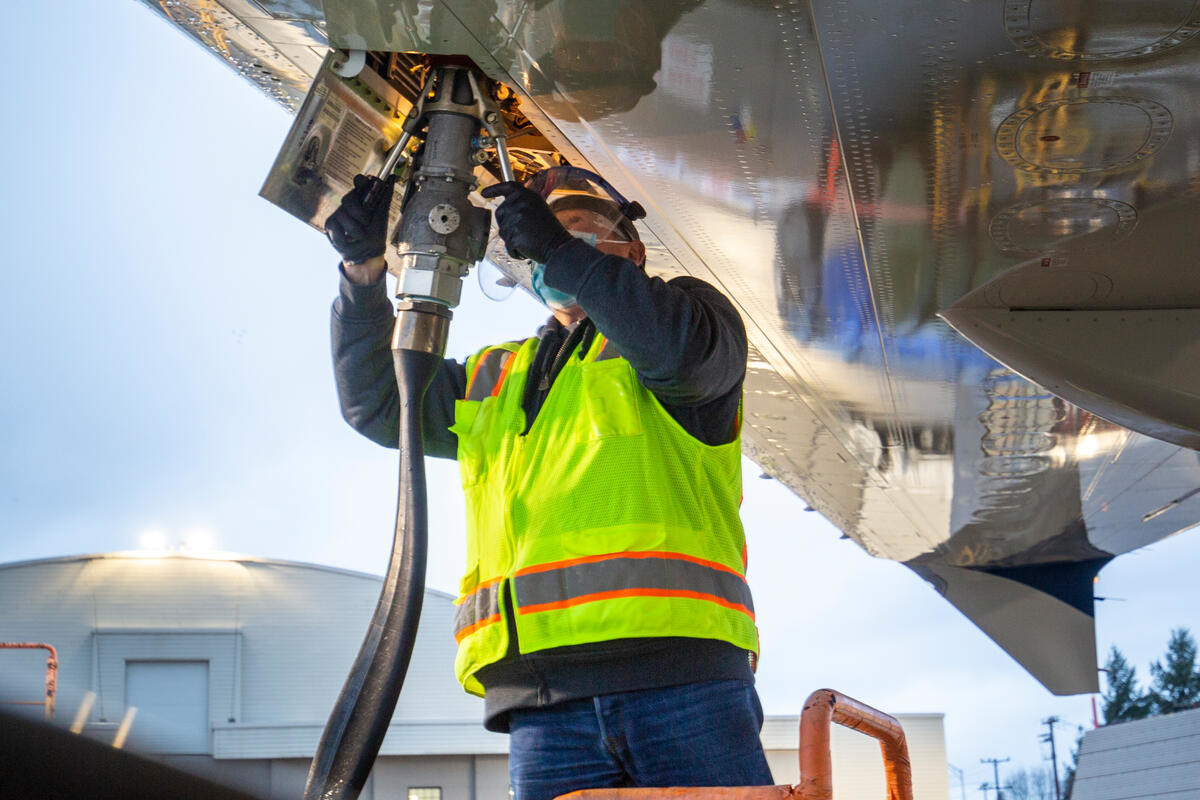
Opener image: A technician loads sustainable aviation fuel (SAF) into a Boeing aircraft. Credit: Boeing