
The Systems Engineering Technical Committee (SETC) supports efforts to define, develop, and disseminate modern systems engineering practices.
In 2025, systems engineering witnessed progress in model-based systems engineering (MBSE), configuration management, agile systems engineering and digital transformation — all of which was shared through events and professional society publications.
In July, the Object Management Group (OMG) approved the release of version 2 specification of the Systems Modeling Language (SysML), the culmination of the last seven years of hard work within OMG members. According to OMG, SysML v2 offers significant MBSE enhancements, “precision, expressiveness, usability, interoperability, and extensibility.” It was discussed at the International Council on Systems Engineering (INCOSE) International Symposium 2025 in July. Several major vendors, including Dassault, will not have a full SysML v2 capability until early 2026.
Extending MBSE with pattern-based systems engineering yielded progress through collaboration within the Rosetta Stone project, which provided mapping of consistency confirmation frameworks of different communities. Through the American Society of Mechanical Engineers (ASME) Verification, Validation, and Uncertainty Quantification (VVUQ) Standards Committee, balloting ASME VVUQ 50.1 — which uses some of the contents of the Rosetta Stone Project Report because of the differing treatment— was approved for publication in August. As of mid-November, authors were in the typesetting process to create a public viewable draft guideline.
Progress within agile systems engineering was achieved through ongoing efforts with AIAA and National Defense Industrial Association (NDIA) collaboration exploring defense surge production capacity. The collaborative effort, started in April, approved a call to action for the Department of Defense to develop actionable solutions to meet wartime surge demands. NDIA’s “Vital Signs 2025” report, published in February, described a gap between DOD needs and capabilities. The call to action publication was discussed in August at NDIA’s Emerging Technology Conference. In addition, DOD co-sponsorship of workshops with AIAA (among others) demonstrated a methodology for quantifying surge demands.
One of the primary work product outputs of a complex system development life cycle stage is the establishment of the technical baseline, or the set of validated configuration information, or the recipe, that can be used in later life cycle stages. Systems Engineering Technical Committee members contributed to a new SEBoK v2.12 (released in May) page, titled Configuration Management Baselines, which summarizes key information that enables project management and systems engineering practitioners to plan around the essential work activities that lead to better development project outcomes.
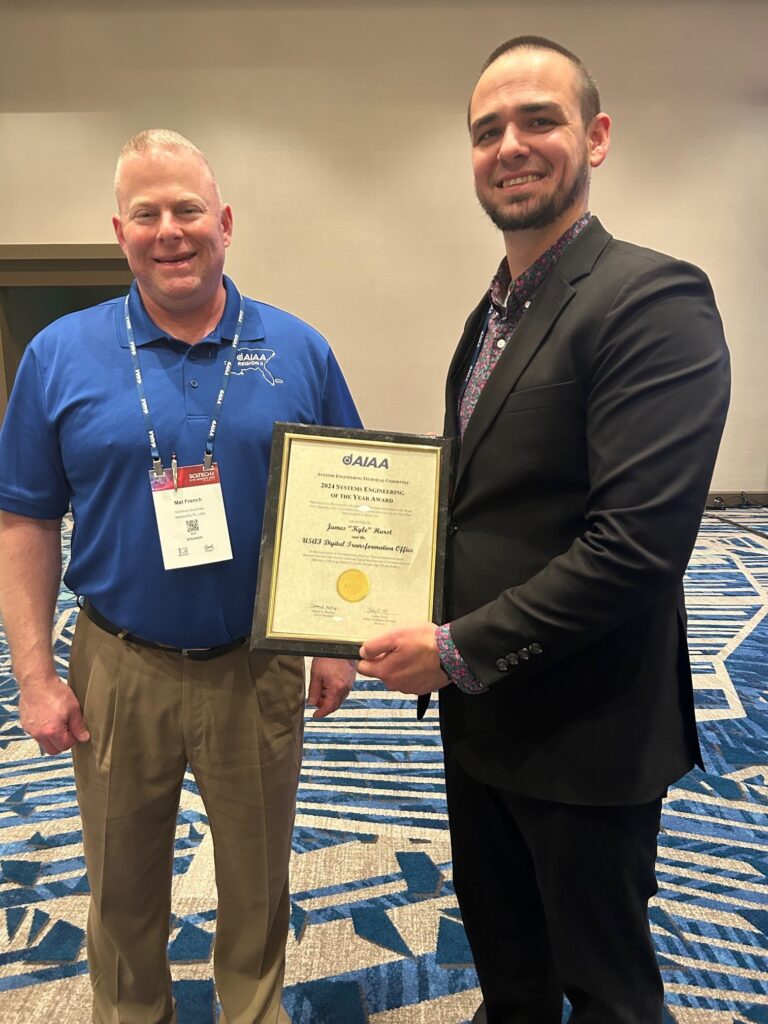
In January at AIAA’s SciTech Forum, this committee awarded the 2024 Systems of the Year award to Kyle Hurst and the U.S. Air Force Digital Transformation Office staff. They were recognized for championing digital transformation with demonstrated creativity and for their significant contributions in driving a digital-first culture within the Air Force. This is an annual award presented to recognize a systems engineering individual or team that significantly contributed to and/or influenced the systems engineering landscape.
In July, the Defense Department’s Digital Engineering, Modeling and Simulation Directorate, and Office of the Under Secretary of Defense for Research and Engineering (OUSD R&E) held the 2025 Federal Digital Engineering Forum. This annual event provides insight into how organizations are implementing digital transformation to advance digital engineering practices. Participants were split into one of five working groups for collaboration before presenting to the other groups. Attendees collaborated, addressed pain points, and shared best practices, success stories and challenges.
The Air Force is pursuing Digital Materiel Management (DMM) initiatives through the Digital Transformation Office in partnership with AIAA and NDIA. AIAA hosted multiple DMM meetings during SciTech that were heavily attended by DOD DMM strategic leaders and industry leaders. NDIA also hosted workshops in April, advancing digital objectives and capabilities to accelerate value delivery to service members. These included identifying use cases for improved Air Force acquisitions and MBSE Data Item Descriptions to augment existing prose documents.
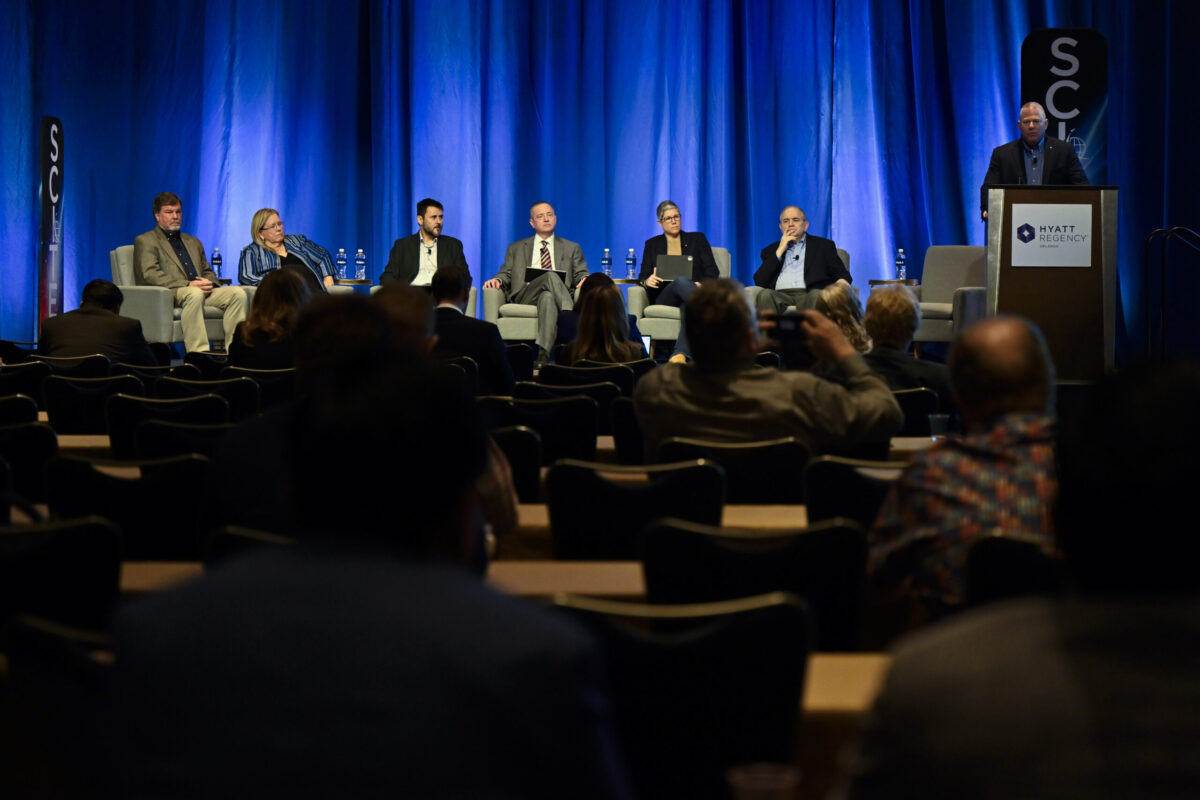
Opener image: Multiple sessions on digital materiel management and systems engineering were held at AIAA’s SciTech Forum in January 2025. Credit: AIAA/David Becker