Mixed policy, financial and technical development outcomes for sustainable aviation and space in 2025
 By Cat Hofacker
 By Cat Hofacker
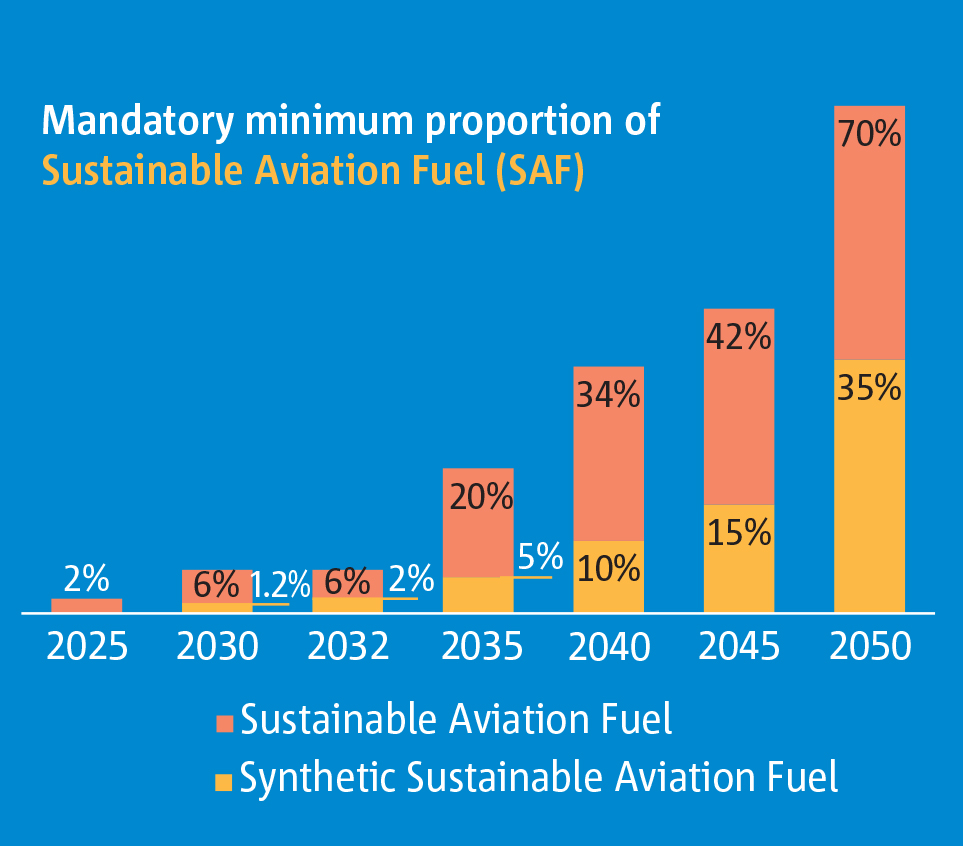
The year saw notable international developments related to the production and utilization of sustainable aviation fuel (SAF). Prominent among these was the January implementation of a mandate by the European Union and the U.K. requiring that SAF comprises 2% of aviation fuel use across these regions. Per the mandate, operators are subject to financial penalties if the blending minimum is not met. Concurrently, in U.S. policy, President Donald Trump’s signature tax and spending bill, enacted in July, revised Section 45Z Credits for SAF production in the U.S. after 2025. Relevant modifications include a reduction in the per-gallon credit afforded to SAF production, as well as a removal of indirect land use change considerations in calculating emission impacts. It also required U.S.-supplied feedstocks for SAF to be eligible for credit. A report released by the International Air Transport Association (IATA) in June suggested that by the end of 2025, there would be enough SAF production to cover 0.7% of airline fuel demand.
Another IATA report, released in September, projected that the amount of SAF will not be sufficient to meet global aviation needs by 2050. The authors concluded that the limited growth of production is not prohibited by feedstock availability in the form of sustainable biomass, but instead due to the lack of prioritization of biomass access for the aviation community, as well as the limited progress in advancing SAF production technologies. They further indicated that growth in power-to-liquid SAF, or e-SAF, will be a pivotal component to future aviation decarbonization strategies into the mid-century timeframe. Consistent with this need, United Airlines Ventures announced a strategic investment in Twelve, an e-SAF producer, in May.
Hydrogen aviation programs similarly experienced advancements and setbacks. In February, Airbus announced a delay in the targeted entry into service for its narrowbody hydrogen airliner, citing technical and regulatory challenges with the concept, as well as a lack of adequate hydrogen supply infrastructure for the initial 2035 target. However, Airbus remained committed to overcoming these challenges and signed agreements with MTU Aero Engines in June and Conflux Technology in September to advance fuel cell power systems and additively manufactured heat exchanger technologies, respectively.
Joby Aviation also continued to push hydrogen aircraft technologies forward, reportedly completing a nearly nine-hour flight with a hydrogen-electric demonstrator in June. In August, ZeroAvia announced the receipt of a P-1 Special Conditions Issue Paper concerning certification of its 600-kW electric propulsion system, marking a key milestone in establishing the requirements for certification of these technologies.
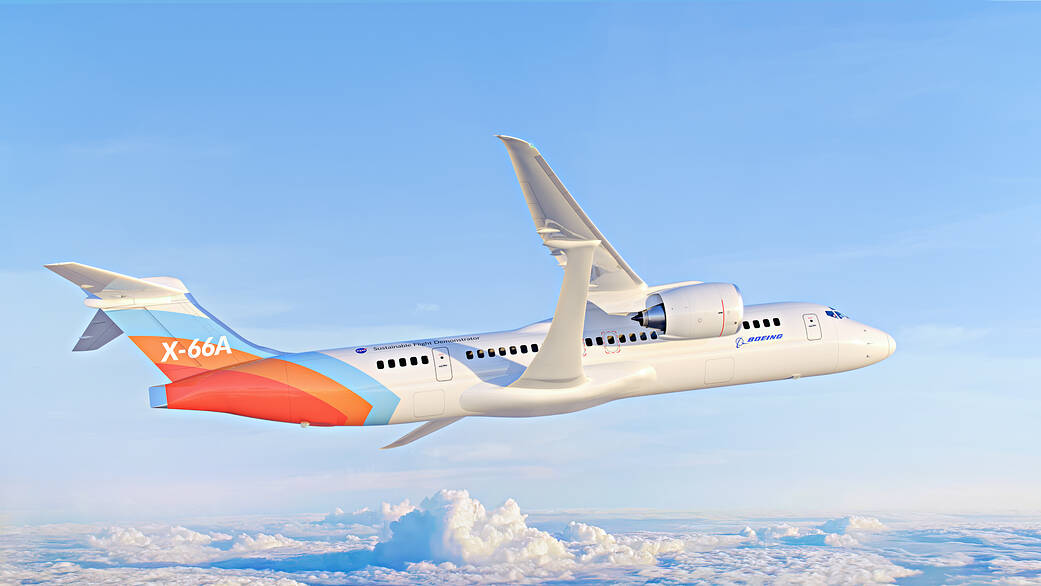
Regarding developments in sustainable airframe technologies, NASA and Boeing announced in April they had decided to pause development of the X-66A aircraft for the Sustainable Flight Demonstrator project, redirecting efforts to ground testing and research on applicable vehicle system technologies. In April, California startup JetZero announced further investment from United Airlines Ventures into its blended-wing-body demonstrator, and in June announced Greensboro, North Carolina, as the location for its first manufacturing facility.
Developments in space sustainability began with the January publication of the Zero Debris Technical Booklet by the European Space Agency, which further articulates the technical developments necessary to meet the targets set by ESA’s Zero Debris Charter. Concurrently, in August, Trump signed Executive Order 14335, “Enabling Competition in the Commercial Space Industry,” to reduce environmental regulations associated with commercial space launch activities, with an intent to reduce the cost and increase the frequency of launches.
Opener image: In April 2025, NASA and Boeing mutually agreed to pause development of the X-66A Sustainable Flight Demonstrator aircraft, shown here in an illustration. Credit: NASA