Entering the commercial era of low-gravity science and technology research
 By Cat Hofacker
 By Cat Hofacker
As 2025 drew to a close, the microgravity research community prepared for the future low-Earth orbit (LEO) ecosystem. NASA’s LEO Microgravity Strategy, released in December 2024, presented the path for developing scientific and commercial activities in LEO after the retirement of the International Space Station in 2030. With 13 goals and 44 objectives, the document underscored the need for sustained human presence in LEO and outlined a shift toward commercially owned and operated space stations. These capabilities will become a vital testbed for upcoming NASA exploration efforts.
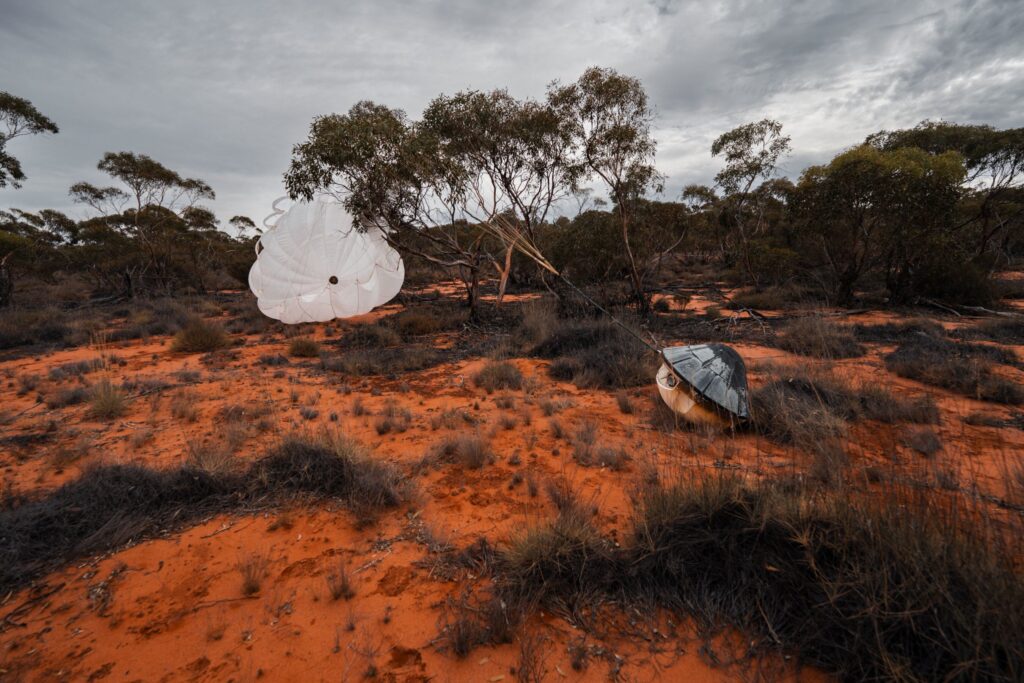
In February, Vast of California finalized the primary structure qualification proof test of Haven-1, its planned LEO space station, followed in November by the deployment of Haven Demo, a technology demonstration satellite in support of Haven-1. Also in February, Varda Space Industries completed the first commercial space reentry, landing its W-2 capsule in Australia. The capsule carried a spectrometer built by the U.S. Air Force Research Laboratory, internal research in pharmaceutical processing, and a heat shield developed in collaboration with NASA’s Ames Research Center in California. The reentry of Varda’s W-3 capsule followed in May. In September, Axiom Space of Texas launched the Axiom Global University Alliance program to promote access to research in microgravity as the community navigates the transition to a commercial space ecosystem.
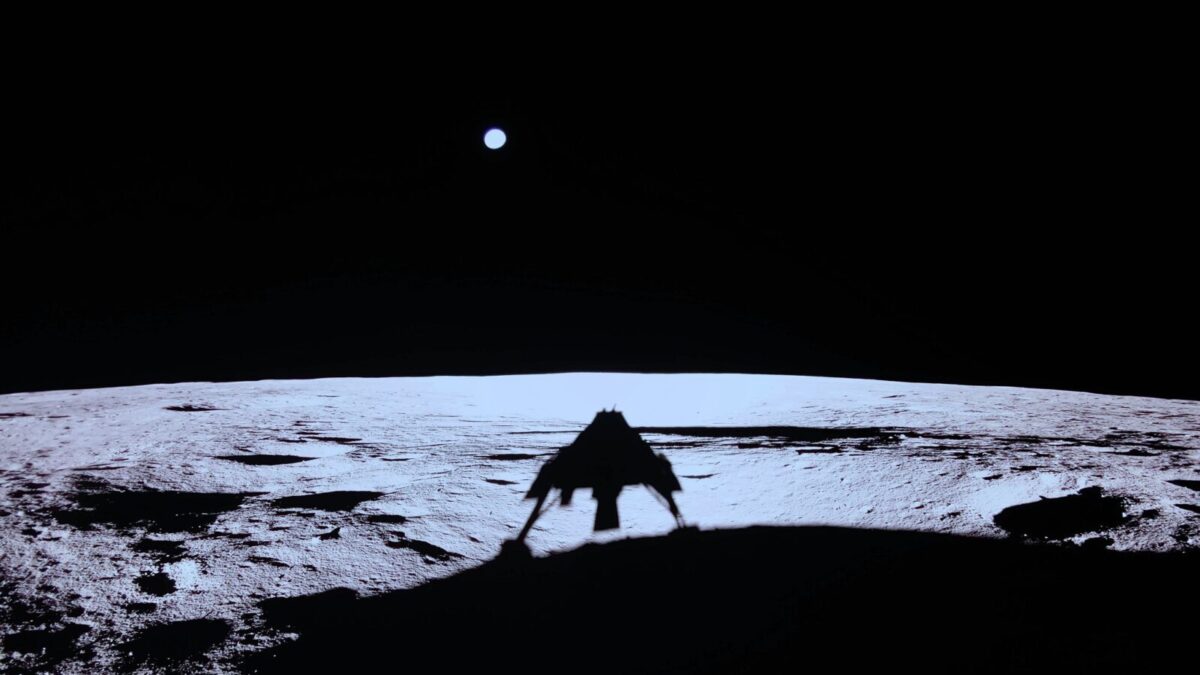
In March, Firefly Aerospace’s Blue Ghost lander touched down on the lunar surface, the third spacecraft to do so under NASA’s Commercial Lunar Payload Services program but the first to remain upright. The mission delivered 10 scientific and technological lunar surface experiments. Among them was the first lunar demonstration of an electrodynamic dust shield, a technology developed at NASA’s Kennedy Space Center in Florida for contactless lift and removal of lunar dust from sensitive surfaces using electrodynamic force fields.
On Earth, the NASA Flight Opportunities Program sponsored 17 payloads that were launched in February in a simulated lunar gravity flight of Blue Origin’s New Shepard suborbital rocket. The program also sponsored this new vehicle capability through development funding as part of its strategic investment in the U.S. spaceflight industry. Over two minutes, researchers tested a variety of lunar surface technologies, addressing critical shortfalls for the Artemis program, planetary exploration, and commercial space missions.
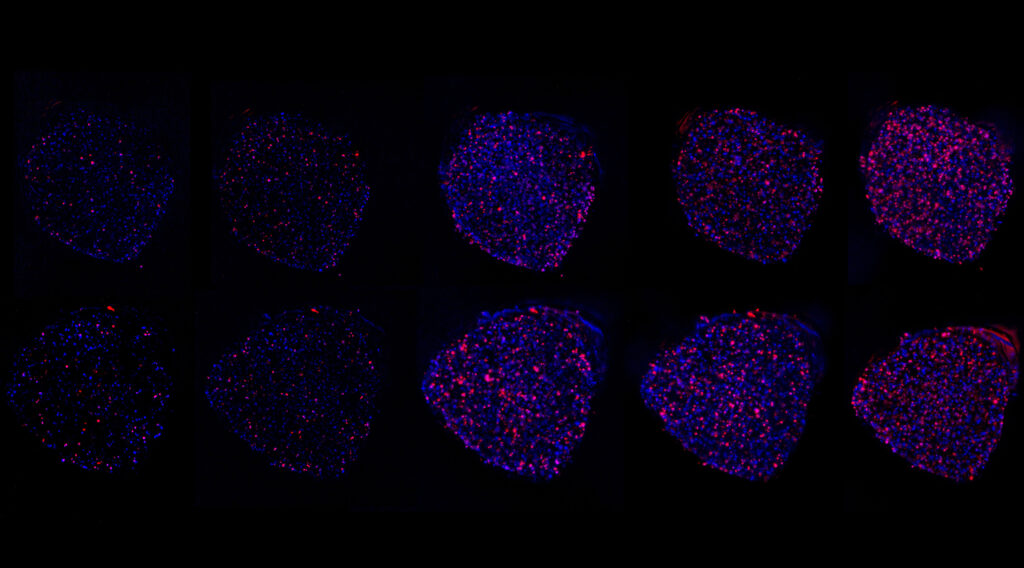
The ISS National Laboratory (ISSNL) celebrated its 25-year anniversary in 2025, continuing its scientific mission by hosting payloads for fundamental science, technology development, in-space manufacturing, and STEM education. In July, Encapsulate of Connecticut tested a tumor-on-a-chip system on a Space Tango emulator. The experiment, funded by the 2019 Technology in Space Prize, tested different cancer-treatment drugs on miniature tumors in microgravity to accurately mimic their development in the human body, providing a pathway for precision diagnostics and personalized care on Earth.
Researchers at NASA’s Glenn Research Center in Ohio completed during the first half of the year a series of 5.2-second lunar-gravity material flammability tests using the centrifuge bus at Glenn’s drop shaft. The experiment aimed to establish the lunar-gravity flammability limit for several fabrics of interest to the Artemis moon program. In May, Zero-G Corp. completed its largest-ever parabolic research campaign with 11 research flights, including two full lunar gravity tests. The flights carried 87 advanced payloads and over 280 researchers. In August, researchers at Georgia Tech and the ZARM Institute in Bremen, Germany, unveiled two new magnetohydrodynamic bubble management methods for microgravity water splitting devices, paving the way for more reliable oxygen and hydrogen production in space.
Contributor: Kenneth Lui
Opener image: The shadow of the Blue Ghost lander on the lunar surface. Credit: Firefly Aerospace