Aircraft industry innovation remains robust
 By Cat Hofacker
 By Cat Hofacker
2025 saw progress in advancing the state-of-the-art in airplane development along several fronts.
In May, Bombardier conducted the inaugural flight of a production Global 8000. Designed to travel 8,000 nautical miles at a normal cruise speed of Mach 0.85, the aircraft stands out as having an ultrahigh cruise Mach of 0.92. On the smaller end of general aviation, the Cirrus SR Series G7+ made its first flight. This model employs the Safe Return Emergency Autoland system that a passenger or pilot can activate to autonomously fly the airplane to a landing. A month later, the Sonex Highwing made its first flight. As the name suggests, this is Sonex first high-wing design, offering dual occupant aerobatics and the Sonex traditionally sporty performance.
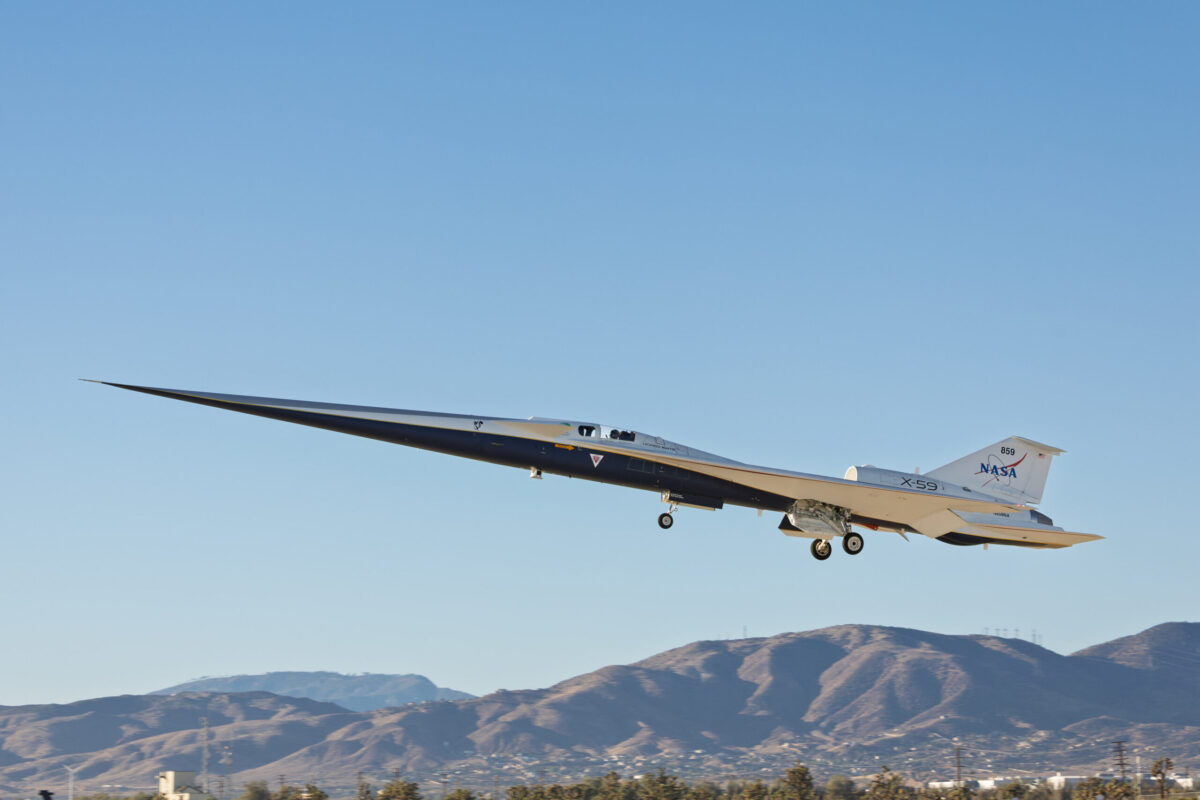
In the realm of more specialized, high-speed aircraft, Boom Supersonic in January achieved the first supersonic flight of its XB-1 demonstrator, hitting Mach 1.1. The tri-jet aircraft flew supersonically again in February, then was retired. In May, Hermeus conducted the first flight of its uncrewed Quarterhorse Mk 1. The supersonic research aircraft flew from Edwards Air Force Base in California. NASA and prime contractor Lockheed Martin completed ground tests of the X-59 demonstrator, leading to its first flight in October. The 1 hour, 7 minute flight from Palmdale, California, over to nearby Edwards Air Force Base included some basic handling tests at relatively low to moderate speeds. Envelope expansion leading to supersonic flight is planned to occur in the coming months.
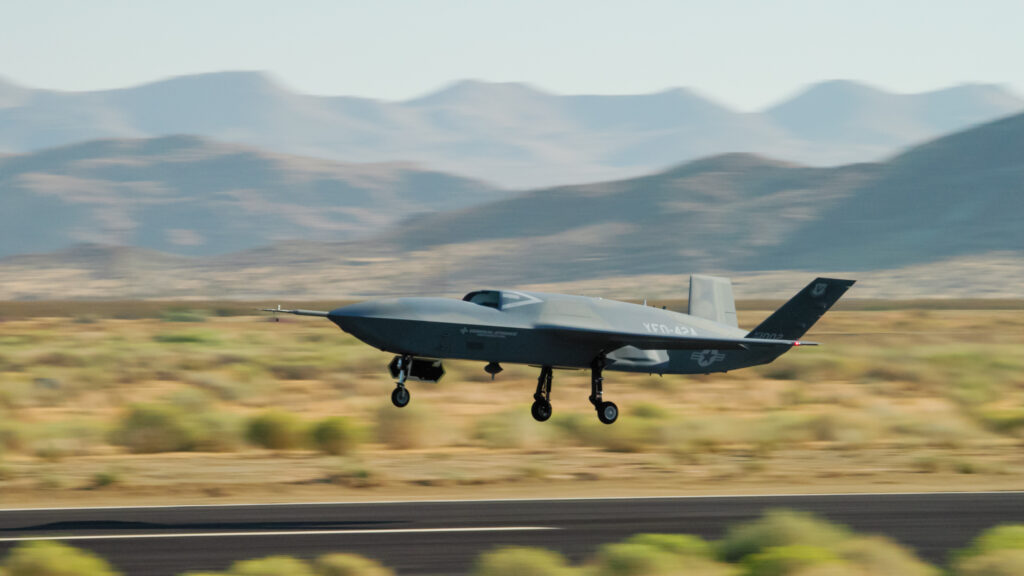
On the military side, General Atomics flew the uncrewed YFQ-42A in August, the first prototype flight under the U.S. Air Force’s Collaborative Combat Aircraft program. The other competitor, Anduril, conducted the first flight of its YFQ-44A Anduril in October in Victorville, California. The Collaborative Combat Aircraft “loyal wingman” endeavor is intended to complement human-piloted fighters, such as the F-35. And in March, the Air Force announced that it had awarded to Boeing the F-47 contract, to produce a sixth generation fighter. Although many specific details were withheld regarding particulars around the design, the F-47 is slated to eventually replace the F-22 Raptor.
The eVTOL (electric vertical takeoff and landing) sector continued to be particularly dynamic, with new players entering and some fading, and a variety of first flights. These included Vertical Aerospace, which in January completed piloted hover tests with its second VX4 prototype, leading to open airspace, wingborne flight, by May. Supernal, Hyundai Motor Group’s advanced air mobility subsidiary, in March conducted the first flight of its A2 demonstrator, but in September announced it would pause development. Archer Aviation continued flight testing with its Midnight aircraft, in July conducting its first flight outside the U.S., in Abu Dhabi. SkyDrive flew its eVTOL SD-05 in April with a public flight at the Osaka World Expo, in Japan. Also in April, Unither Bioelectronics performed the first piloted flight of its hydrogen-electric fuel cell powered helicopter, based on the Robinson R44. It was Canada’s first piloted hydrogen-powered aircraft flight.
Opener image: The X-59 takes off for its inaugural flight at U.S. Air Force Plant 42 in Palmdale, California, before landing near NASA’s Armstrong Flight Research Center in Edwards, California. Credit: Lockheed Martin