
Advancing exploration and autonomy from the moon to the battlefield
 By Cat Hofacker
 By Cat Hofacker
Throughout 2025, breakthroughs in guidance, navigation, and control delivered demonstrations that are shaping the future of exploration, autonomy and spaceflight.
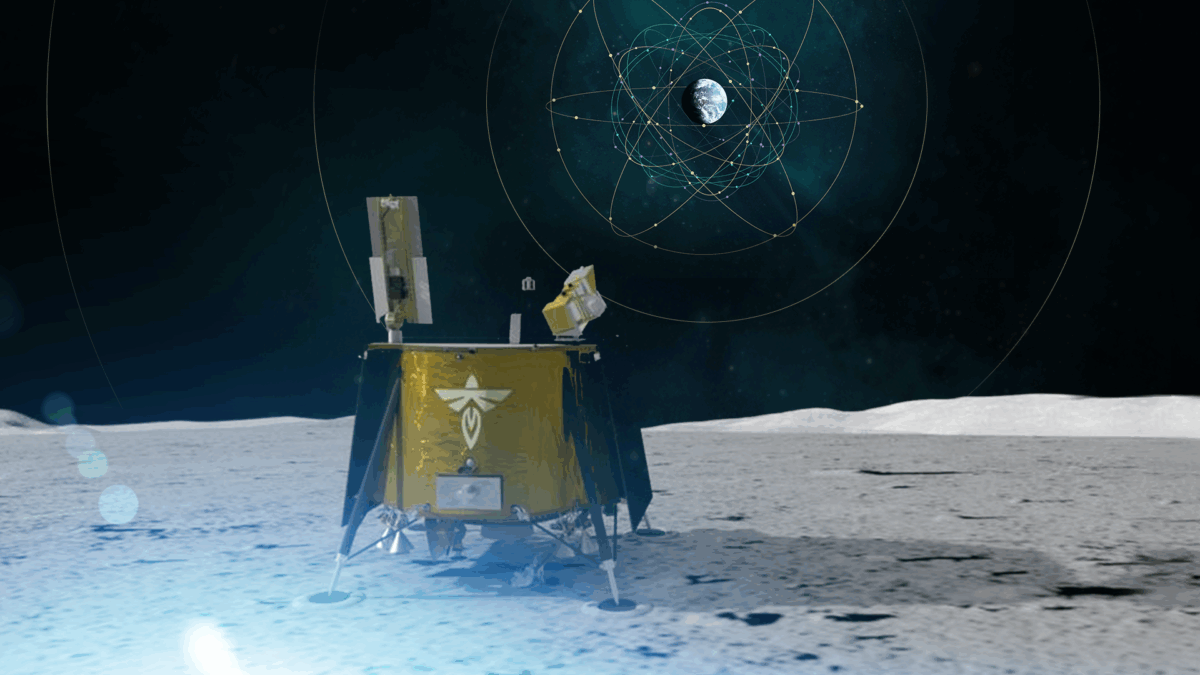
As NASA advances toward crewed missions to the moon and Mars, the success of those efforts will depend on precise navigation and positioning. One key step forward was the Lunar Global Navigation Satellite System (GNSS) Receiver Experiment (LuGRE), a joint venture between NASA and the Italian Space Agency. Launched toward the moon in January, LuGRE set out to test whether GNSS signals could be received on the lunar surface and assessed their viability for future navigation.
In March, Firefly Aerospace’s Blue Ghost 1 lander delivered LuGRE to the lunar surface, where it achieved a historic first by acquiring and tracking Earth-based navigation signals from the lunar surface. As NASA highlighted in a press release, “the LuGRE payload’s success in lunar orbit and on the surface indicates that signals from the GNSS can be received and tracked at the Moon. These results mean NASA’s Artemis missions, or other exploration missions, could benefit from these signals to accurately and autonomously determine their position, velocity, and time. This represents a steppingstone to advanced navigation systems and services for the Moon and Mars.”
Progress in autonomous flight also reached important milestones on Earth. In May, researchers in NASA’s University Leadership Initiative program on Robust and Resilient Autonomy for Advanced Air Mobility capped a two-plus-year effort with a field test at the University of Nevada-Reno. Led by the University of Illinois Urbana-Champaign’s Aviate Center, with several partner universities, the demonstration showcased autonomy across multiple platforms and environments. The team executed real-time trajectory replanning after obstacle detection and executed an autonomous emergency landing, both important steps toward creating the robust and resilient systems needed for the next generation of air mobility.
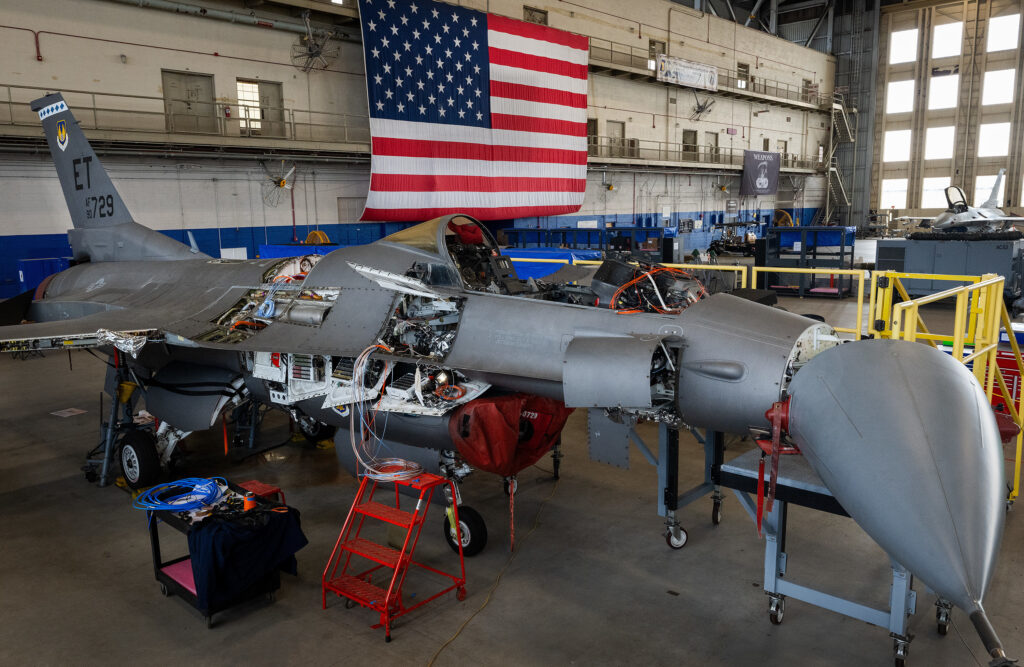
Military aviation also saw GNC and autonomy milestones. In April, the final F-16 Fighting Falcon was delivered to Eglin Air Force Base in Florida to join the U.S. Air Force’s Viper Experimentation and Next-gen Operations Model (VENOM) program, marking the sixth aircraft delivered since 2024 for modification into an autonomous testbed. VENOM is designed to accelerate autonomy testing on crewed and uncrewed combat aircraft, advancing the service’s broader vision for Collaborative Combat Aircraft. Initial GNC tests will manage aggressive maneuvers and ensure they remain within safe limitations for the onboard test pilot, who will have the ability to manually start and stop the autonomy in flight. Data from VENOM’s flight tests will inform autonomy development with the goal of rapidly fielding these aircraft to operate alongside crewed platforms.
In August at Eglin, the Osprey MK III uncrewed aircraft completed its first flight test using alternative navigation software developed by a third-party partner. With its smaller size and lower cost, the Osprey MK III provides an appealing testbed for startups and emerging companies pursuing GPS-independent navigation solutions — capabilities the Air Force considers essential for operating in GPS-denied environments, as seen in the Russia-Ukraine war. The test marked a milestone in rapid prototyping and testing of alternative navigation solutions by the Autonomy, Data, and AI Experimentation Proving Ground in partnership with AFWERX.
Throughout 2025, universities, government, and industry advanced the frontiers of GNC and autonomy. Together, these milestones signal a future where spacecraft and aircraft will navigate, decide and operate with greater independence, paving the way for the next era of exploration and aerospace innovation. These advancements serve as a foundation for the increasingly autonomous and resilient systems that will define the future of aerospace.
Contributors: William Fife, Irene M. Gregory
Opener image: An artist’s concept of the Lunar Global Navigation Satellite System Receiver Experiment that in March 2025 landed on the lunar surface aboard the Blue Ghost lander. Credit: NASA/Dave Ryan