With larger air taxi design, Vertical bets on demand for more capacity


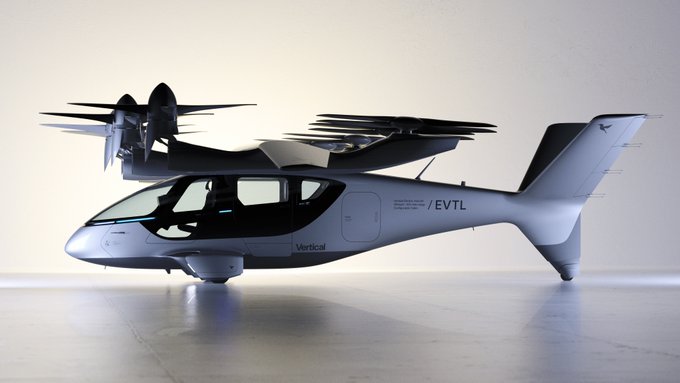
Vertical Aerospace’s new electric air taxi design, Valo, is a response to customers who want a safety standard similar to today’s passenger airliners, plus the option to carry more luggage or passengers, according to Michael Cervenka, the company’s chief commercial and technology officer.
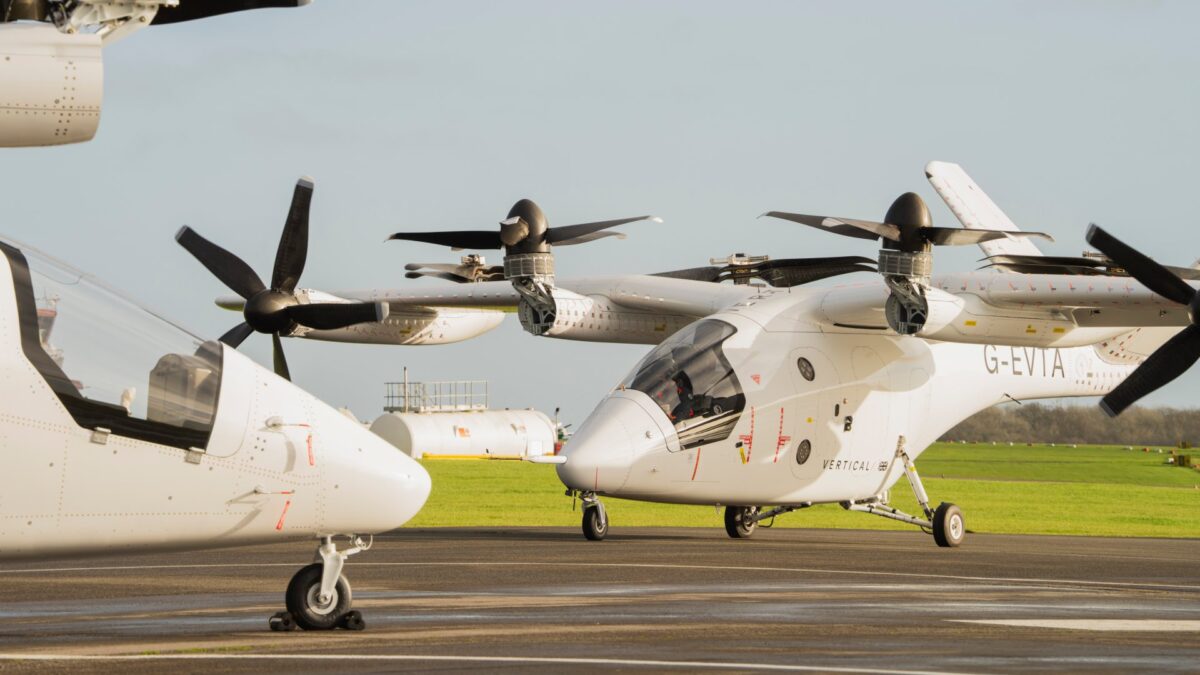
Valo’s design attempts to address those goals by optimizing the four-seat VX4 prototypes Vertical has been testing, Cervenka said. Changes in the Valo design include a shorter fuselage, repositioned landing gear and four front propellers that each have four blades, instead of five, “for better aerodynamics and lower drag,” he said.
Also, the rear propellers were elevated slightly to eliminate noise caused by the interaction of the front and rear propellers.
“I wouldn’t even say it’s a redesign. It’s a lot of optimization,” Cervenka said.
Tests with two VX4 prototypes will continue in 2026, he said, with the company expecting to demonstrate a full transition from vertical to forward flight in the early part of the year. Valo could be ready to enter commercial service in 2028, if the company’s timeline holds. Vertical plans to first debut a four-seat version of the aircraft, but Cervenka said the cabin can be extended to accommodate six.
Valo is planned to carry up to 550 kilograms, compared to the 450-kg capacity of the four-passenger designs in the works by competitors. The new design would allow two rows of passengers seated three abreast, or two wide luxury seats with a console in the middle.
Carrying that weight could be difficult on a battery, Cervenka acknowledged in an interview.
“We’re going to be laser focused on weight, because our customers want to carry weight,” he said.
A full-scale mockup displayed at a London soiree in December displayed the Valo “premium experience,” he said. That includes some extras — consoles, plush upholstery and interior finishes — but those wouldn’t necessarily add much weight, he added.
“They’re going to have to look good. That doesn’t mean they have to be super heavy,” Cervenka said. “We’re talking about proper, crashworthy, lightweight helicopter seats that we’ve covered with some nice materials.”
Vertical has pledged that Valo will be able to meet the safety standard for commercial transport aircraft, which is a failure rate of one catastrophic event every billion flight hours. That’s also the standard the European Union Aviation Safety Agency has put in place for vertical takeoff and landing aircraft. In the U.S., however, FAA regulations for some general aviation aircraft, including rotorcraft, set the slightly less stringent standard of one in 100 million flight hours.
Such standards are proven through mathematical analysis, simulations and real-world flight tests.
As air taxis become more common, Cervenka said it will be critical to meet the EASA-level standard. “This is not about aircraft carrying hundreds of passengers. It’s about very large numbers of aircraft flying over cities where we must do everything possible to minimize the risk of an accident,” he said.