Electra files to certify its hybrid-electric plane under FAA Part 23


Manassas, Virginia-based Electra announced Wednesday it has submitted an application with FAA to certify its hybrid-electric, nine-seat EL9 for commercial and military use under Part 23, the certification regulation for conventional airplanes with 19 or fewer passengers.
That category was specifically chosen, Electra CEO Marc Allen told me in an interview, because Part 23 is a known, established pathway. It’s a distinct strategy from many of the other companies developing electric aircraft, he noted, which aim to certify their design through the new powered-lift class that FAA is still defining.
Electra doesn’t have “the complication others face of going through a still untested certification pathway,” Allen said. “This [Part 23] is a certification pathway that’s well understood, and we have a team that’s gone through that pathway dozens and dozens of times.”
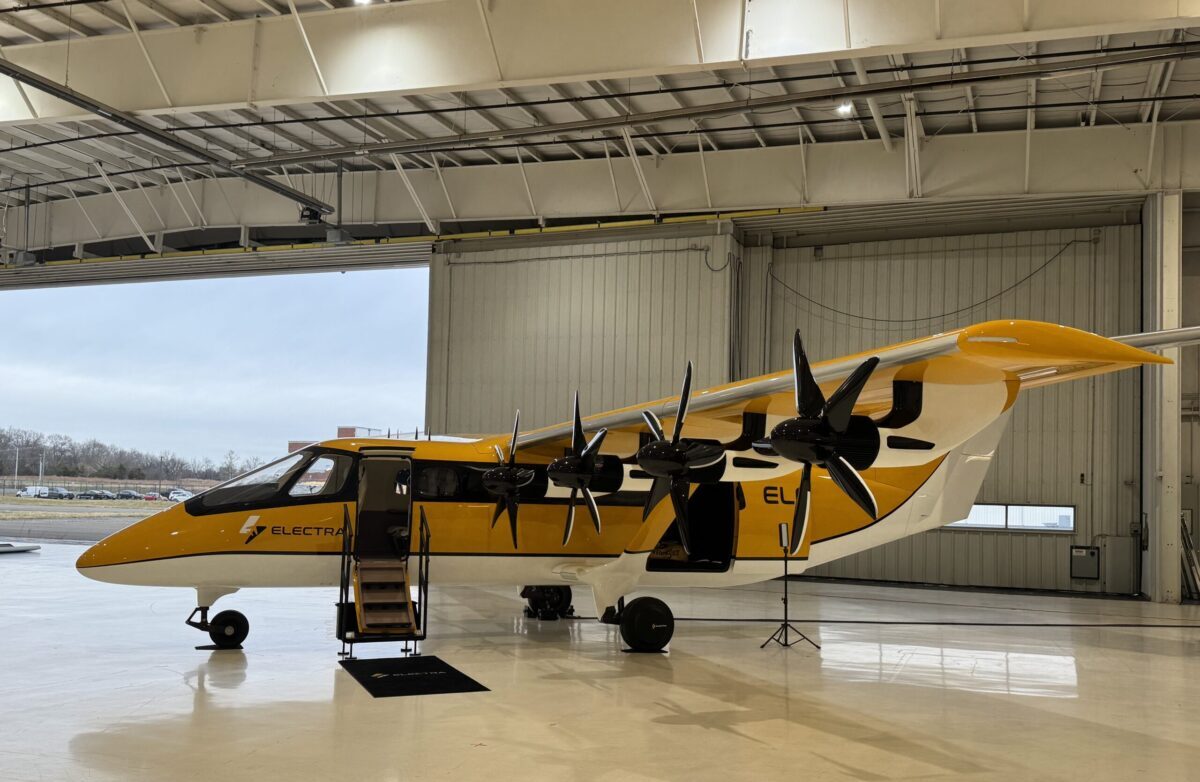
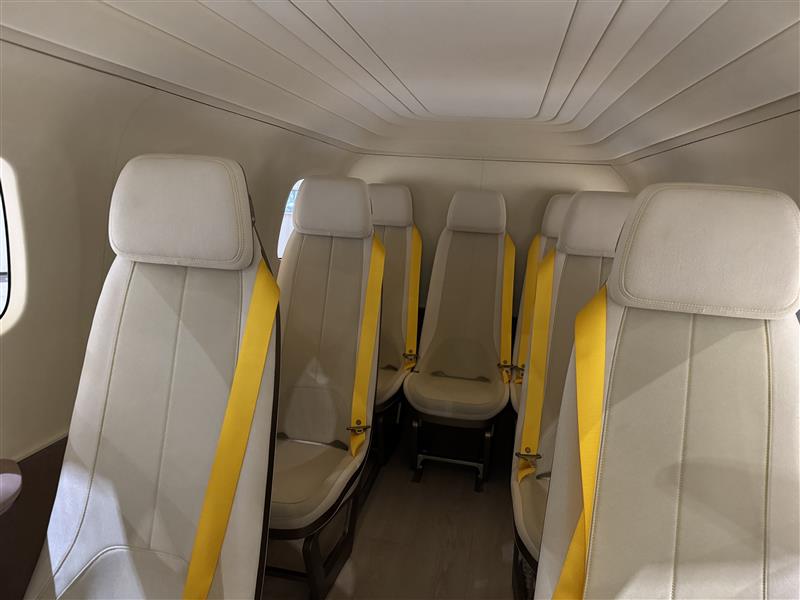
The company now has a full-size EL9 mockup in its hangar at Manassas Regional Airport, which shows what the aircraft will look like, how seating will be arranged and how the large cargo door behind the passengers will open.
I saw @ElectraAero‘s full sized mockup of their planned EL9 hybrid electric STOL plane yesterday just as the company announces it has filed for FAA certification. Stay tuned for my story on it. #FAA #electrification pic.twitter.com/c4QlDAyOxM
— Paul Brinkmann (@PaulBrinkmann) December 10, 2025
To support EL9 development, Allen said Electra has doubled its physical plant footprint at Manassas, adding a second hangar where the first EL9 is now being built. Plans call for beginning flight tests with that aircraft by 2027. After those flights, he said, Electra will build three EL9 prototypes for FAA pilots to fly in pursuit of credit toward a type certificate.
As for future growth plans, Allen said Electra is in the midst of vetting a new manufacturing location to mass-produce the EL9s. He expects to announce that location in the “middle of next year.”
While many companies are developing aircraft that would take off and land vertically, the EL9 would take off and land conventionally via a runway. Electra designed the aircraft for “ultra short” takeoffs and landings — 45 meters or less — made possibly by the blown-lift aerodynamic effect, derived from eight propellers mounted along and below the wing that create additional lift.
This ability to land in a small field or parking lot, or even on some helicopter landing areas, will open up a new era of “direct aviation,” Allen said, meaning an EL9 will be able to land closer to, or directly at, a passenger’s destination.
Still, Electra will have to prove some unique aspects of the EL9, including demonstrating that the eight propellers can survive bird strikes in the configuration, or that the hybrid turbogenerator works to charge the batteries in flight or send current directly to motors when needed. For that, Allen said the company is relying heavily on the aspects of Part 23 that were revised in 2017, which removed prescriptive design requirements and replaced them with performance-based airworthiness metrics.
“That rewrite of Part 23 is going to significantly facilitate our pathway through certification, just as the FAA intended,” he said.
Like many of its competitors, Electra is also aiming to sell EL9s for defense applications. The company on Dec. 3 announced it had established a defense division, stating in a news release that the EL9 can “alleviate demand on larger airlift assets like the C-17 and C-130” because of its ability to access remote locations that may not have a long runway, and its payload capacity to carry 450 kilograms over 1,800 kilometers (1,000 pounds over 1,000 nautical miles).
Allen said the U.S. military is also interested in using EL9 as a field generator, because it can generate 600 kilowatts in remote areas, particularly the Pacific region’s islands, to charge electronics such as drones.
“On the defense side, we will sell to multiple different services” in the defense department, Allen said. “It’s like a Swiss Army Knife. Some people will buy it for access. Some people will buy it for noise and quiet. Some people, for payload and range, just to compete head to head with other nine seaters” because it will be lower cost than competitors, he said.