Wisk starts to flight test ‘supervised autonomy’ with Gen 6 prototype


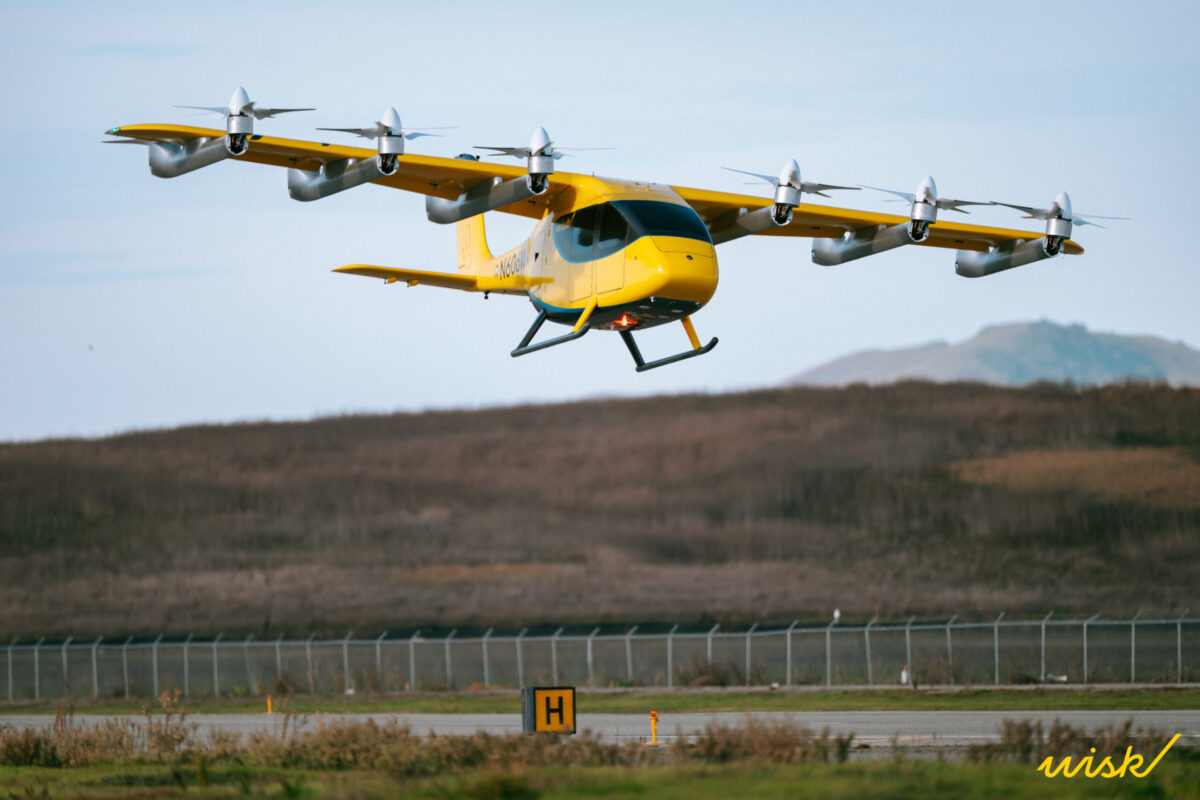
The person at the controls during Wisk’s inaugural test flight of its Gen 6 prototype didn’t have a joystick, or pedals, or any such typical hardware.
Also, they weren’t in the aircraft. Instead — as Wisk has been planning for years — there was a supervisor watching display monitors at Hollister Municipal Airport in California. Wisk is unique among U.S. air taxi developers in that it has never intended to have a pilot on board its four-passenger electric aircraft, for which it hopes to secure FAA type certification by 2030.
I asked Wisk’s Guillaume Beauchamp, who is overseeing development of Gen 6, about the Dec. 16 flight and the company’s pursuit of autonomous technology. Here is our conversation, lightly condensed and edited.
A: In our case, we’re proving that we can go and test the right things. It’s about learning about the aircraft so far. You need to prove that you can get the right type of test points and test data. So we’re doing both of these prior to eventually having a conforming aircraft to pursue FAA credit toward a type certificate.
An aircraft at this stage is going to be heavily instrumented to collect data. Our first aircraft are not meant to ever carry people because of the instrumentation package they have. There’s no interior in that sense.
A: The supervisor of the vehicle has a mouse. Really, you don’t have pedals, you don’t have a stick. You don’t have any of that in our control station.
A: We have predetermined contingency management modes or behaviors. For example, to land as soon as possible or land immediately. There’s also a termination system that could “kill” the aircraft and make it crash if ever really something bad was to happen.
A: Unfortunately, just like any other aerospace programs, along the way you may discover “unknown unknowns” — a few of these things that ended up delaying the program a bit but also allowed us to gain more maturity in the areas that weren’t delayed. One day, we may give out more details, but at the moment that’s all we are saying.
A: We will have a video released soon, but it shows the aircraft taking off, rising vertically and holding, then drifting a bit due to some wind but tracking back to its position. It performed exactly as expected. The next step will be more about specific activities to work out our control laws so that we can start expanding the envelope — go faster, go higher. We plan to perform a transition from vertical flight to horizontal in about six months.
A: The FAA came out Dec. 9 to inspect the aircraft, and they provided us a permit to fly under the experimental category with no people on board. There is obviously certifying the vehicle, but you also need to think about certifying the operation and then flying into the airspace. We’re very involved with FAA on supervised autonomy, and we don’t need any new regulations for the aircraft as an example, but we do need something new for the operation, or the airspace integration, and we can share more about that later.