NASA cuts short second flight of X-59 experimental plane


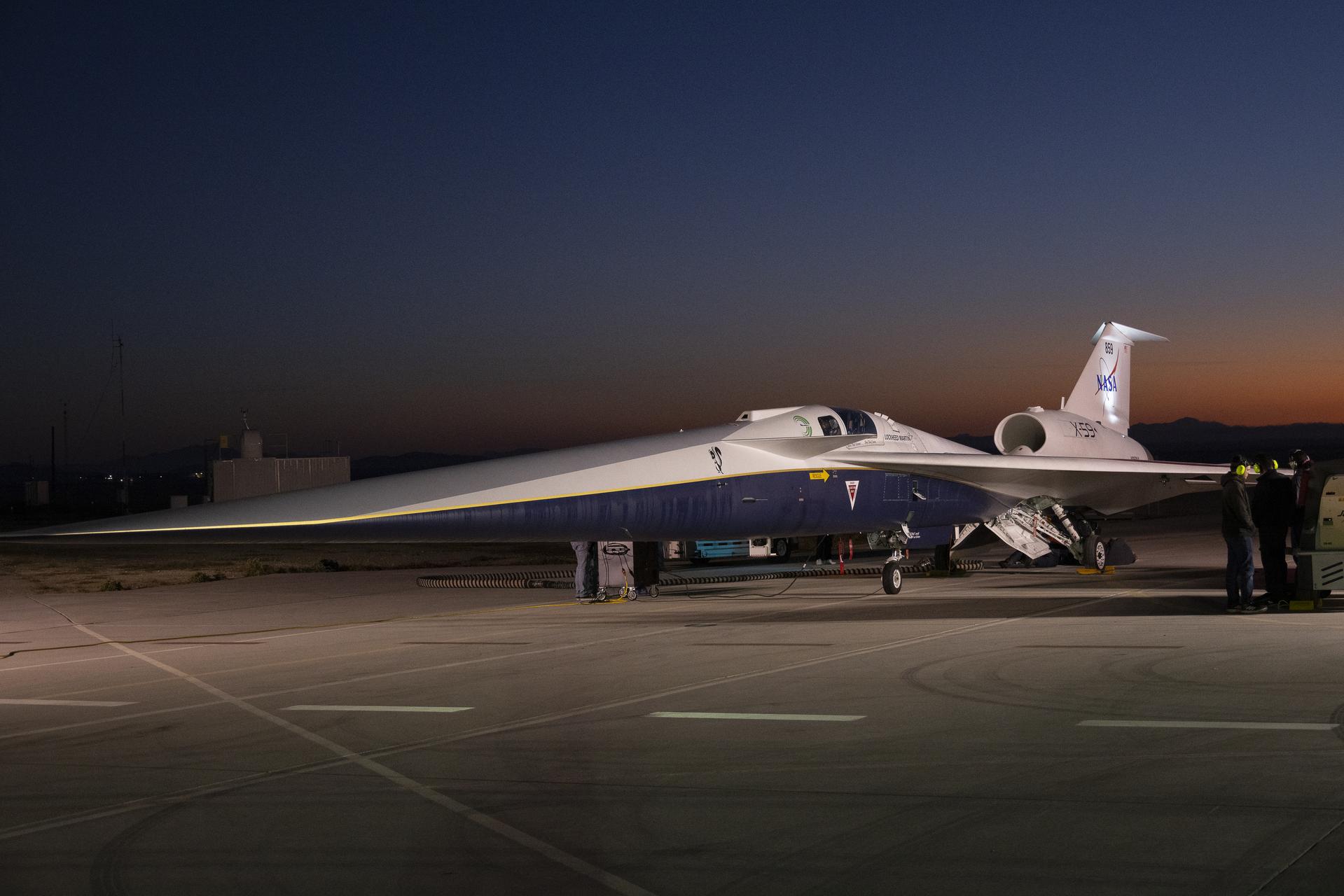
NASA is investigating the root cause of a warning light that popped up minutes into the second flight of its X-59 research plane, prompting the pilot to make an early landing.
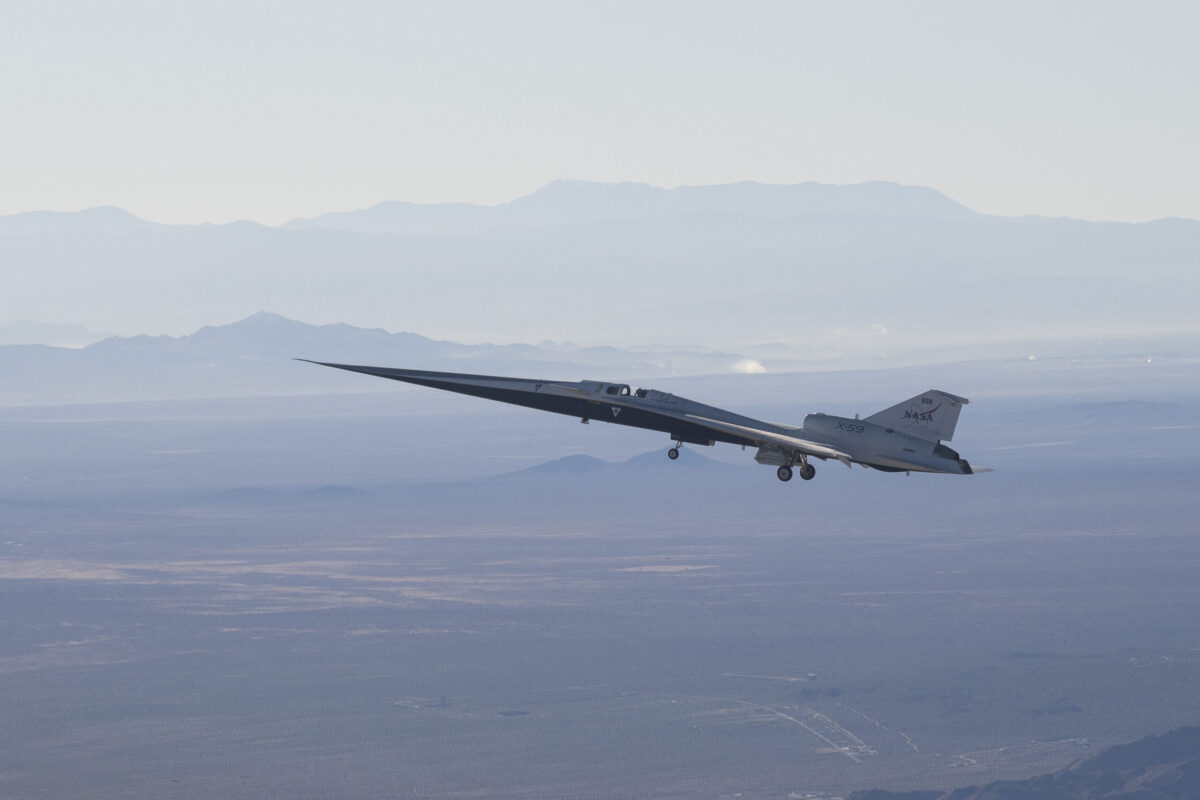
After taking off from NASA’s Armstrong Research Center in California, the demonstrator was to fly subsonically for roughly an hour over the Mojave Desert to check out aircraft handling and systems, prior to its first supersonic flight later this year. Pilot Jim “Clue” Less was to take the needle-nosed jet up to about 415 kilometers per hour and 20,000 feet.
Instead, a “warning light” appeared in the cockpit several minutes into the flight, said Cathy Bahm, project manager for NASA’s Low Boom Flight Demonstrator, during a post-flight press conference. X-59 landed nine minutes after takeoff and reached around the same speed and altitude as the first flight in October: 370 kph at 12,000 feet.
“I certainly hoped to have more to talk about than nine minutes of flight. But the plane performed great,” Less told reporters. “I had not intended to have to land quite as urgently for my first landing, but the plane performed beautifully.”
The NASA officials on the call declined to identify which of the aircraft’s systems triggered the warning light, noting that further investigation is required to determine whether this was an instrumentation failure, for instance.
“The aircraft is currently back in the hangar, and the team is already starting to evaluate the issue and determine the path forward,” Bahm said.
She added that those findings will dictate what type of testing is needed before X-59 can fly again and how long it might be until the next flight.
Such occurrences are not unusual during experimental flights, said Bob Pearce, associate administrator for NASA’s Aeronautics Research Mission Directorate.
“We are at the very beginning of flight testing. We expect that we’re going to find things that we’re going to have to work through. As far as X-planes go, it’s not unusual, and we’ll keep moving X-59 forward deliberately and safely,” he said.
Today’s flight was to be first of 10 planned “envelope expansion” flights, in which NASA pilots will gradually take X-59 “higher and faster,” as the agency put it in a press release. Only then will X-59 fly beyond Mach 1.
Based on NASA’s calculations and modeling from wind tunnel tests, X-59 should produce sonic “thumps” instead of ear-splitting booms when it exceeds the sound barrier. These are to be captured and recorded by a network of microphones and other sensors installed in a remote part of the Mojave Desert. NASA has estimated the thumps will be comparable to the sound of a car door closing 6 meters (20 feet) away.
Once this recording technique is perfected in Mojave, NASA plans to fly X-59 over a handful of communities across the U.S. — which are yet to be selected — to gauge the public’s reactions to the aircraft’s noise and vibrations.
NASA plans to share X-59’s flight data with the International Civil Aviation Organization and FAA so those entities can craft updated noise regulations that once again permit overland commercial supersonic flight. FAA banned such operations over the continental U.S. in 1973 due to public complaints about sonic booms generated by military aircraft.