

For most of the Space Age, geopolitics played out in Earth orbit. That era is ending. The next strategic arena is cislunar space which is the vast volume from geosynchronous orbit out to, around, and including the moon. Cislunar space is sought after because it provides the ability to host the infrastructure that makes deep-space operations routine: communications relays, navigation beacons, refueling depots, scientific observatories, and eventually sustained lunar surface activity, including commercial operations.
The question for policymakers isn’t only who gets there first. It’s who shapes the norms of behavior for operating safely, transparently, and sustainably in cislunar space.
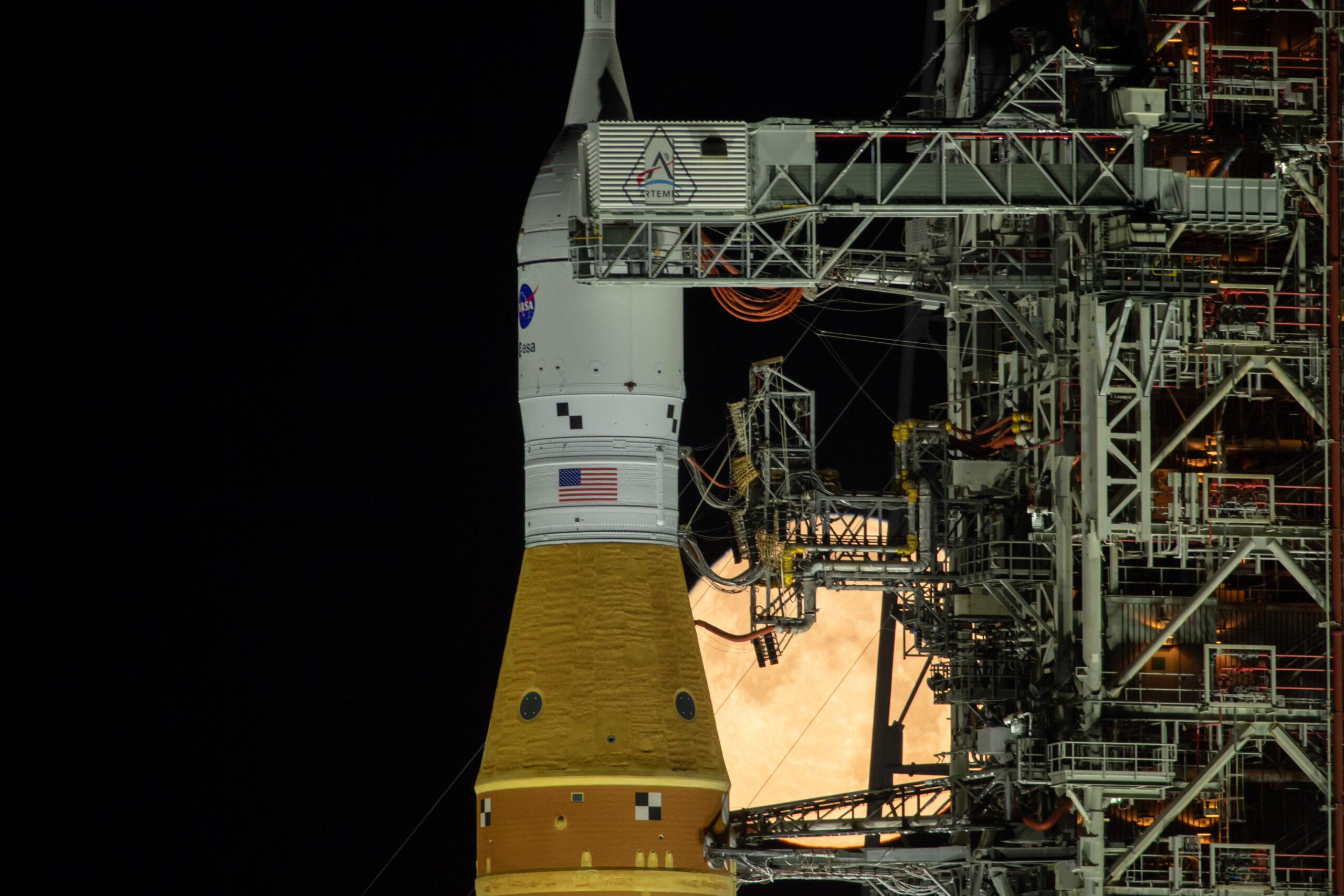
The United States has a rare advantage in that it can be the world leader and geopolitical influencer in cislunar space through soft power by setting widely adopted norms, technical standards, and cooperative frameworks that make partners want to build with the United States rather than compete with it. NASA’s Artemis Program and the Artemis Accords are a critical enabler of that strategy.[1]
But soft power values, culture and policies, and the necessary leadership are not self-sustaining. They all require continuous action. Congress can either treat cislunar governance as a “nice-to-have,” or recognize it as a strategic enabler of U.S. leadership via economic, scientific, and geopolitical avenues. If the United States is not the leader now, we risk ceding that leadership for decades to come.
Why Cislunar Is the Next Geopolitical High Ground
Three factors make cislunar space different from prior competition:
- Scarcity of “best” real estate without formal property rights.
Locations near the lunar south pole are finite and strategically valuable because permanently shadowed regions are expected to contain water ice and other volatiles, while nearby terrain may support more consistent power and thermal management such as resources and conditions that could enable sustained operations. The Outer Space Treaty forbids national appropriation, but it does require “due regard” and anticipates consultation to avoid harmful interference – exactly the legal terrain where norms and precedents that will matter.[2] - Infrastructure creates path dependence.
The first widely adopted cislunar communications and navigation standards will shape compatibility, market access, and partner interoperability for years much like GPS and the internet did here on Earth. The United States has already begun standard-setting through NASA’s LunaNet interoperability work.[3] To be discussed infra. - A multipolar moon is arriving faster than most Hill calendars.
China has publicly stated its intent to achieve a crewed lunar landing by 2030, and Beijing and Moscow have promoted an International Lunar Research Station concept as an alternative cooperation avenue.[4]
The U.S. position cannot be limited by engineering, development, and launch cadence. Rather, it must include a governance cadence.
Artemis as a Soft-Power Engine
Artemis is often described as NASA’s return-to-the-moon program. Strategically, it is more than that, it is a coalition-building platform.
The Artemis Accords translate foundational space law into practical norms for modern lunar activity such as transparency, interoperability, emergency assistance, registration, deconfliction, and open scientific data release. This matters because cislunar activity will be crowded by governments and commercial entities operating on different timelines and with different risk tolerances.
There are two aspects of the Accords that are especially “soft-power” rich:
- Transparency and data-sharing as default settings.
When participants commit to open scientific release and coordination, the world sees what responsible lunar presence looks like, and smaller nations can justify partnership domestically because the benefits (data, standards, access) are tangible. - Interoperability as strategic inclusion.
Interoperability is not rhetoric; it’s interfaces, protocols, and spectrum coordination. LunaNet is a concrete example of how U.S.-led exploration can become a shared architecture others can plug into.
This is how soft power becomes durable when partners invest in the same ecosystem because it lowers their cost, raises safety, and increases scientific return.
The Real Gap is that Cislunar Governance Is Underbuilt
The United States has acknowledged the cislunar challenge directly. The White House’s National Cislunar Science and Technology Strategy call for expanding international cooperation, extending space situational awareness into cislunar space, and implementing scalable, interoperable communications and navigation services.[5]
That strategy is directionally right. The gap is execution capacity and sustained congressional attention, especially in four areas.
The first is cislunar domain awareness: the ability to detect, track, and characterize objects beyond geosynchronous orbit in a way that supports safety and transparency. The second is interoperable communications and navigation: standards and services that enable sustained operations rather than one-off missions. The third is predictable deconfliction: operational mechanisms for avoiding harmful interference without implying territorial claims. The fourth is sustainability: environmental and operational practices that reduce risk and preserve the lunar environment for long-term use.
The international system already has some of the required building blocks. The UN Committee on the Peaceful Uses of Outer Space adopted voluntary guidelines for the long-term sustainability of outer space activities such as useful baseline principles, but not designed for the scale, distance, and operational complexity that sustained cislunar activity will introduce.[6]
Congress can turn these building blocks into an American advantage.
Six Concrete Moves that Congress Can Do Now
1) Treat Artemis as strategic infrastructure, not just a NASA program
If the United States wants governance and behaviors that reflect transparency and sustainability, it must not only be first but also remain a consistent presence. Congressional predictability with multiyear stability and realistic scheduling assumptions do matter as much as topline dollars.
It’s actionable because Artemis is explicitly designed for a long-term presence with international and commercial partners.
The practical step is for Congress to encourage appropriations and authorizations that reduce year-to-year volatility for the core exploration architecture and partner-dependent elements.
2) Fund cislunar domain awareness as a safety-and-norms priority
In LEO, tracking is foundational. In cislunar space, it is still an emerging capability and an avoidable operational vulnerability.
The national cislunar strategy calls for extending U.S. space situational awareness into cislunar space.
The practical step for Congress is to direct and resource federal efforts (and public-private partnerships) that enable tracking, conjunction assessment, and information-sharing beyond GEO, so transparency is backed by capability and collaboration.
3) Make LunaNet a “public good” standard the world can adopt
LunaNet’s interoperability specifications already define standards for interoperable communications and PNT services for lunar surface and cislunar users.
The practical step for Congress is to encourage interagency alignment and sustained funding, so LunaNet-like standards mature, remain open, and are adopted by allies and commercial providers, turning interoperability into the default.
4) Lead on lunar spectrum before rules calcify internationally
Cislunar communications will depend on spectrum decisions made through international processes. Congress needs to treat that as a strategic infrastructure and not technical trivia.
The practical step for Congress is to support U.S. technical preparation and diplomatic engagement for upcoming international spectrum work on lunar communications, so U.S. operators and partners can operate safely and predictably.
5) Clarify “deconfliction without appropriation”
The Outer Space Treaty’s “due regard” and consultation expectations are the legal foundation for preventing harmful interference. The Artemis Accords further emphasize coordination and responsible behavior in practice.
The practical step for Congress is to use hearings and legislative language to encourage clear operational norms that advance notice, consultation triggers, shared safety practices, and transparent coordination mechanisms without implying sovereignty.
6) Update the space resources conversation which is grounded in law and allies
U.S. law recognizes rights for U.S. citizens to possess and sell resources they obtain, while also stating the U.S. does not assert sovereignty over celestial bodies.
The practical step for Congress is to work with allies to harmonize approaches to resource utilization, scientific protection, and commercial certainty so rules-based lunar activity is attractive to partners and investors.
Soft Power Is a Capability
Cislunar space will be governed either by transparent, interoperable, sustainability-oriented norms that many nations choose to join, or by fragmented, opaque practices that increase friction, miscalculation risk, and coercive leverage.
NASA’s Artemis Program is the U.S. vehicle for coalition leadership. The Artemis Accords are the norms vehicle. LunaNet and cislunar domain awareness are the enabling infrastructure. The UN sustainability guidelines are a global baseline that the United States can build on.
Congress can solve the problem by treating cislunar governance as national competitiveness by funding the capabilities that make transparency real, invest in standards that make interoperability normal, and shape the legal-operational framework that keeps competition peaceful, enables collaboration, all while maintaining U.S. leadership.
That is how the U.S. wins the race to the moon – without having to run it alone.
References
- NASA, The Artemis Accords (PDF). https://www.nasa.gov/wp-content/uploads/2022/11/Artemis-Accords-signed-13Oct2020.pdf
- United Nations Office for Outer Space Affairs, Treaty on Principles Governing the Activities of States in the Exploration and Use of Outer Space (Outer Space Treaty), 1967. https://www.unoosa.org/oosa/en/ourwork/spacelaw/treaties/outerspacetreaty.html
- NASA, LunaNet Interoperability Specification (v5). https://www.nasa.gov/wp-content/uploads/2025/02/lunanet-interoperability-specification-v5-baseline.pdf
- Reuters, “China lunar chief accuses US of interfering in joint space programmes with other nations,” April 23, 2025. https://www.reuters.com/business/media-telecom/china-lunar-chief-accuses-us-interfering-joint-space-programmes-2025-04-23/
- The White House, National Cislunar Science & Technology Strategy, November 2022. https://bidenwhitehouse.archives.gov/wp-content/uploads/2022/11/11-2022-NSTC-National-Cislunar-ST-Strategy.pdf
- United Nations Office for Outer Space Affairs, “Long-term Sustainability of Outer Space Activities Guidelines,” 2019. https://www.unoosa.org/oosa/en/informationfor/media/2019-unis-os-518.html