

Defense Startup Debuted World’s First AI-Piloted Fighter Jet Requiring No Runway
When brothers Ryan and Brandon Tseng co-founded Shield AI a decade ago with Andrew Reiter, they did so with a fire in their belly and a clear mission: to protect service members and civilians with intelligent systems, buoyed by the belief that “air power is the only way to deter war.”
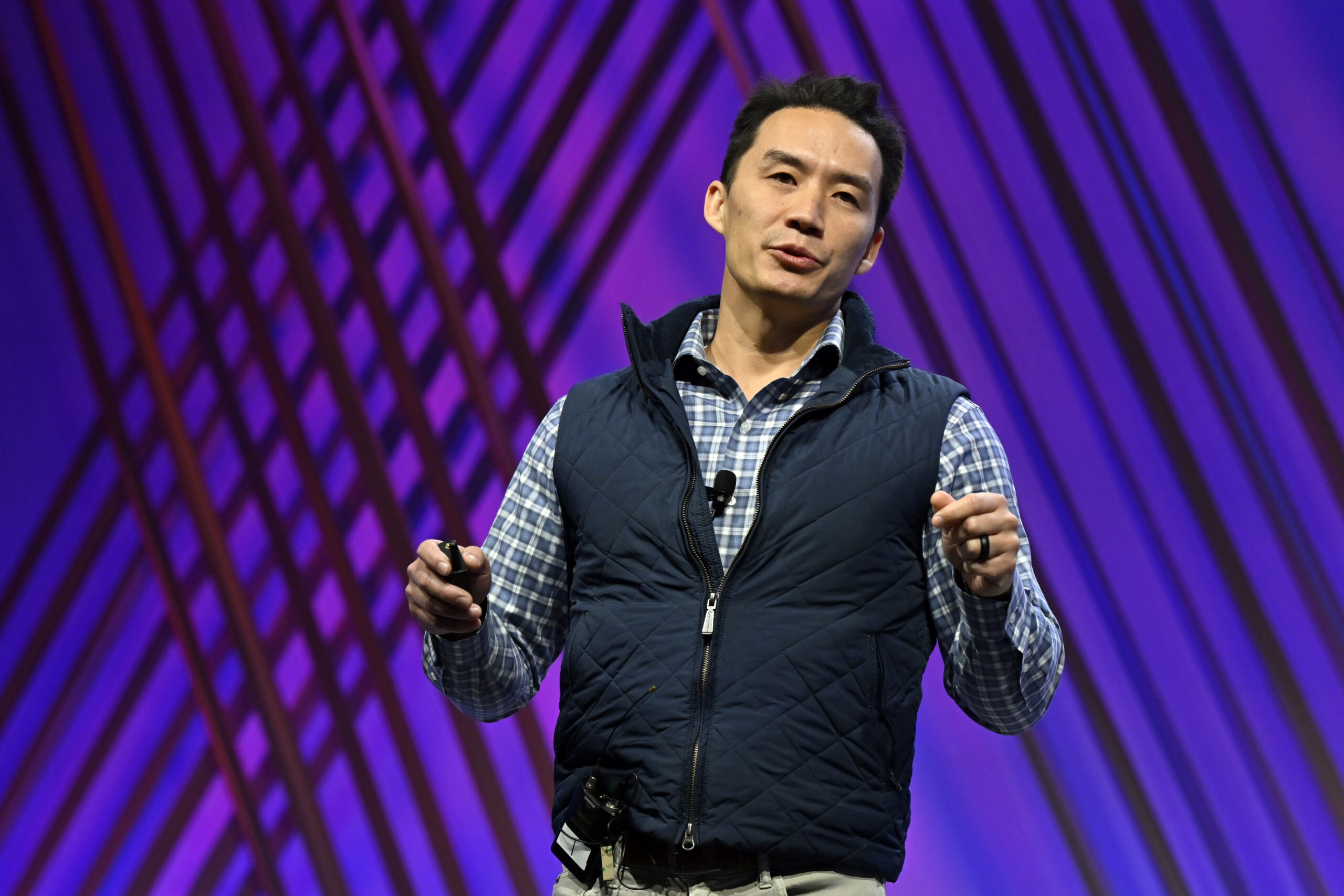
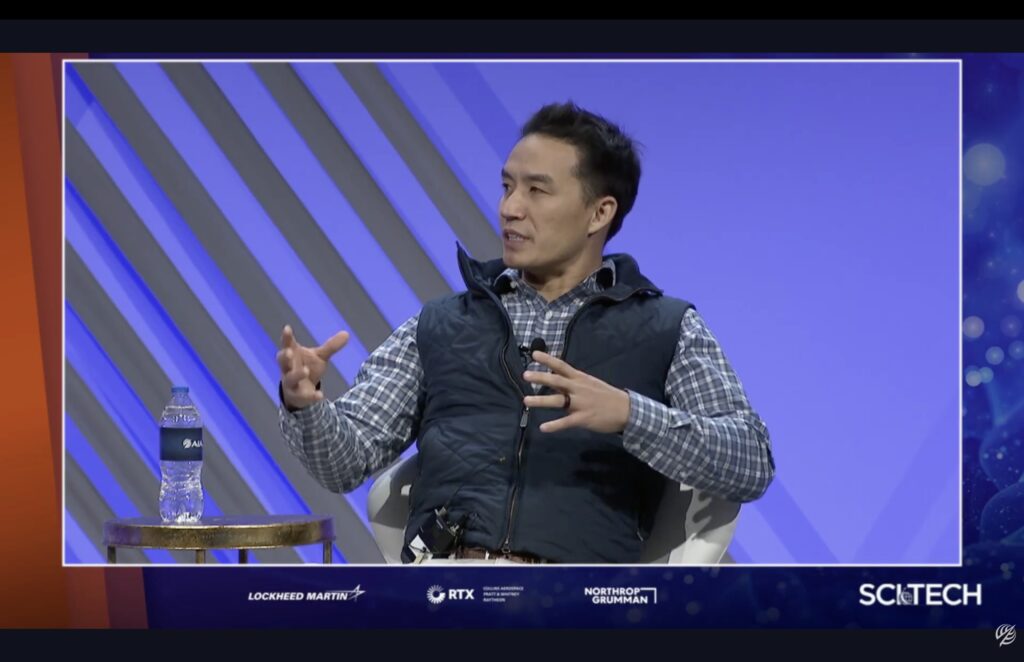
“When we started the company in 2015, people often asked me, ‘What would success be?’ And the first thing I said was mission and impact: We would measure our success based on lives saved, people brought home safely to their families, war averted,” recalled Ryan, speaking on 15 January at AIAA SciTech Forum in Orlando.
Today, the $5.6 billion defense tech firm has more than lived up to its founding mission, “with a track record of delivering mission impact and defining the possible,” said Ryan Tseng.
Product “Firsts”
He showcased several product firsts, each built with Shield AI’s autonomous software called Hivemind, which acts as an AI pilot for aircraft.
In 2018, Shield AI introduced Nova, the first quadcopter operated by an AI pilot in combat with the U.S. Special Operations Command. The vehicle was designed to enter buildings ahead of forces to find IEDs and barricaded shooters, a capability that has saved lives, said Tseng.
“I’m tremendously proud of the impact that this product has made,” Tseng added, noting that its design was heavily influenced by his brother’s firsthand experience losing fellow soldiers while serving as a Navy SEAL. Since its introduction, the product “has saved many lives in combat,” he stated, quoting a customer.
In 2020, Shield AI operationalized a tail-sitting aircraft, V-BAT, where the aircraft takes off and lands vertically on its tail before transitioning to horizontal flight. According to Tseng, the unique vertical take-off and landing (VTOL) architecture “brings unmatched payload mass fraction and endurance.” Mass fraction refers to the proportion of different VTOL components to the total weight, which is crucial for performance.
Since 2024, the aircraft has operated in Ukraine as the only effective long-range reconnaissance and targeting asset in the war, Tseng noted.
In 2023, Shield AI became the first company to fly a combat aircraft with an AI pilot, pitting it against an F-16 operated by a U.S. Air Force weapon school pilot in a first-of-its-kind dogfight.
First AI-Piloted VTOL Fighter Jet
The firm’s latest milestone came in October 2025, with the launch of X-BAT, the world’s first AI-piloted VTOL fighter jet. Describing the 23,000-pound VTOL, tail-sitting strike fighter as “super badass,” Tseng said, “We think X-BAT is going to transform military aviation forever. VTOL tactical aircraft are as significant as the advent of stealth.”
He explained the fundamental problem faced by U.S. and other allied forces globally is that adversaries have developed long-range strike weapons “that put every airfield in the world within their weapon engagement zone.”
“Air power is the only way to deter war; it’s the only way to win war. Giving our forces and allies the ability to launch and land from anywhere in the world is fundamentally transformative. It is the only way we will be able to project air power in a world where you are operating or living in your adversary’s engagement zone,” he emphasized.
Values-Defining Lessons
Despite his company’s success, Tseng shared the significant challenges he and his co-founders faced from the start of their venture. First, as a Silicon Valley defense tech startup, they had to overcome skepticism and resistance from Bay Area investors since defense tech was unpopular at the time.
Tseng also admitted to nearly running out of money on multiple occasions – moments that cast doubt on his company’s survival.
When an investor demanded that Shield AI change its focus away from protecting service members and civilians, Tseng and his partners passed on the funding, choosing instead to remain true to their mission.
Another pivotal moment came as the firm was about to close a key funding round with a final investor. A few days before the transaction was to close, Tseng realized that his projections for the company’s financial performance were not possible to meet. Rather than remaining silent and letting the transaction close, he called the investor. That transparency earned him the investor’s admiration, but not his financial backing.
“I wanted to puke my brains out…because that was four years of crushing effort and so many people and customers putting their faith in us,” he recalled.
Despite the setback, the company persevered and eventually achieved a $5.3 billion valuation. “The lesson was: know your values, know who you are, do the right thing even when it’s the hard thing,” said Tseng, crediting lessons his parents taught him from childhood.
He closed his presentation with three lessons: First, mission matters, as it serves as a source of inspiration and energy “when the going inevitably gets tough.” Second, “know your values and always do the right thing.”Third, “believe in yourself – think big.”
He concluded his talk by challenging AIAA SciTech attendees to “go change the world.”
Reaction: Sharing the Same “Fire in the Belly”
AIAA SciTech attendee Juan Rohrer reacted positively to Tseng’s presentation. “A lot of his message resonated. It was refreshing to see the personal side of [launching a tech startup] and the nitty-gritty of how hard things get if you’re really trying to stand out,” said Rohrer, a configuration designer with Boeing Technology Innovation in Huntington Beach, Calif.
“I really like what he said about having a fire in your belly,” added the 2024 Princeton University mechanical engineering master’s graduate. “In big aero in general, it’s easy to become comfortable and not really have that fire. I’ve been fortunate to work with a passionate group of researchers based in a unique corner of a very big company. We support the whole enterprise and we have that fire.”