Ensuring safety of AI, autonomous flight tech requires cooperation with regulators, panel says


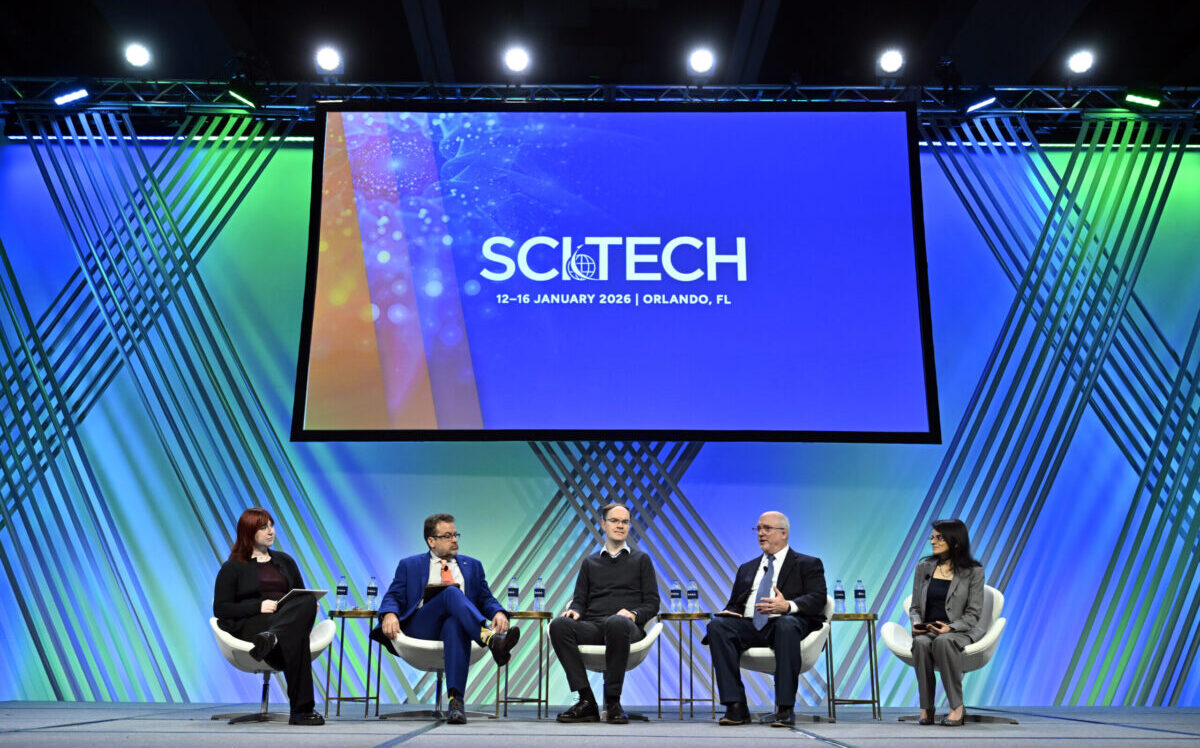
AIAA SCITECH FORUM, ORLANDO, Fla. — The rapid adoption of artificial intelligence and autonomous flight technologies means U.S. government regulators, academia and the aviation industry must work together to verify these emerging technologies meet aviation’s high safety requirements, a panel said here Thursday.
“The biggest challenge is, there are no well-established methodologies to validate artificial intelligence, especially when integrating larger autonomous or semi-autonomous aircraft into the national airspace,” said Mykel Kochenderfer, an associate professor of aeronautics and astronautics at Stanford University.
He noted the six-year time lag between when Stanford established its Institute for Human-Centered Artificial Intelligence in 2019, and when the university last year began offering courses to teach students how to validate AI systems. That’s just one example of how verification methods move more slowly than private sector adoption of new technology, he said.
“Most universities haven’t yet realized the need to educate the next generation on validation methodologies,” Kochenderfer said. “The good news is, we are publishing course materials for free, and Stanford allowed us to release all of the lecture videos for free on YouTube.”
He said researchers and scientists play a vital role in helping regulators determine what emerging technology will be viable — not just on paper, but in the real world. “Regulators don’t necessarily have the deep technical expertise in-house, at first. They rely on federally funded research and development centers” and academic institutions, he added.
Because companies are often leading development, the private sector is best positioned to help characterize the limitations of new technologies, but “of course there are concerns about independence, because you don’t want the engineers who are developing the system to necessarily be responsible for all of the validation,” Kochenderfer said.
It might appear that safety and innovation are at odds, said Wes Ryan, a former FAA and NASA engineer who’s now a Northrop Grumman fellow for airworthiness of autonomy and AI in aeronautics systems. But in his experience, innovation often leads to increased safety.
“Glass displays, GPS navigation, smart autopilots — they all enhance safety, and each one of those required us to kind of find that balance between the right regulatory oversight, the right level of rigor and engineering and the airworthiness processes,” Ryan said.
It’s important that developers find limited safe places to deploy new technology where it is guaranteed to reduce risk, said Natasha Neogi, NASA senior technologist in Assured Intelligent Flight Systems. She pointed to the increased use of drones and other uncrewed autonomous aircraft for firefighting to reduce how often human firefighters must venture into unsafe areas.
This approach allows developers to “get data in risk reduction before wider adoption” of these aircraft into the National Airspace System, she said.
Also key, Neogi added, is that the technology’s possible impact is considered early on in the development process.
Kochenderfer pointed to Stanford’s partnership with the U.S. Air Force Test Pilot School, announced Tuesday, in which researchers evaluated how an AI “copilot” could support human pilots during the most demanding moments of flight.
“We wanted to see what would it take to build a system that we can actually trust, and that can fill in when there are unanticipated edge cases that are not perfectly caught by checklists and so forth,” Kochenderfer said. “There’s a long way to go, but there’s a lot of potential for future innovations.”