Electric aircraft should replace helicopters for D.C. transport, aircraft developer says


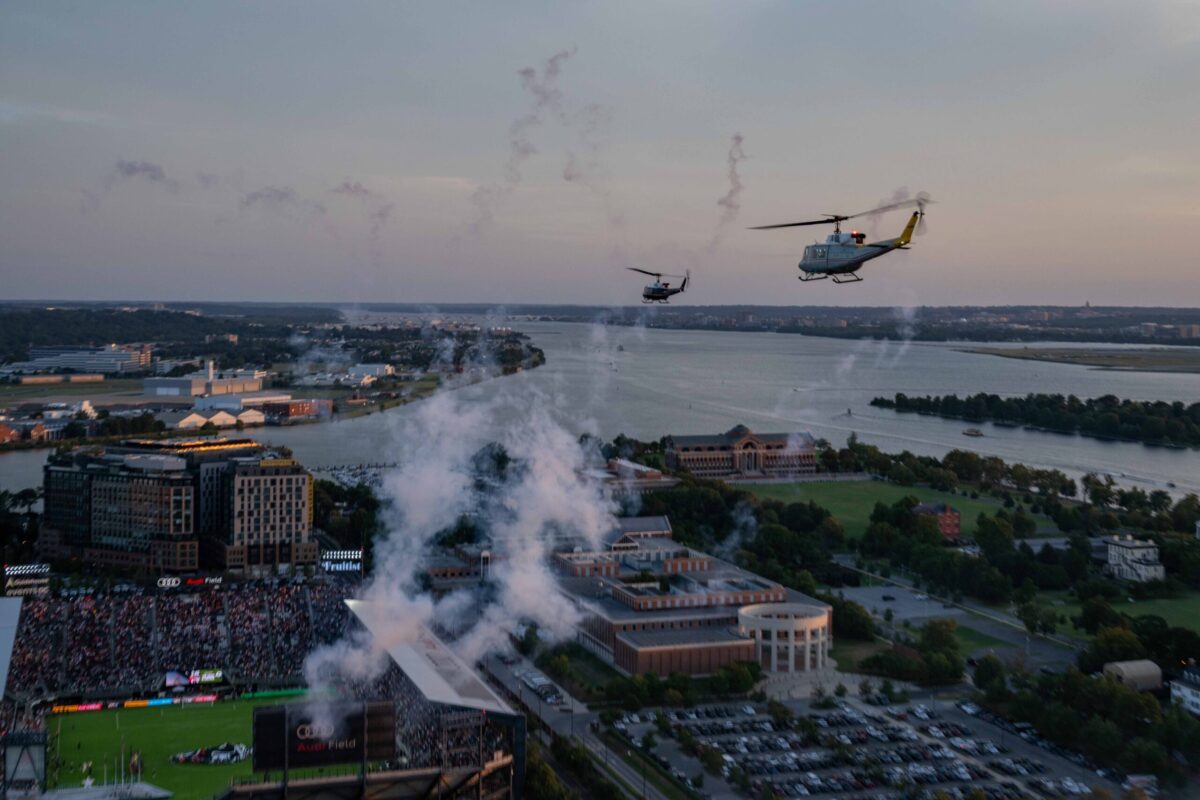
Washington, D.C.’s airspace could be safer and quieter if electric aircraft ferried notable people around the nation’s capital instead of helicopters, the founder of Vermont-based electric air taxi developer BETA Technologies told lawmakers on Wednesday.
“Our generals and our dignitaries here should be carried around in aircraft that are not polluting the noise up and down the Potomac, cost less and are safer. There’s no question that it can,” said Kyle Clark, who also serves as BETA’s CEO, during a hearing before the U.S. House Transportation and Infrastructure Committee.
BETA is testing and flying two versions of its electric ALIA aircraft, one that can take off and land vertically and another that takes off conventionally from a runway. Neither has received FAA type certification, but BETA believes the conventional fixed-wing variant could be certified by 2027. ALIA prototypes are among the electric aircraft that U.S. Air Force pilots and engineers have flown in recent years to assess possible military applications.
D.C.’s airspace is complicated by frequent military and government flights over the city, as well as the presence of Reagan National Airport to the southwest across the Potomac River. Scrutiny of the region’s air safety has increased since the January collision of an American Airlines regional jet and a U.S. Army Black Hawk helicopter that killed 67 people.
During Wednesday’s hearing, Clark said 20% of all flights in the capital region are under 320 kilometers (200 miles), which BETA’s aircraft can complete on a single charge. “That is within striking distance now, and battery energy density and other technologies are increasing the performance of this aircraft on a regular basis,” Clark added.
Democratic Rep. Eleanor Holmes Norton, D.C.’s sole congressional representative, asked what Congress can do “to facilitate the development of low-noise, advanced aviation mobility?”
“Your continued support and alignment with the FAA is most important,” Clark responded. “Our industry, as pointed out previously, is well funded. The technology works. We’re flying all over the world.”
“What we need is the unlock of type certification” by FAA, he added. “When FAA and us agree to a particular set of rules, those rules have to be consistent. Once we spend the millions and millions of dollars we do to prove something is safe, we need the FAA to adjudicate on that efficiently.”