

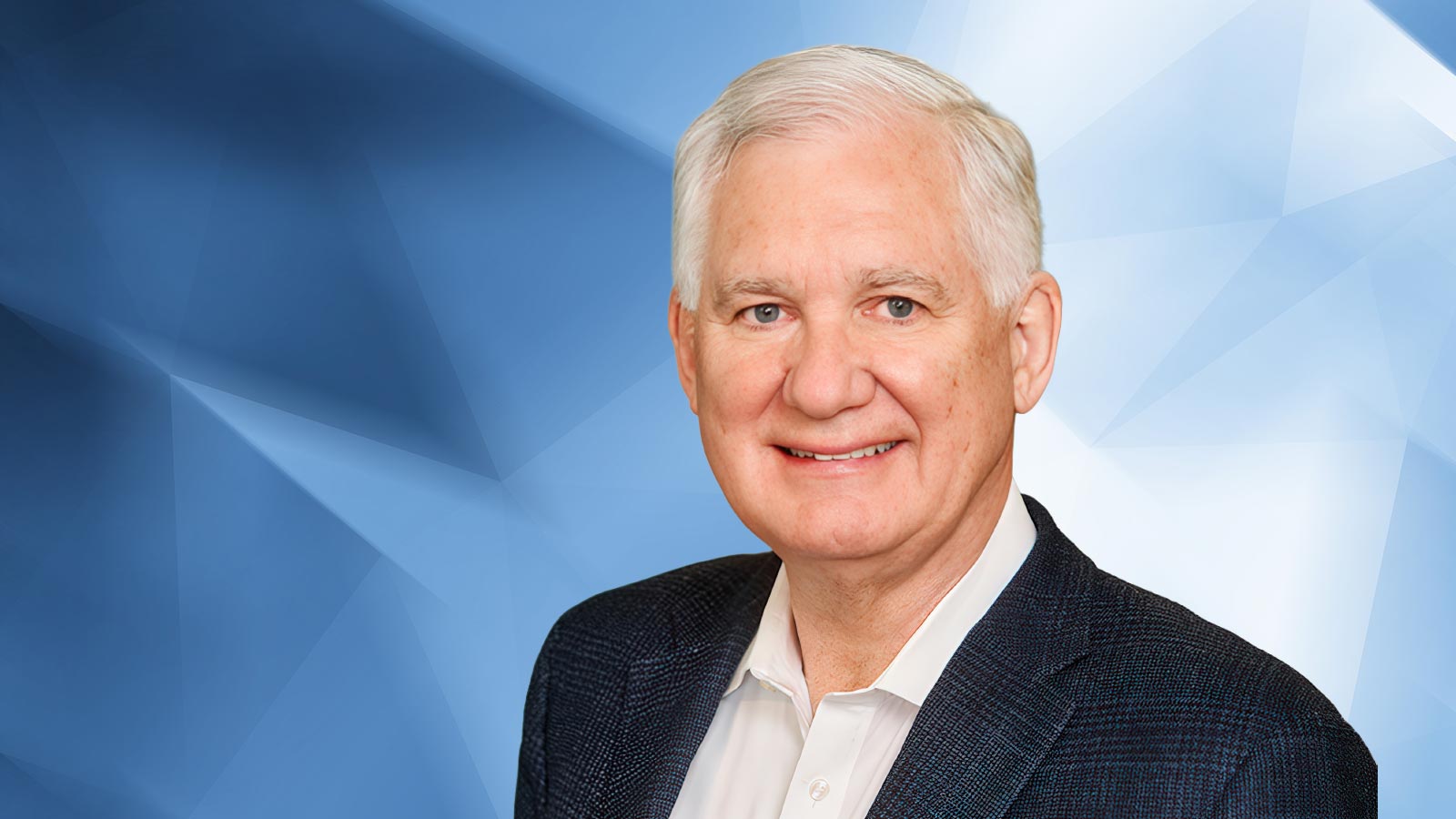
Bill Lynn, former U.S. deputy defense secretary
Bill Lynn has experienced defense modernization both as a Pentagon insider and an industry executive. As deputy defense secretary from 2009 to late 2011, he unveiled the Pentagon’s first cyberspace strategy in response to what he described as “a strategic environment that is unlike anything we could have imagined.” Since leaving DOD, Lynn has returned to the industry side, serving as chief executive of Leonardo DRS, the U.S.-based subsidiary of Italian defense contractor Leonardo. The challenges facing today’s Defense Department are very different, but the organization is once again making a massive technological shift. President Donald Trump has pledged that the Golden Dome missile defense shield will be operational by the end of his term and has requested billions to fund the required technology. At the same time, DOD, like other government agencies, is facing significant workforce reductions.
I sat down with Lynn at Leonardo DRS’ headquarters in Arlington, Virginia, to discuss the challenges ahead and how DOD should proceed.
Q: Let’s start with the changes at DOD we’ve seen in the last six months. What is your sense of how those are going to affect the broader defense industry?
A: You always have a reset with a new administration. I think a lot of what’s going on is that. This administration is dramatic in all things and controversial, so people kind of lose that idea that no, no, with a new administration, whoever it was, people rethink and should. We rethink our strategy, we redo the budget, we try and upgrade the processes. All of that is normal and good, somewhat. For industry, it can be disruptive, but it’s an opportunity as well, and you just have to balance. Most of what’s going on is that. It’s a progression. Programs will continue, and some will stop, and some will get increased, and there will be new ones. That’s all what you’d expect with any new administration.
Q: When you were in the building, the acquisition workforce in particular was an area you were interested in. Are you concerned about how the workforce cuts might impact that?
A: When you disrupt the federal workforce, you worry about losing expertise, and that happened in the ’90s. We lost a lot of contract expertise, a lot of subject matter expertise, as they downsized by several hundred thousand — not just in DOD, but the whole federal workforce.
The Clinton administration in 1993 established the National Partnership for Reinventing Government, which included workforce reductions. According to a program official’s congressional testimony, the effort cut the federal workforce by 426,200 between January 1993 and September 2000. — MC
I don’t think we know yet, but I think that’s something you have to worry about. It’s not that you can’t have a smaller federal workforce. Like anything of that size, you can do it more efficiently, and you can do the same work more efficiently. What you have to worry about is: Does it lower the quality of the work? And that’s, I think, an open question. Over the next year or so, we’ll get a better sense of how they’re doing on that. It’s a worry item, but it’s not a crisis at this point.
Q: In terms of defense contractors, are you seeing any repositioning going on in the wake of this, or is it relatively unchanged?
A: Some of the plates are shifting. The larger primes are having to defend their positions. I think this new administration has some affinity for the newer companies. They’re less interested in somebody coming with a PowerPoint. They want to see a prototype; they want you to move fast.
Q: Previous Pentagons have established entities like the Defense Innovation Unit to assess emerging commercial technology. What do you see as the path forward for those segments?
A: I think it’ll continue. We’re in a world where the Defense Department has to access commercial technology. We rebalanced. It used to be defense was really a net exporter of technology. Think the internet, GPS, that kind of thing. Now, we’re a net importer. The balance has shifted. So now it’s autonomy, artificial intelligence. These are all technologies that really are stronger and originate in the commercial sector.
A lot of the enabling technologies are coming from the commercial sector, and DOD absolutely has to have access to them. I don’t think there’s one path to that access. DIU and the other things they’ve set up — not just in Silicon Valley, but in Austin and Boston — that’s one path. It’s equally important to have the defense industry itself reaching out so when you’re looking at acquisitions, you’re now looking at acquiring artificial intelligence capability, not just defense hardware, satellites or whatever. That’s another path.
Conceivably, you would have commercial entrants into the defense market. You’ve seen less of that. Defense is a difficult market. There’s huge barriers to entry. I think the partnering, though, of commercial technology inside the defense industry, that is a key path for DOD to get the technology it needs.
Q: Let’s shift to Golden Dome. What are you expecting from an industry perspective? How many players do you think the DOD might need?
A: I don’t think you can answer that because there’s so many dimensions to it. You’ve got everything from counterUAS at the lowest level, both mobile and fixed site. You’ve got the intermediate to your THAAD [Terminal High Altitude Area Defense system] and Arrow [missile defense system]. And then you’ve got the intercontinental land-based and over-the-horizon radars. And then you’ve got the space-based transport and tracking capabilities that are going to be needed and are already being acquired. You may go to space-based interceptors. In each of those segments, you’ve got multiple competitors. So saying “How many players are there?” Well, which piece of it are you talking about? There are multiple players, and the larger ones play in multiple segments.
Q: How much of the tech for Golden Dome already exists or is in the works versus brand-new tech that needs to be developed?
A: The administration seems to be leaning a little bit toward existing, in that they’ve talked about having something by the end of the administration. If you’re inventing it today, it’s going to be hard to deploy it in three and a half years. But you don’t have to do it all at once. This is a large architecture. The better way to answer it is, the initial pieces, I think, are going to have to be largely existing technology or derivations of existing technology. And then as you go further, you’ll discover new needs and new technologies to meet those. Space-based interceptors, I think, would be a second phase.
Q: Do you think that it’s technologically feasible for DOD to get where it wants to go with Golden Dome in the time period being discussed?
A: I don’t think there’s an end point with this. It’s going to be sort of a constant upgrade. Yeah, I think they could get some capability, meaningful capability, in three or four years.
Q: What do you think are the challenges or pitfalls they’ll encounter along the way?
A: If you have the priority that they put on early deployment, it’s a little bit “come as you are.” It’s going to be hard to invent new technologies, as I said, in that time frame. But it doesn’t mean you can’t do both. You can deploy what we have to meet the threats that we can see, while developing newer technologies to either address new threats or address the older threats better. We’re in early days on this in the sense that they’re just standing up the organization now, and they’ve set out some general objectives, but I think over the next period of months, you’ll start to see much more of an architecture.
Space Force Gen. Mike Guetlein, the Golden Dome program manager, said in July the architecture is due to the deputy defense secretary in 60 days. — MC
Q: From the industry perspective, what’s the critical information needed to be able to participate?
A: Like any program, you need to know what capabilities do you want. And then we would answer with “This is what we can produce at this cost, on this schedule.” Golden Dome isn’t just one program, it’s multiple programs. In some cases, we have an existing counter-UAS system. You can just buy more of them and deploy them. We’re doing things like putting directed energy on them. You could fund us to go faster and bigger on that. Those are the kinds of questions. We need to know if that’s what you want.
Q: Big picture, what do you think will be the real growth areas — or areas that may not see growth — in this Pentagon?
A: Golden Dome is clearly a very, very large investment, and it wafts over into short-range air defense and counter-UAS on the battlefield as well, as we’ve seen the impact of drones on the battlefield. That’s going to be an area of interest and investment.
Given where we are with shipbuilding and, in particular, the submarine industrial base, I think that’s going to be a major area of investment. The sensing area has gotten somewhat less attention, but if we’re going to increase the capability of our forces on the battlefield, that sensing capability and the ability to pull it all together and have a unified, fused, actionable picture of the battlefield that’s shareable, up and down formations and higher, is going to be a critical investment for the department to make.
Q: Anything you think might get left behind or pushed aside here?
A: It’s harder to do that than people think. If we’re a global superpower, it’s very hard to specialize. You can’t just say, “Oh, well, we’re not going to fight a ground war.” We’ve tried that before a couple of times. It hasn’t gone very well. You can have areas of emphasis and so on. But we do have to have full-spectrum capabilities. And some things are going to get funded bigger and faster than some other things, but to give up broad areas of capabilities is hard.
BILL LYNN’S BIO:
Key positions:
- Since 2012, chairman and CEO of Leonardo DRS.
- 2009-2011, deputy secretary of defense, the No. 2 civilian job at the Pentagon tasked with overseeing day-to-day operations.
- 1997-2001, chief financial officer and under secretary of defense (comptroller).
- 1993-1997, director of program analysis and evaluation at DOD, focused on the Pentagon’s program and budget development.
- 1992-1993, led the Clinton administration defense transition team.
- 1987-1993, counsel to the Senate Armed Services Committee for Sen. Ted Kennedy, D-Mass.
- 1982-1985, executive director of the Defense Organization Project at the Center for Strategic and International Studies, analyzing the Pentagon’s organization and proposing updates.
Notable:
- At DOD, oversaw the creation and 2011 rollout of the Pentagon’s first cyberspace strategy and in 2009, announced plans to hire 20,000 more employees focused on acquisition.
- The Defense Organization Project he led helped prompt the 1986 Goldwater-Nichols Act, which reorganized the U.S. military.
- When working for Kennedy, helped advance legislation including the Military Childcare Act of 1989, which focused on making military child care safer and more affordable, and a 1991 law that overturned a ban on women flying in combat.
Age: 71
Resides: Washington, D.C.
Education: Bachelor’s degree from Dartmouth College (1976), JD from Cornell Law School (1980) and Master of Public Affairs from Princeton University (1982).