

1926
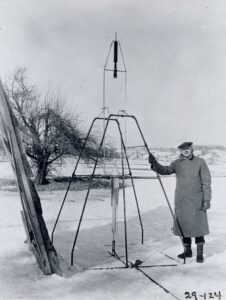
March 16 — Robert H. Goddard launches the world’s first liquid-fueled rocket from Auburn, Massachusetts. The tiny craft — propelled by liquid oxygen and gasoline — flies for 2.5 seconds, climbing to 12.5 meters before it arches and then plunges into the snowy ground 56 m away. Goddard; his wife, Esther; and his two assistants are the only witnesses, and the extremely secretive Goddard did not publicly reveal this achievement until a full decade later. Eugene Emme, NASA Aeronautics and Astronautics, 1915-1960. Michael Neufeld, “Robert Goddard and the First Liquid-Propellant Rocket,” March 16, 2016.
March 19 — The National Aeronautic Association awards S. Albert Reed the 1925 Collier Trophy for his development of the Reed metal propeller, a new design more durable and reliable than wooden propellers. Orville Wright and other members of the award committee attend the award ceremony at Bolling Field in Washington, D.C. U.S. Air Services, April 1926, p. 38.
March 23 — Samuel Heron receives the exclusive license for manufacturing sodium-filled valves for internal combustion engines and assigns it to Rich Tool Co., later part of the Eaton Manufacturing Co. By using sodium encased in exhaust valve stems to carry heat away from the combustion chamber and into the surrounding air flow, Heron’s invention virtually eliminates the problem of burned and warped exhaust valves. The design greatly increases the reliability of air-cooled engines. Eugene Emme, Aeronautics and Astronautics 1915-1960, p. 21. Robert Schlaifer and S. D. Heron, Development of Aircraft Engines and Fuels, pp. 196-198.
March 30 — Colorado Airways Inc. of Denver receives a U.S. Post Office Department contract to establish air mail service between Cheyenne, Wyoming, and Pueblo, Colorado, with intermediate stops. The new route connects with the transcontinental one operated by the government in Cheyenne. Aviation, April 12, 1926, p. 556.
1951
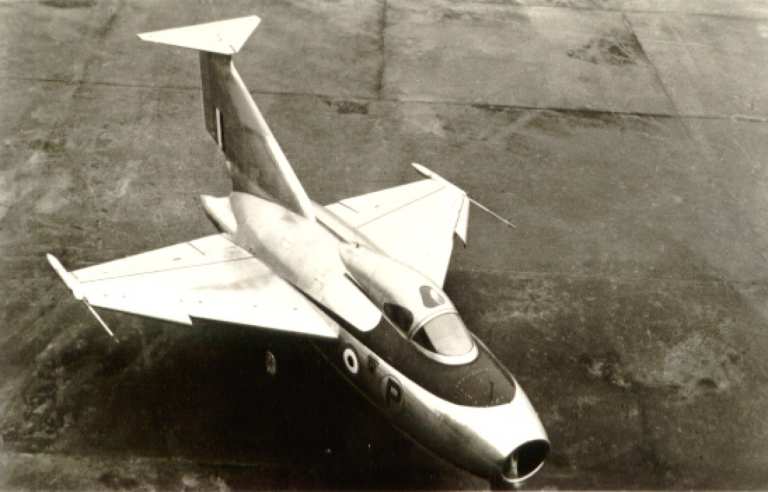
March 12 — British Royal Air Force Group Capt. R. Gordon Slade completes the first flight of the experimental Fairey Delta 1 at Boscombe Down, Wiltshire. This single-seat design joins the Avro 707 and Boulton Paul P.111 Deltas in Britain’s delta-wing research program. The Aeroplane, March 16, 1951, p. 311.
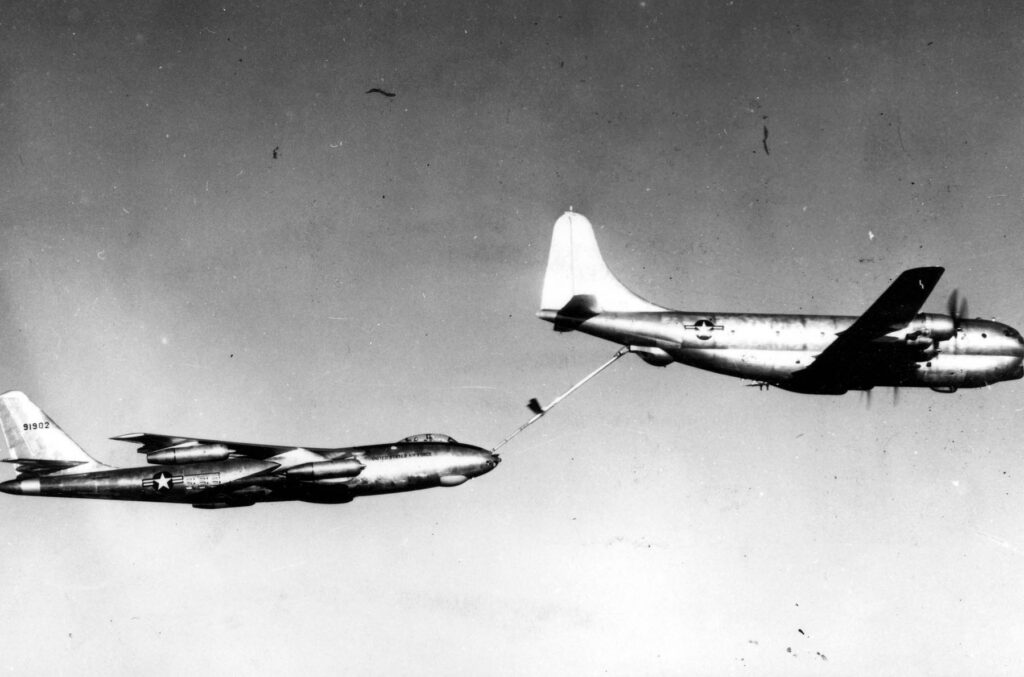
March 15 — Boeing test pilots refuel a B-47A Stratojet medium bomber from a KC-97A tanker equipped with a refueling boom. This method of air-to-air refueling becomes the standard. Later, the difficulties of operating propeller-driven tankers with jet propelled fighters and bombers causes Boeing to press for the rapid development of faster jet tankers, leading to the KC-135 Stratotanker and the 707 civilian airliner. USAF, A Chronology of American Aerospace Events, p. 59.
March 16 — The experimental French Sud-Ouest S.O.4000, a two-seat light bomber, completes its first and only flight. Despite an estimated maximum speed of 850 kph, the aircraft’s performance falls short of expectations, and the project is eventually canceled. William Green and Roy Cross, The Jet Aircraft of the World, p. 122.
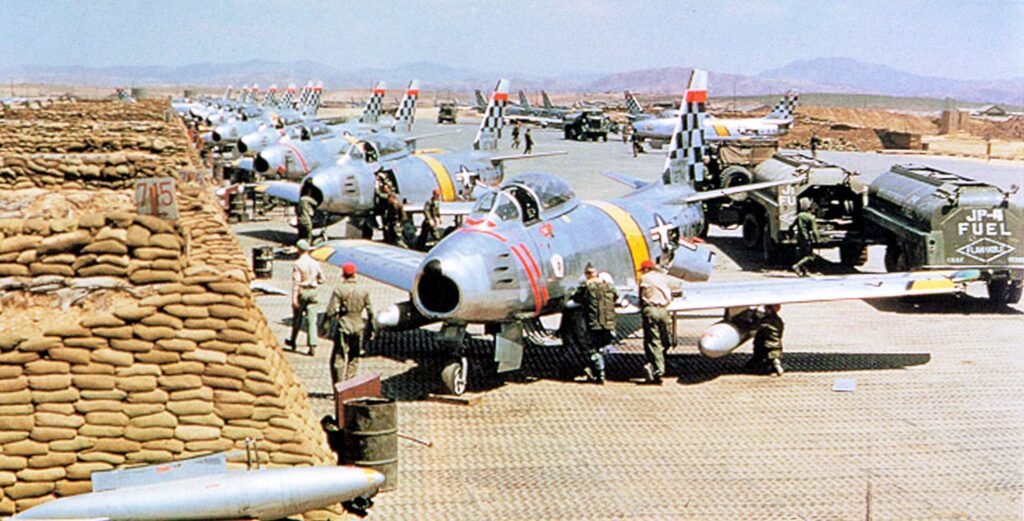
March 19 — North American Aviation delivers the first production F-86E Sabre to the U.S. Air Force for use in the Korean War against the Soviet-built MiG-15s. This variant is identical to the earlier F-86A except for an all-moving horizontal tailplane. The Aircraft Yearbook for 1951, p. 319.
March 31 — The U.S. Navy’s Bureau of Aeronautics issues a development contract to Convair to design and construct the XFY-1 experimental propeller-driven VTOL fighter. A radical turboprop fighter, the aircraft takes off and lands vertically on its tail, earning the nickname “Pogo.” It is intended to operate from destroyers or other small ships to provide air cover at sea but proves extremely difficult to fly and dangerous to land on the ground, much less on the pitching deck of a destroyer. U.S. Naval Aviation, 1910-1970, p. 185.
1976
March 7 — James Pollack, a research scientist at NASA’s Ames Research Center in Silicon Valley, is named the 1975 H. Julian Allen Award recipient for his findings about Venus’ atmospheric composition. Using airborne near-infrared telescope observations, Pollack and his colleagues determine the top 20 km of Venus’s heavy cloud cover primarily consists of concentrated sulfuric acid. This compound’s peculiar heat absorption helps account for the extreme heat conditions near the planet’s surface. Ames Research Center Release 76-11.
March 12 — A joint U.S.-West German team launches the first rocket in a four-part test campaign to study the source of the aurora borealis. The launches take place in northern Sweden at twilight to minimize moonlight interference. The results of Project Porcupine —named for the 12 quill-like probes sticking out from the rockets — contribute to the 1976-78 International Magnetospheric Study, a 40-nation initiative to explore the upper atmosphere. NASA, Astronautics and Aeronautics, 1976, p.49.
March 16 — A reenactment commemorates the 50th anniversary of Robert Goddard’s launch of the world’s first liquid-propellant rocket. Apollo 17 astronaut Eugene Cernan — the last person to walk on the moon’s surface — symbolically lights a non-flyable replica of the 1926 rocket at the launch site, on what is now the Pakachoag Golf Course, near Worcester, Massachusetts. The three-day event also includes an exhibit about Goddard’s life and work at the Museum of Worcester and a rocket display at the Worcester Polytechnic Institute at Auburn, where Goddard studied physics before receiving his Ph.D. from Clark University in Worcester. Washington Post, March 17, 1976, p. C-2; NASA, Astronautics and Aeronautics, 1976, p. 51; Michael Kernan, “50th Anniversary of Step Toward Space,” Smithsonian Magazine, March 1976, pp. 76-80.
2001
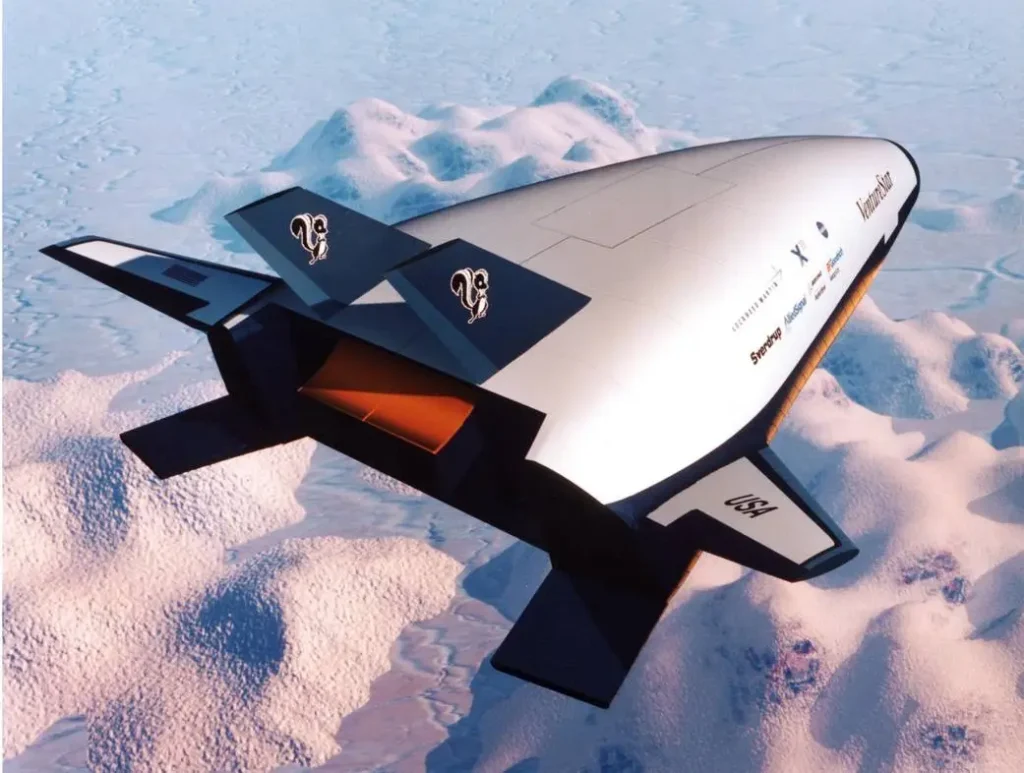
March 1 — NASA eliminates funding for the $1.3 billion X-33 reusable space plane program after five years of development. The subscale demonstrator, designed by Lockheed Martin, was to verify advanced linear aerospike engines and other technologies needed for the VentureStar, a larger reusable spaceplane designed to replace the aging space shuttle orbiters. Jay Miller, The X-Planes: X-1 to X-45, p. 345.
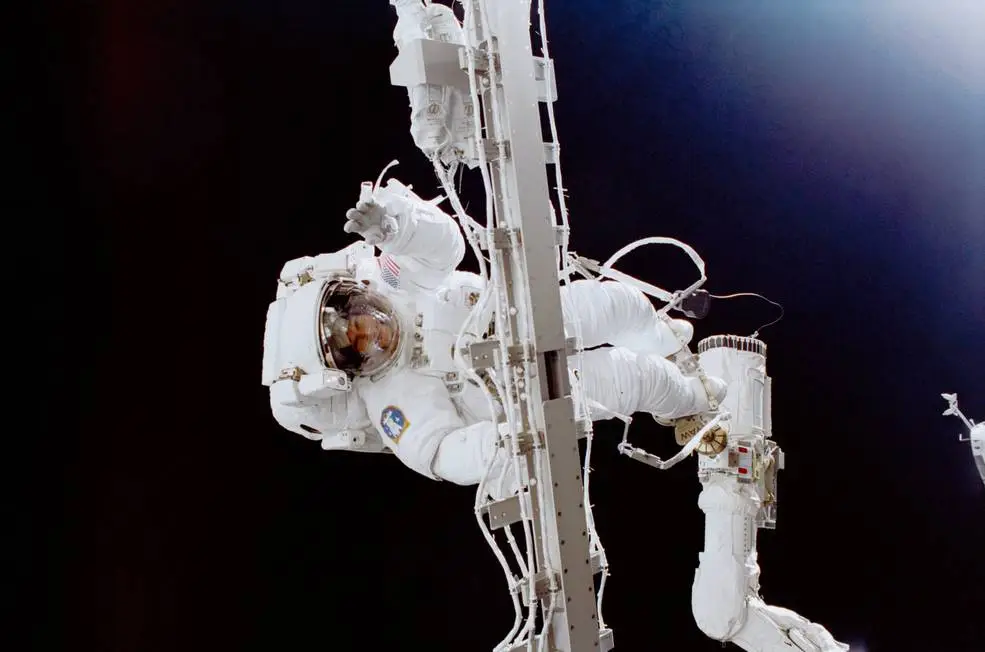
March 11 — NASA astronauts James Voss and Susan Helms conduct a nearly 9-hour-long spacewalk from the International Space Station, a record that has yet to be surpassed. Their tasks include removing the Lab Cradle Assembly from the cargo bay of the space shuttle Discovery and installing it on the side of the U.S. Destiny Laboratory module. NASA, Astronautics and Aeronautics: A Chronology, 2001-2005, pp. 10-11.
March 11 — Lockheed Martin completes the first flight test program with the X-35C Joint Strike Fighter, about three months after the design’s inaugural flight. In total, the aircraft logged 73 flights and 58 flying hours at Naval Air Station Patuxent River, Maryland. Lockheed Martin Press Release, March 11, 2001.
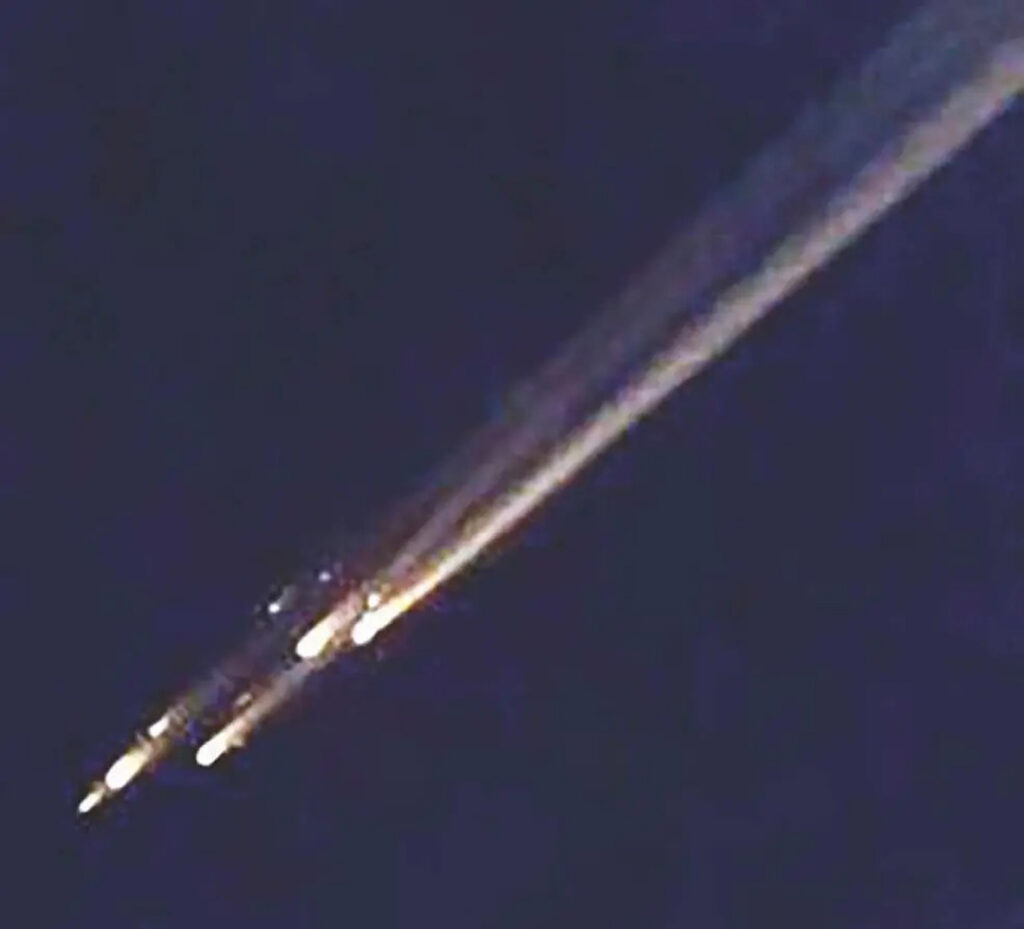
March 23 — After 15 years in orbit, the Mir space station reenters the atmosphere. The controlled deorbit maneuver directs all surviving debris into the Pacific Ocean some 2,700 kilometers east of New Zealand. Mir was launched in February 1986 by the former Soviet Union, and over its lifetime made 86,320 orbits and hosted 104 visitors who conducted 23,000 experiments and 140 spacewalks. Flight International, March 27-April 2, 2001, p. 7.