The U.S. military, human-machine teaming and decision dominance
 By Cat Hofacker
 By Cat Hofacker
There are many aerospace domains where human-machine teaming (HMT) can contribute. In 2025, HMT continued to track toward becoming a mainstream contributor for defense. One trending area was providing rapid decision-making guidance to humans for complex situations. Another ideal area is for HMT to be the interface to artificial intelligence (AI) algorithms. Both of these technical areas were not publicly disclosed in previous years.
In April, the U.S. Air Force published Doctrine Note 25-1, “Artificial Intelligence.” This key document underpins both operational planning and technical development, explaining that the Air Force approach to employing AI will be using HMT, with the intent that HMT will amplify airmen capabilities.
HMT is already being tested in a command-and-control experiment to optimize the aerial kill chain, called Decision Advantage Sprint for Human-Machine Teaming (DASH). In June, DASH was used by the 805th Combat Training Squadron in an exercise at Nellis Air Force Base to demonstrate increased decision-making speed and accuracy by integrating AI-driven software microservices to assist human operators in battle management. The focus was demonstration of a function called Perceive Actionable Entity, which determines which actions are possible, permissible and desirable. This empowered the exercise team to perceive, decide and take action against threats faster. The result of the exercise was a sevenfold reduction in average decision-making time, a significant increase in the number of dilemmas addressed, and improved solution generation.

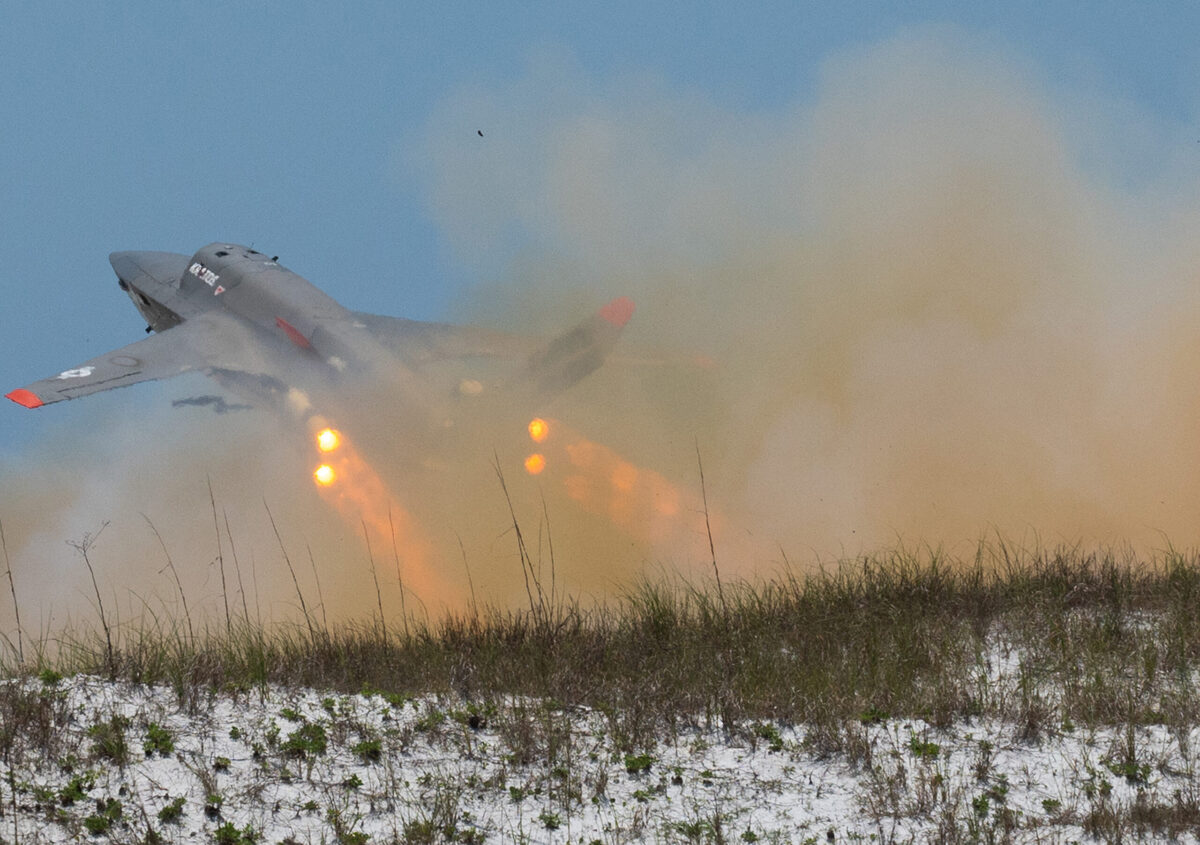
In July, the Air Force also demonstrated HMT during an Autonomous Collaborative Platform (ACPs), test alongside crewed fighters. The 96th Test Wing’s 40th Flight Test Squadron executed the XQ-58A Valkyrie test, with pilots managing ACPs in simulated combat situations. These autonomous aircraft are designed to operate alongside human-piloted jets, providing affordable capabilities that can operate semi-autonomously in high-risk environments and marked another step toward their integration into air combat.
The U.S. Space Force is also working toward HMT to prototype automated space battle management. Space Systems Command’s Space Domain Awareness Techniques, Applications, and Tools (SDA TAP) lab in Colorado Springs in August added a focus on automated hostility and intent assessment, as well as response recommendations. Risk, Intent, and Utility functions are being refined to autonomously generate inputs for threat response recommendations to human decision makers. These battle management components are intended to avoid operational surprise by developing and testing microservices that address specific portions of the space threat kill chain.
The U.S. Army in April launched a competition for small businesses to develop autonomous capabilities for uncrewed aerial vehicles, ground vehicles and sensor networks. By July, the competition, called xTechOverwatch, had selected 40 finalists to demonstrate their technology solutions to identify and occupy advantageous overwatch positions, adapt to terrain constraints and execute mission objectives with HMT objectives of minimal human intervention.
The U.S. Navy also significantly advanced HMT by focusing on integrating AI with new uncrewed systems that are to ultimately be used in future hybrid fleets. Task Force 59 demonstrated HMT capabilities during the International Maritime Exercise in February that focused on the integration of unmanned systems and AI. In September, the Navy began design work on new carrier-based “loyal wingman” drones designed for the Collaborative Combat Aircraft program. The drones will be uncrewed, modular, and interoperable.
Opener image: A U.S. Air Force XQ-58A Valkyrie flies over Eglin Air Force Base’s Gulf Test and Training Range in a July 2025 flight test. Credit: U.S. Air Force/Ilka Cole