
Potential biosignatures on Mars and beyond
 By Cat Hofacker
 By Cat Hofacker
2025 featured several discoveries in astrobiology, a field of study that includes the search for life beyond Earth. In September, NASA announced it had found the strongest indications yet that microbes may have inhabited Mars in the past. The Perseverance rover detected a potential biosignature in Mars’ Jezero Crater, described by acting NASA Administrator Sean Duffy in a press release as “the closest we have ever come to discovering life on Mars.”
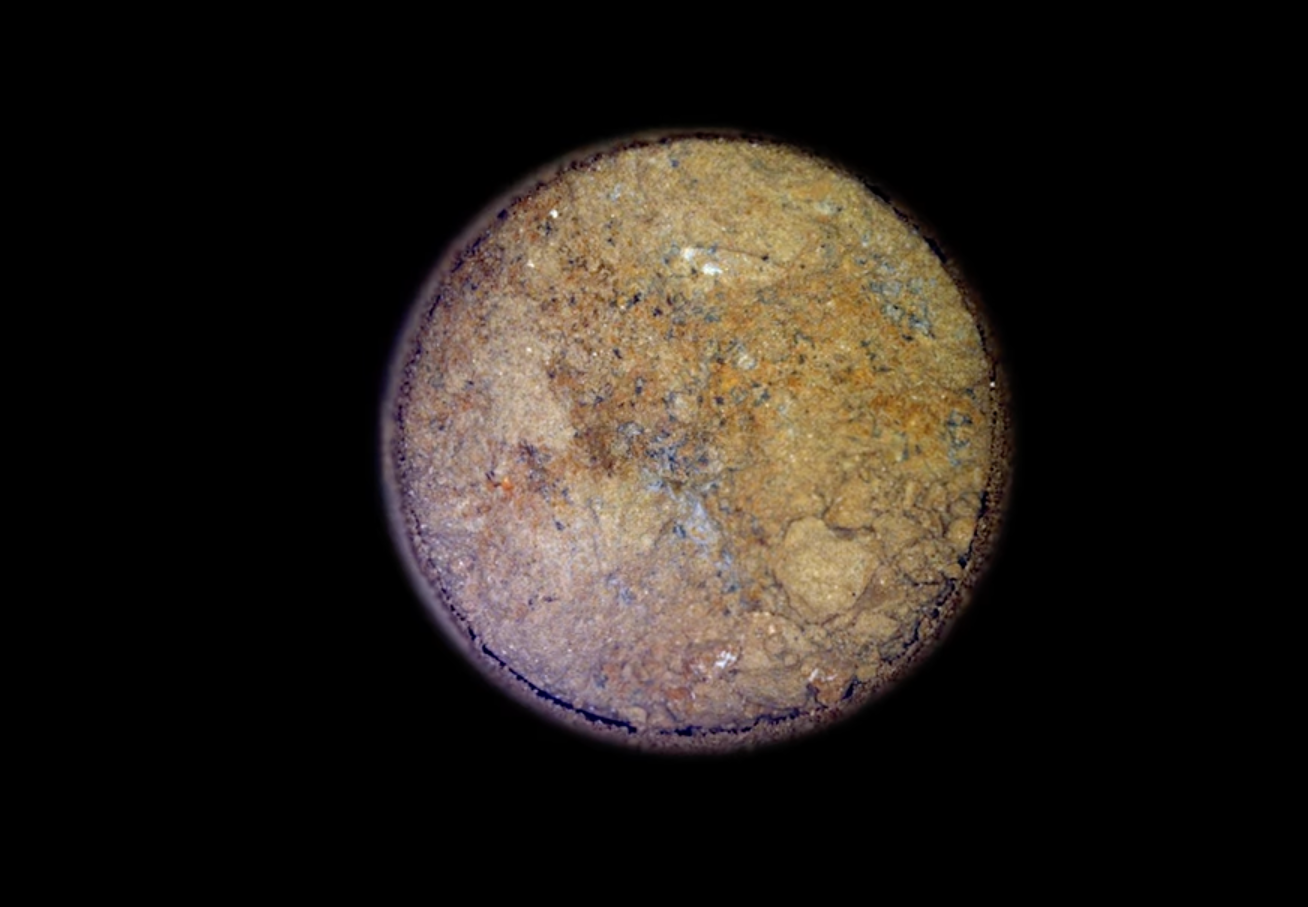
Potential biosignatures may be biological in origin but are considered inconclusive until further study or evidence can explain their specific origin. Geochemical formations, similar to a fossil record, were found within a rock sample called “Sapphire Canyon.” The material was extracted in 2024 from an ancient riverbed within the crater where liquid water once flowed. Initial characterizations were published in September in Nature. Samples collected by Perseverance are planned for return to Earth via future missions.
In March, research from Curiosity Mars rover samples was detailed in “Proceedings of the National Academy of Sciences.” Curiosity detected long-chain organic molecules called alkanes, a class of hydrocarbons that may be potential biosignatures. The sample was drilled from a mudstone named Cumberland in a dry lakebed within Gale Crater.
In May, research was published in Nature of NASA’s James Webb Space Telescope’s direct observations of water ice within a debris disk orbiting a sun-like star 155 light-years away. It is the first such observation of extrasolar water, which may be a requirement for life. The ice-dirt formations appear similar to ones found in Saturn’s rings and the Kuiper Belt.
Closer to Earth, scientists directly observed specialized microbes. Research published in the March issue of the International Journal of Systematic and Evolutionary Microbiology discussed a new species of bacteria that was discovered on hardware returned from China’s Tiangong in June 2023. New microbial species have previously been discovered on the International Space Station, but this is the first one found on China’s space station. It appears to be adapted with mutations that “may enhance biofilm formation, oxidative stress response and radiation damage repair,” all of which would improve its survivability in the space environment.
In the realm of space medicine, researchers with NASA’s Glenn Research Center in Ohio and Universities Space Research Association in October evaluated over 200 portable x-ray scanners and selected three options for further ground tests. The portable x-ray is desired for use in missions aboard the ISS and would serve dual purposes. The first is clinical, including for dental injuries and informing telehealth with flight surgeons on Earth. The other is for noninvasive inspection of equipment, such as the inner layers of a space suit. Short-listed systems are by MinXray, Remedi, and Fujifilm. NASA had planned to select one of these by end of the year for a flight demonstration on the ISS in support of future missions to the moon and Mars.
Opener image: Among the Martian rock samples that NASA’s Perseverance rover has collected is this one, nicknamed Sapphire Canyon, from a riverbed in the Jezero Crater. The leopard-like spots are considered a potential biosignature for ancient microbial life on Mars. Credit: NASA/JPL-CalTech/MSSS