Leading eVTOL developers energized by flight test accomplishments
 By Cat Hofacker
 By Cat Hofacker
Throughout 2025, three of the leading companies developing electric vertical takeoff and landing aircraft expanded the envelope of their respective eVTOL designs. Archer Aviation, Joby Aviation and Vertical Aerospace conducted hovers, long distance flights, overseas demonstrations and crewed flights previously only piloted remotely. These activities are demonstrating the maturity of their designs. FAA expects eVTOLs to be a major contributor to the city center transportation market by 2028.
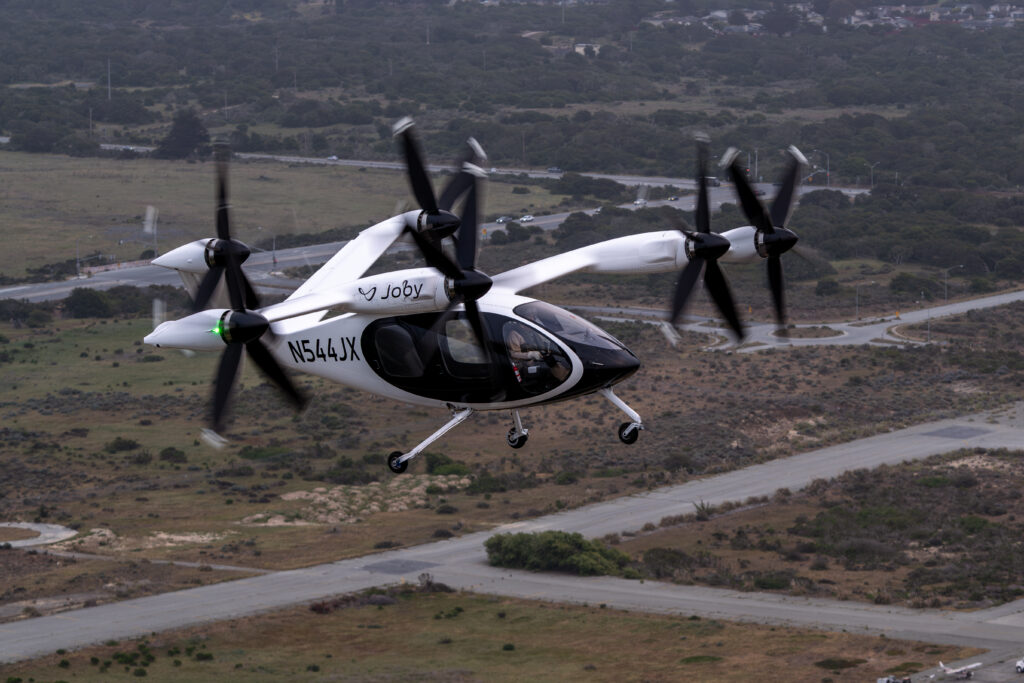
Joby completed several piloted test flights with its S4 prototypes, covering full transition from vertical to cruise flight and back again. The first such flight happened in April, and since then, multiple transition flights have been made with three different pilots at the controls. Joby reported in July that it is now halfway through the fourth of five stages toward receiving FAA type certification, and that the company has flown more than 40,000 miles (64,300 kilometers) since 2017 with several test aircraft.
One important milestone took place in August, when chief test pilot James “Buddy” Denham was at the controls for the first piloted transition flight at Joby’s facility in Marina, California. In the latest eVTOL to leave the production line (tail number N544JX), he took off vertically before climbing and accelerating to fully wingborne flight and then landing vertically.
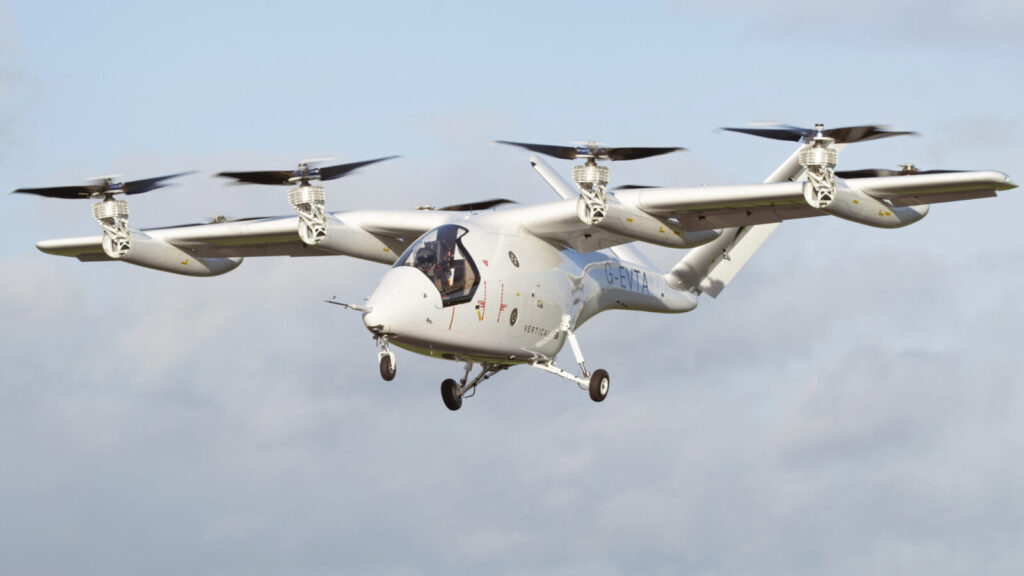
Overseas, U.K.-based Vertical Aerospace in February entered Phase 2 of its four-phase flight test program, completing a vertical hover flight with the second VX4 prototype with chief test pilot Simon Davies at the controls. The hover took place at Vertical’s flight test center at Cotswold airport in Gloucestershire, U.K. In May, the VX4 was flown in conventional takeoff and landing (CTOL) configuration during Phase 3 of the flight test program.
The aircraft handled “a little bit nicer than expected,” Davies told Flight Global, while the predictions around motor performance and drag were “pretty much spot on.” The aircraft departed from the flight test center — the first time a VX4 left the confines of the airfield — and reached cruising at about 100 knots (185 kph). Plans call for continuing onto Phase 4, with a goal of receiving type certification in 2028.
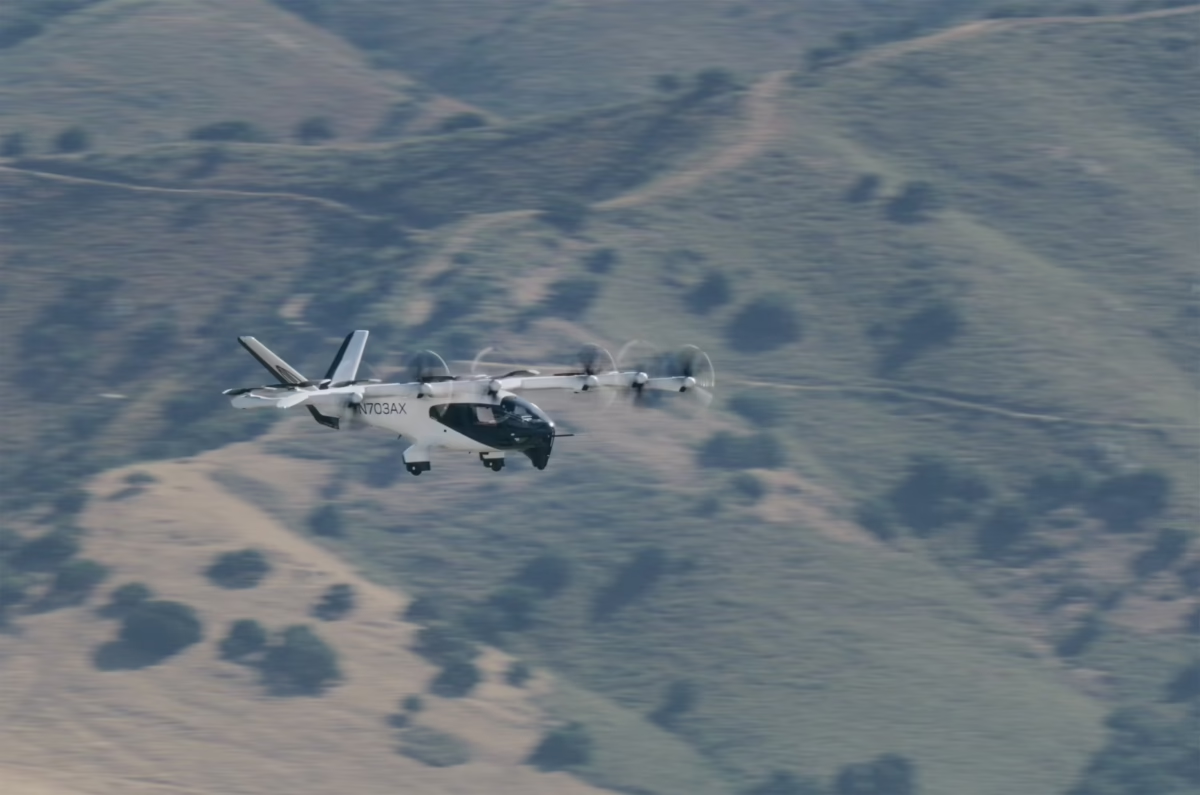
One of Archer Aviation’s Midnight prototypes in August completed its longest piloted flight to date, flying approximately 55 miles (89 km) in 31 minutes at speeds exceeding 110 knots (203 kph). The flight by test pilot Tom Gray took place at Archer’s facility in Salinas, California, and was conducted in a CTOL configuration. Speeds of 130 knots (241 kph) have been reached on previous flights. This latest achievement is one more step toward FAA certification in the U.S. and near-term commercialization in the United Arab Emirates. Four of Archer’s test pilots now regularly conduct test flights in Midnights.
In other news, images of a Chinese-made tiltrotor released online in August provided a window into the progress China is making in this form of transportation. Very little is known about the aircraft, which closely resembles the Bell V-280 demonstrator flown by Bell Textron in 2019. Some industry observers believe that the aircraft was designed and built by the Harbin Aircraft Industry Group, a subsidiary of AVIC Helicopter with headquarters in Beijing. Like the Bell V-280, only the prop-rotors tilt upward, while the turboshaft engines remain fixed and horizontal in wingtip nacelles.
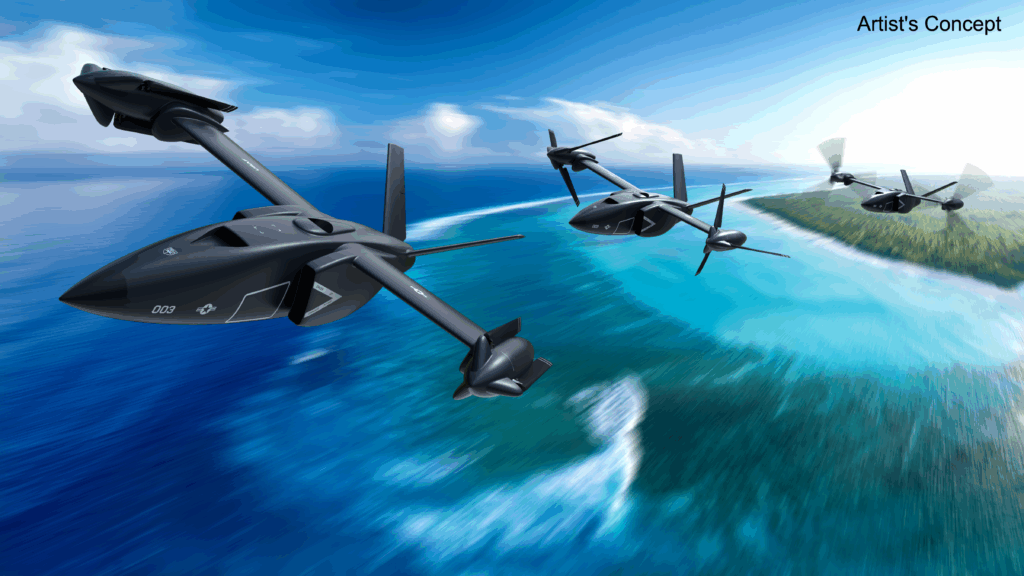
In July, DARPA selected Bell to construct the demonstrator for its SPRINT program, short for Speed and Runway Independent Technologies. In the near-term, Bell is to manufacture components for this X-plane, which is to be a folding rotor vehicle combining a prop rotor with high-speed capabilities.
Contributor: Puneet Singh
Opener image: Archer Aviation in 2025 completed several piloted flight tests with its Midnight prototypes, including this one in June near the company’s facility in Salinas, California. Credit: Archer Aviation