
A year of baby steps toward commercial space exploration
 By Cat Hofacker
 By Cat Hofacker
In 2025, the nascent field of space exploration saw several first-time commercial entrants that launched missions to the moon and near-Earth asteroids to gain experience from a rapid iteration approach.
Firefly Aerospace’s Blue Ghost is the third commercial lunar lander sponsored by NASA’s Commercial Lunar Payload Surfaces program and in March became the first CLPS-funded spacecraft to complete an upright landing. The lander operated for 14 days and 5 hours of lunar night during the surface mission. Blue Ghost Mission 1 was so successful “that NASA added a $10 million contract to acquire more imagery and data received from the lander beyond the original contract,” Firefly said in a September press release. Blue Ghost’s electrical power system included three solar panels and batteries that provided a maximum of 400 watts of power once landed to survive the cold lunar nights.
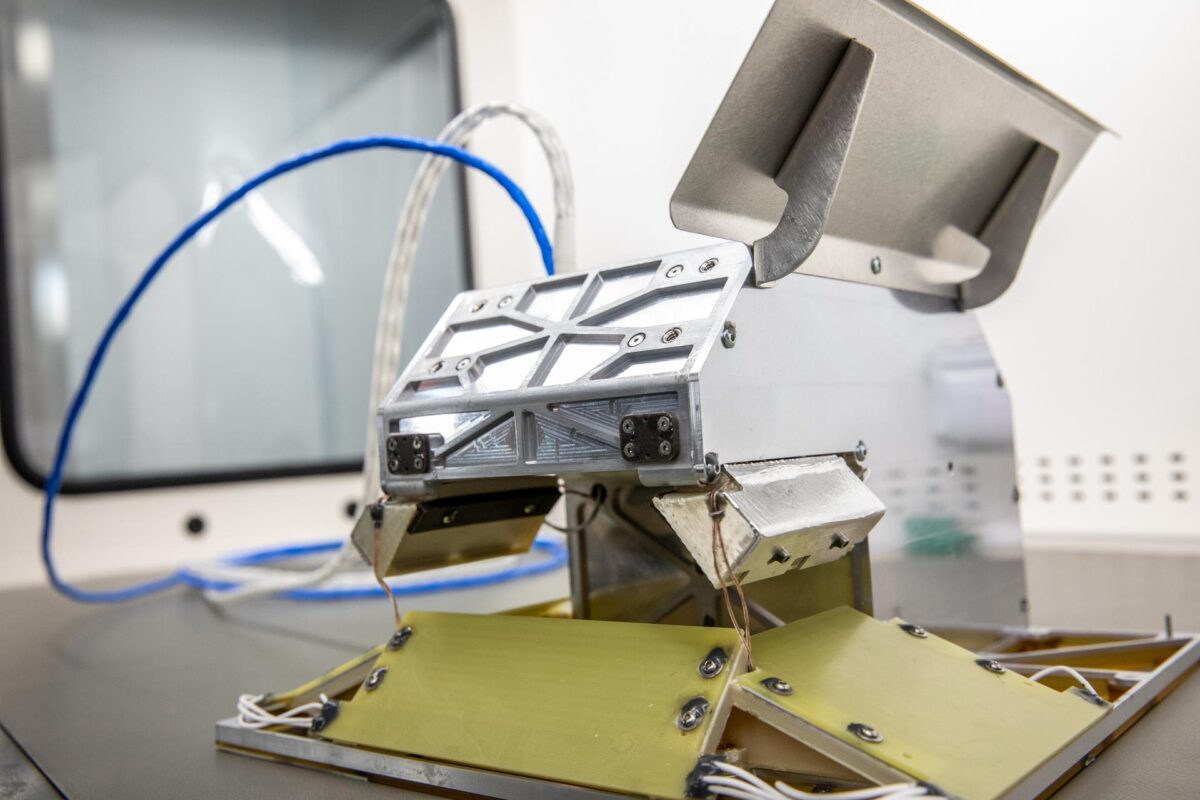
Among the 10 instruments aboard the lander was the Electrodynamics Dust Shield (EDS) experiment developed at NASA’s Kennedy Space Center in Florida. This was the first successful demonstration of the concept operating in the lunar operating environment. EDS is an active dust mitigation technology generated by a power source to lift and transport dust collected on surfaces in a controlled direction away from hardware including solar arrays, thermal radiators, camera lenses, spacesuits and visors. The EDS coupon was released from the lander’s leg and positioned directly on the lunar surface to maximize dust collection to demonstrate the concept.
Blue Ghost was launched in January by a SpaceX Falcon 9 that also carried ispace’s second Resilience lunar lander. The lander was packed with science payloads contributed by commercial and academic partners, including a rover, water electrolyzer experiment, algae-based food production module and space radiation probe. All payloads were powered by batteries designed to operate for a limited time. Resilience was slated to touch down in June on the moon’s northern hemisphere. Unfortunately, it crashed during its final descent due to the failure of its Laser Range Finder, which provided altitude telemetry too late for sufficient time to decelerate.
Intuitive Machine’s second lunar lander, the IM-2 mission, launched in February with AstroForge’s Odin and the Lunar Trailblazer (LTB) satellite built by NASA’s Jet Propulsion Laboratory. Odin was a prototype vehicle anticipated to perform a flyby of a near-Earth asteroid, 2022 OB5, to survey for its possible metallic content and the potential for a future prospect mining mission. AstroForge “built Odin in less than 10 months and spent U.S. $3.5 million to do so” according to the mission summary on the company’s website.
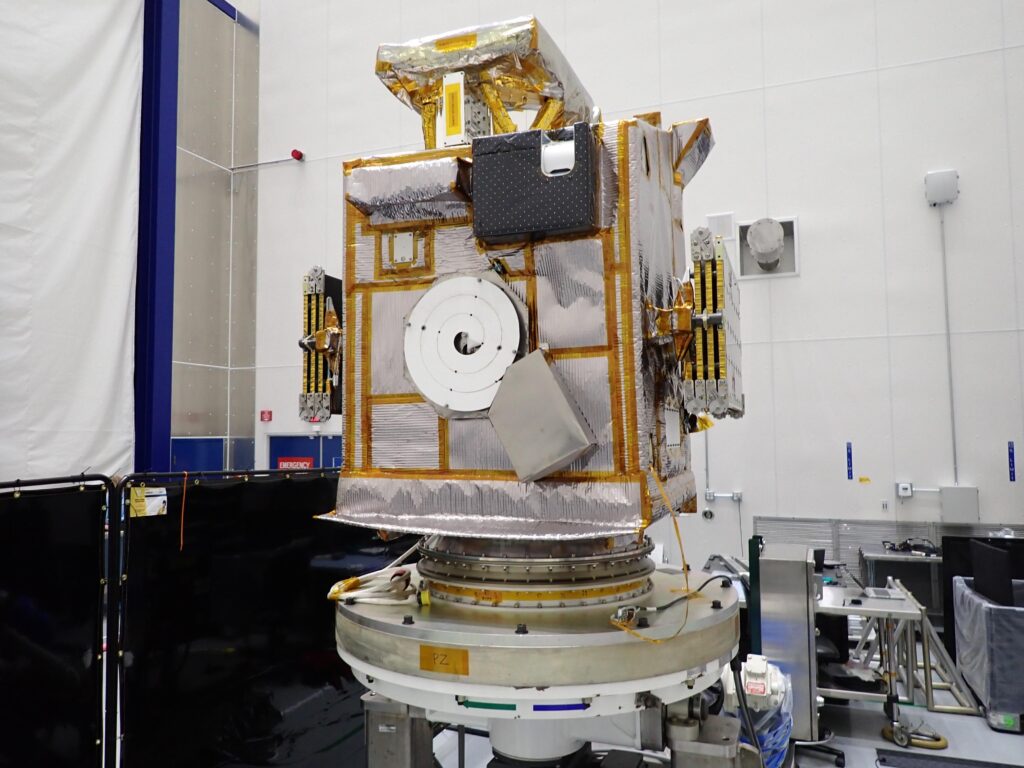
Regrettably, the IM-2, Odin, and LTB missions did not achieve their intended objectives. IM-2 lost its balance upon landing and ended up on its side. Odin lost communication a few hours after launch because of possible complications with deployment of its solar array for mission power. Lunar Trailblazer suffered the same fate as Odin after it lost communication with ground control.
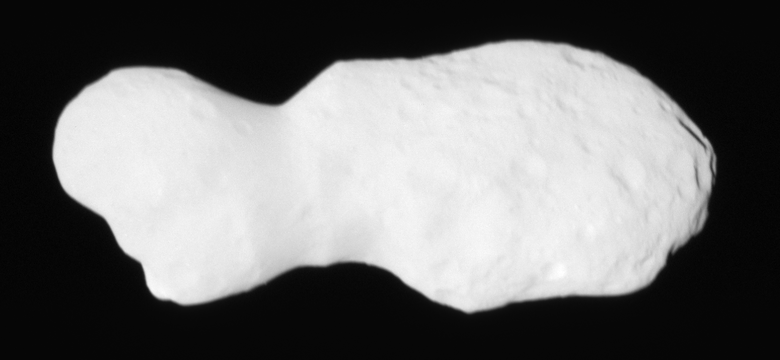
In April, NASA’s Lucy spacecraft completed a flyby of Donaldjohanson, the second planned flyby of three main belt asteroids circling the sun between Mars and Jupiter, on its way to the Jupiter Trojan asteroids. Data and images were effectively taken and sent back to mission control for analysis. Lucy was launched October 2021 and is the first mission to explore these asteroids.
Opener image: An Electrodynamic Dust Shield payload experiment delivered to the moon in March 2025 by Firefly Aerospace’s Blue Ghost Lander. Credit: NASA