
Use of LUCAS drones in Iran puts focus on affordable, fast-moving acquisition


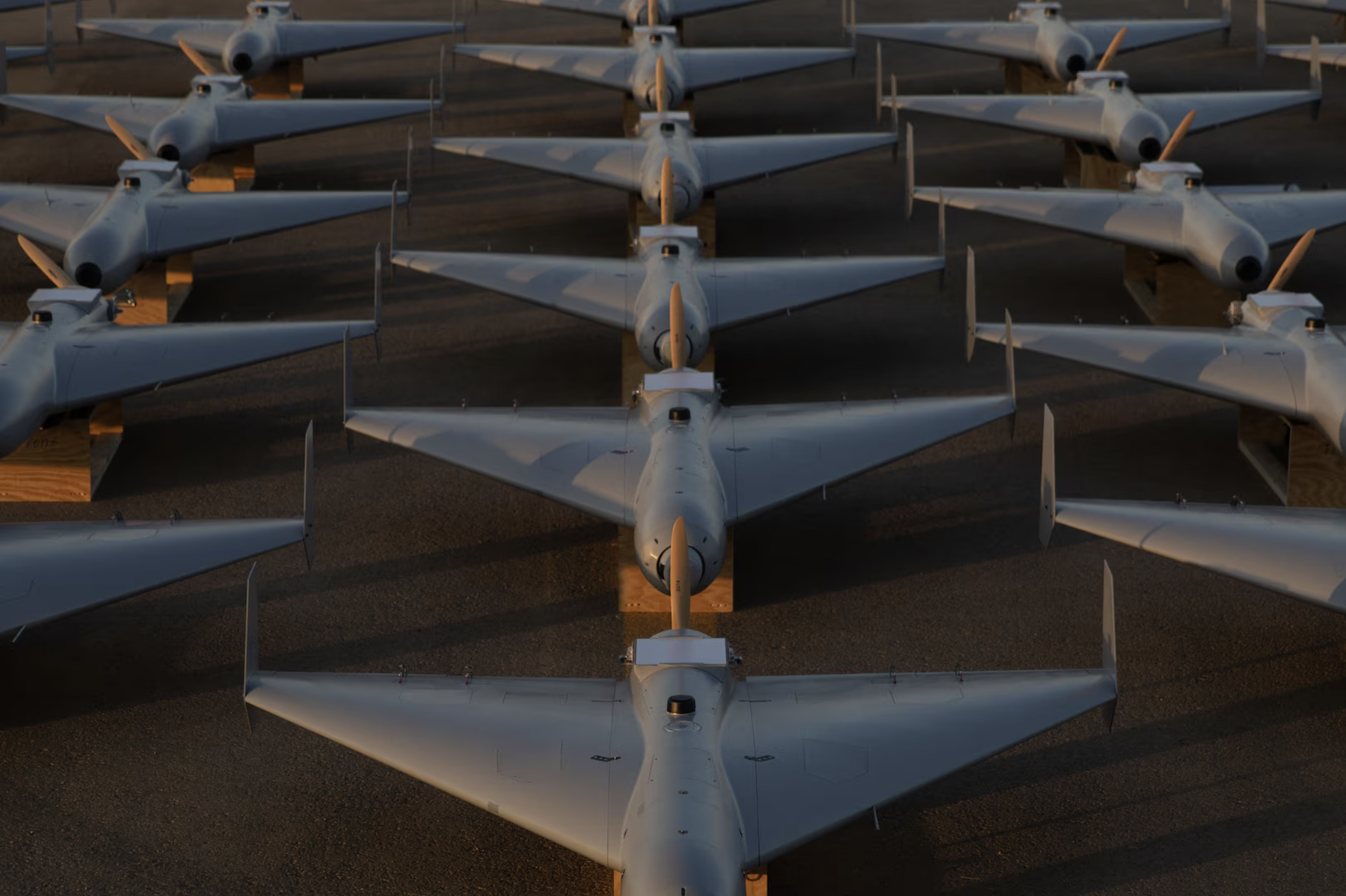
The U.S.-Israeli strike on Iran marked the first use of a new weapon system: the Low-cost Unmanned Combat Attack System, dubbed LUCAS. Some experts say these drones, noted for their low cost and quick speed to deployment, offer a model for future purchases.
U.S. Navy Adm. Brad Cooper, who heads U.S. Central Command, said in a March 3 video posted on X that “for the first time, U.S. Central Command’s drone task force, called Task Force Scorpion Strike, launched countless one-way attack drones.” CENTCOM declined to answer more detailed questions, but in a separate post listed LUCAS among the technologies used in the strike.
LUCAS is a one-way attack drone made by Arizona-based SpektreWorks, which did not respond to requests for comment. Cooper noted the design is based on Iranian Shahed drones. The American-made version, which measures 2.4 by 3 meters, typically carries about 18 kilograms of explosives and can launch from runways, ground vehicles or ships.
Brett Velicovich, a former military drone operator who now owns a drone company, said these drones are generally launched in swarms of four to 10.
According to retired Navy Rear Adm. Lorin Selby, “you don’t send LUCAS after a hardened bunker. You send it after the radar protecting the bunker, or the fuel depot keeping the air force flying.”
LUCAS also “includes autonomous coordination features,” said Selby, who now works as a defense adviser to a marine technologies-focused investment fund. “Some drones are equipped with Starlink terminals — enabling advanced cooperative tactics and dynamic targeting while keeping humans in the loop.”
Drone experts characterized the primary draws of LUCAS as its cost of about $35,000 per unit and its speed to deployment.
“When compared to a Tomahawk cruise missile price of over $2 million, [LUCAS] is a very low-cost solution for targeting enemy positions and equipment,” said Wayne Phelps, a retired Marine Corps lieutenant colonel and author of a book on drone warfare.
The program only took “seven months from public unveiling to combat employment,” Selby noted. “That timeline alone should stop every acquisition reformer in their tracks.”
As the Pentagon seeks to overhaul its acquisition system, LUCAS offers a concrete example of quickly obtaining and fielding a new system, Selby and Velicovich said.
“The question now is whether we treat this as a one-off or as the new standard,” Selby added.
Still, Phelps cautioned “it’s too early to determine the effectiveness of LUCAS from open-source reporting.”
And Alexander Downes, co-director of the Institute for Security and Conflict Studies at George Washington University, downplayed the technology. “LUCAS simply gives the U.S. a capability that its adversaries had already developed,” he noted.
Still, Selby said LUCAS may foreshadow changes to how the U.S. buys drones.
“The future fight,” he said, “whether in the Pacific or elsewhere, will not be decided by who has the most exquisite single platform. It will be decided by who can field, sustain, and replenish distributed autonomous systems faster than the enemy can defeat them.”