U.S. lawmakers probe NASA’s revamped commercial space station strategy


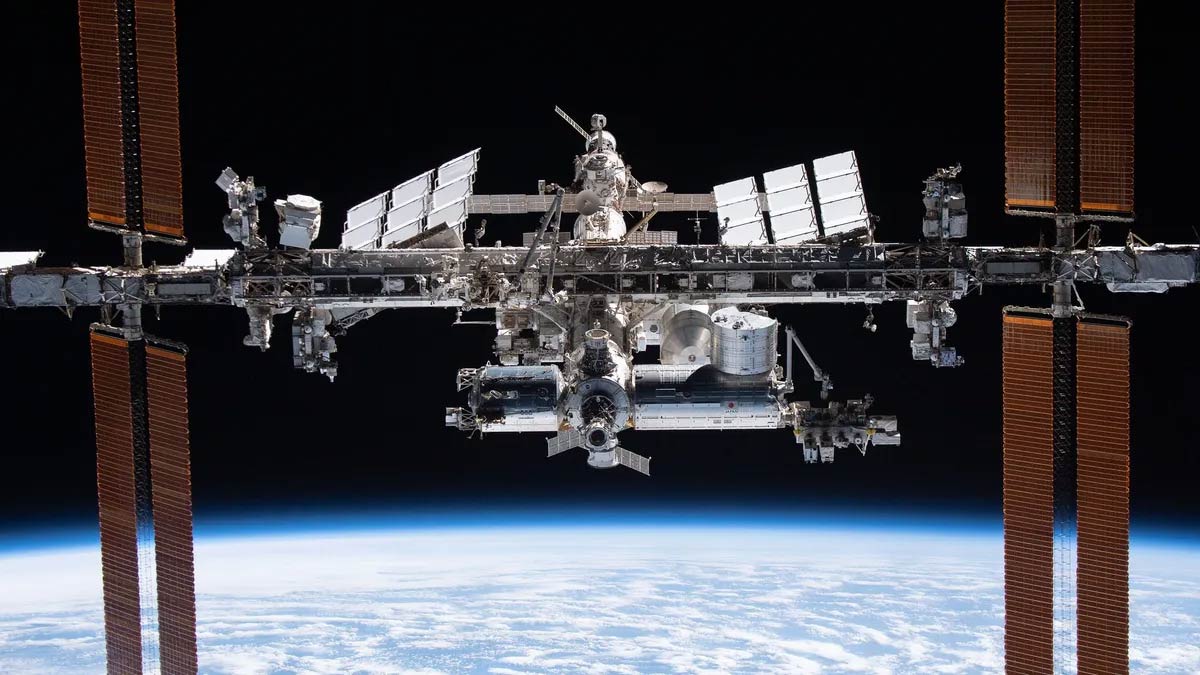
U.S. lawmakers today scrutinized NASA’s newly unveiled approach to maximizing the final years of the International Space Station, as the agency weighs how to address a coming crop of privately owned and operated stations.
NASA has long planned to deorbit ISS in 2031 and become an anchor tenant of one or more of the commercial stations in development. But yesterday, officials unveiled an alternative strategy: adding a NASA-owned “core module” to ISS that companies could attach their commercial modules to. These modules would later separate from ISS and operate as a free-flying station in low-Earth orbit.
Under the Commercial LEO Destinations program, NASA had originally planned to select at least two of the commercial station concepts for additional funding. But the agency only has enough budget for a single provider, Joel Montalbano, acting head of NASA’s Space Operations Mission Directorate, told the U.S. House Space and Aeronautics Subcommittee today.
“And our opinion, that’s a very risky approach,” he said. “It’s risky for the committee, it’s risky for the agency, risky for the country. And what we introduced yesterday was an option.”
Dave Cavossa, president of the Commercial Space Federation, told lawmakers the announcement is “sowing concern and really sowing confusion among the commercial space companies I represent.”
Two of the station builders, Axiom Space of Texas and Colorado-based Starlab Space, told me by email they are still reviewing NASA’s request for input about the alternative strategy, which was released Wednesday morning. Axiom already has a separate agreement with NASA to attach at least one of its modules to ISS for a period of time, but Starlab and other station builders are planning to go straight to free-flying platforms.
“I just don’t see how it’s fiscally possible for NASA to afford the development and launch of a custom-built government core module, while maintaining ISS, while claiming at the same time it can’t afford to be a customer on a commercial station that is being privately financed,” said U.S. Rep. George Whitesides (D-Calif.).
Montalbano responded that the new core module could be more cost-effective because “it doesn’t have to have [its own] power and propulsion. By attaching to ISS, you can take the ISS resources and operate that module.” This would allow the station developers to not “spend money on life support,” which he said is one of the biggest expenses for any space station.
Another recent development, Montalbano said, is NASA’s assessment that the commercial LEO economy the agency predicted a decade ago has not yet emerged.
“We expected the private launch market to take off. We expected tourism to take off. We expected the ability to do research and technology development on the International Space Station, bring it down the earth and mass produce it,” he said. “We’re not seeing any of those three things.”
NASA has committed to operating ISS through 2030, at which point the earliest sections of the station would be close to 30 years old. The agency in 2024 awarded SpaceX a contract valued at up to $843 million to develop a U.S. Deorbit Vehicle. This spacecraft is to dock with ISS and steer it to break apart in the atmosphere, dropping any surviving parts into a remote area of the Pacific Ocean.
The Aerospace Safety Advisory Panel has been tracking problems on the space station, including cracks that leak air in a connecting tunnel of the Russian Zvezda module, which were first reported in 2019. The panel is considered an independent watchdog, particularly on risks to astronaut lives.
In September, the panel discussed aging hardware, spacesuit problems and resupply challenges, according to ASAP meeting minutes.
“Should an age-related failure exceed the program’s ability to manage it, the consequences could include an uncontrolled reentry with risks to both crew and the public,” the minutes stated.