







The U.S. is once again trying to beat another nation to landing astronauts on the moon, and NASA officials and U.S. lawmakers say the stakes are even higher than they were in the 1960s. Leonard David and Cat Hofacker explore the implications of this 21st century space race.
By Leonard David and Cat Hofacker
When NASA Administrator Jared Isaacman took the stage at a Northern Virginia conference in mid-February, the agency was preparing for a second fueling test of the SLS moon rocket, in hopes of launching as soon as March.
But that day, much of Isaacman’s remarks revolved around the progress of “our great rival,” China, which was preparing for a crucial flight test of its own Long March 10 moon rocket and crew capsule.
“We are in a new space race” to the lunar surface, “and if we fall behind, we may never catch up,” Isaacman said. “If we wake up and we see our rival’s taikonauts on the moon before we’re able to return, the blow to American exceptionalism will be so damaging, the shock wave will be felt around the world.”
There have been many twists and turns since the first Trump administration announced NASA would return U.S. astronauts to the lunar surface in 2024 as a precursor to establishing a surface base. The latest shakeup came in late February, when NASA inserted a new mission into the sequence: a 2027 Earth-orbit demonstration of how the Orion crew capsule would dock with one or both of the commercial lunar landers in development — a crucial maneuver if the agency is to achieve up to two lunar surface landings in 2028 and establish a base by 2030.
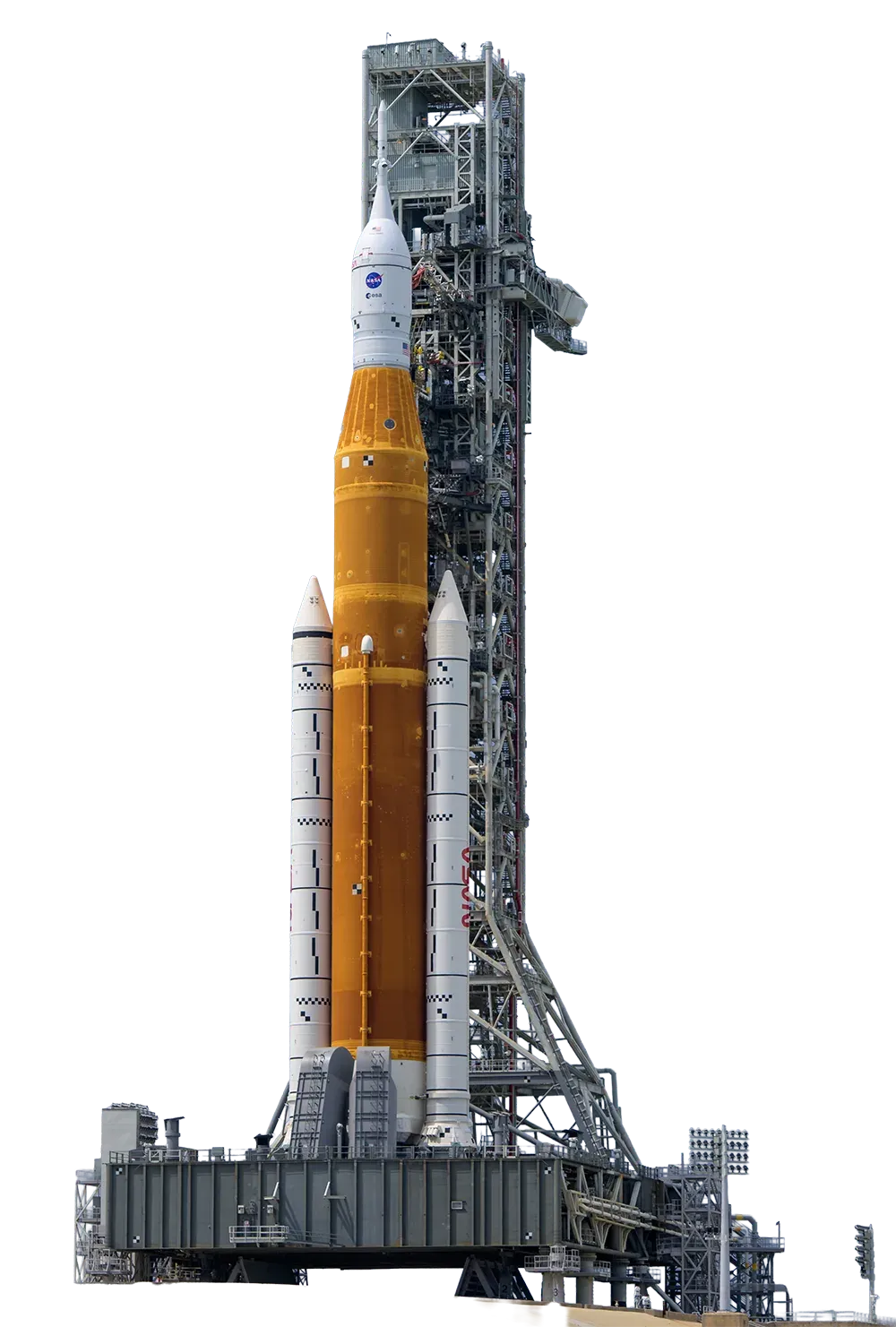
Rocket Multiple launches are required, one for the crew and at least one for the lander. For Artemis, the lander will be launched aboard a commercial rocket.
SLS

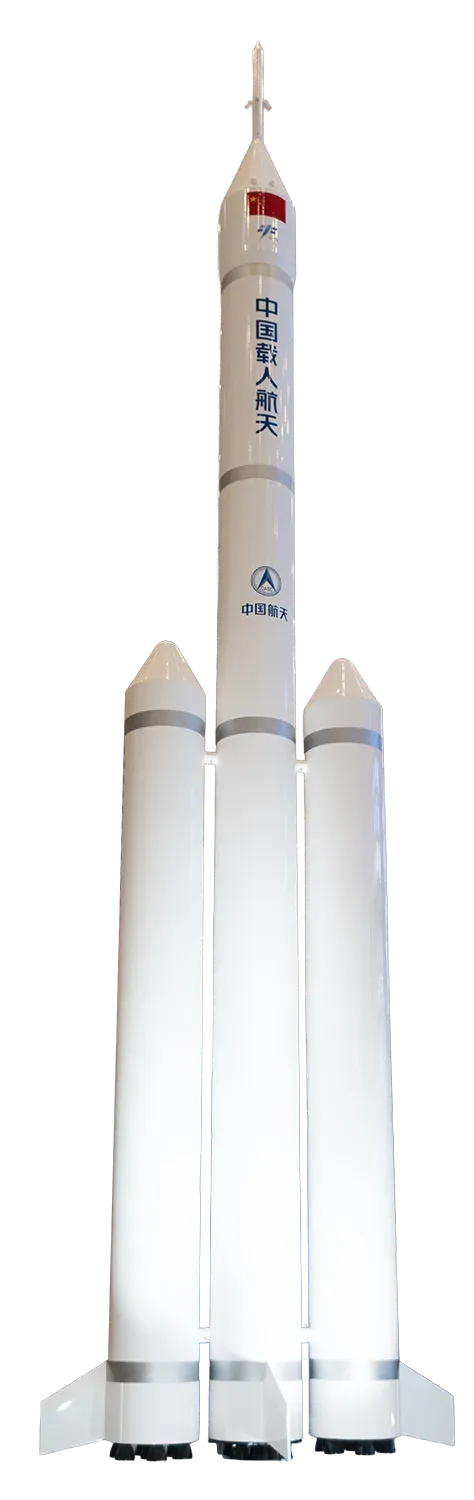
Long March 10

The schedule for those landings — now Artemis IV and V, respectively — partly hinges on the outcome of the Artemis II lunar flyby, which as of mid-March was targeted for no earlier than April. The 10-day mission is to send four astronauts around the moon, demonstrating many of the technologies and techniques required for the early surface missions.
“We do not have a lot of schedule margin here,” Isaacman told reporters at a press conference about the new sequence. He was referring to China’s plan to conduct a crewed landing of its own by 2030. Since announcing that objective in 2023, the China Manned Space Agency (CMSA) and its state-owned contractors have made steady progress on hardware development and testing, which has drawn the attention of the White House and U.S. lawmakers.
Chief among them is Sen. Ted Cruz (R-Tex.), chairman of the Senate Committee on Commerce, Science, and Transportation, which held a September hearing on the matter.
“This is a pivotal moment for our nation’s space programs,” Cruz said in his opening remarks. “America must maintain leadership in low-Earth orbit, while also embarking on a new era of exploration with Artemis. Make no mistake: we are in a new space race with China.”
The chief concern is that whichever nation is the first to land astronauts on the moon this century will be viewed as the global leader in space — and possibly on Earth.
“This is not just about exploration. The choices we make now will determine whether the United States leads in space or cedes it to an authoritarian regime,” Cruz said.
Moments from the race
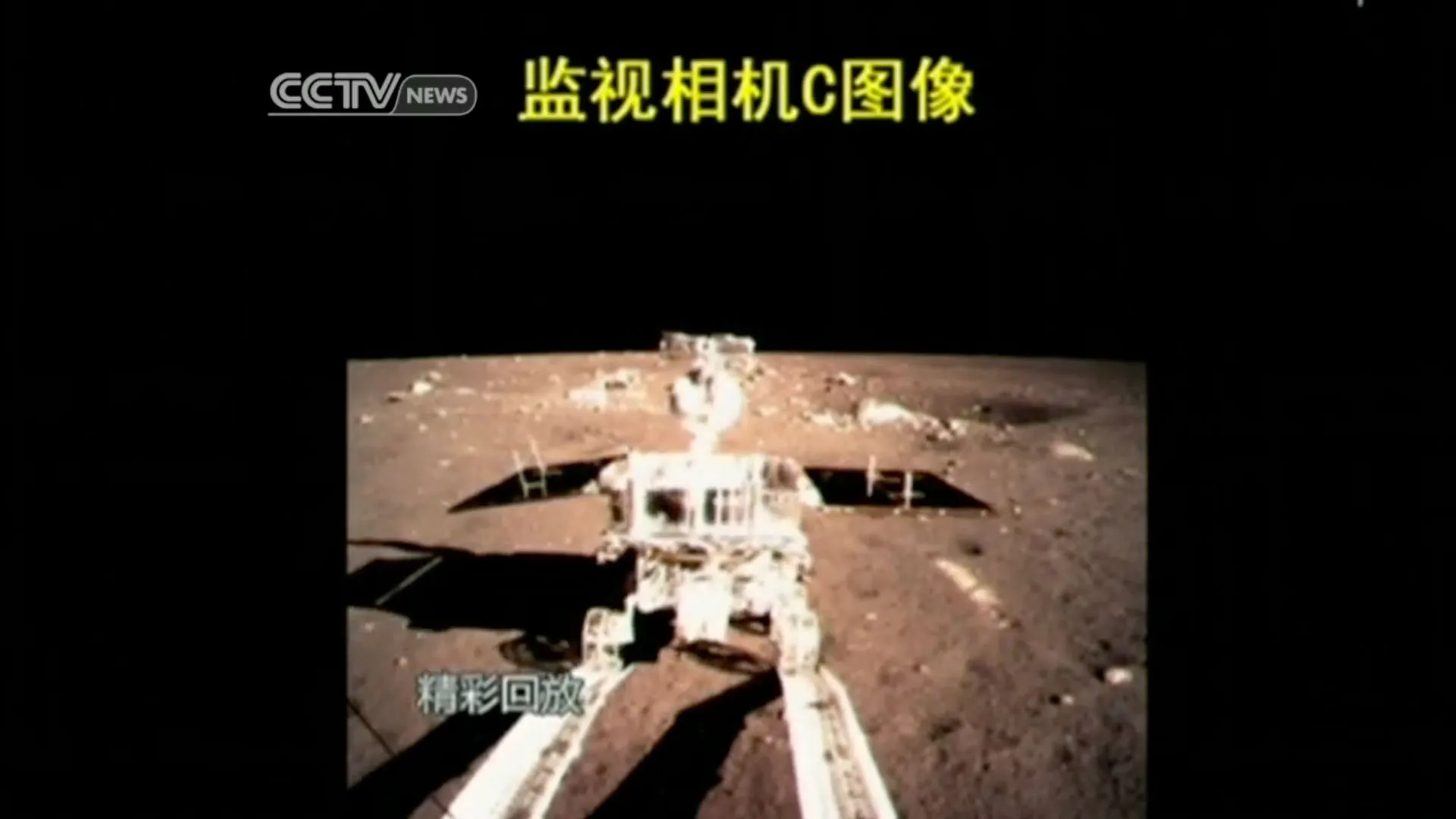
Chang’e-3
China becomes the third nation to land a spacecraft on the moon, when the Chang’e 3 lander touches down in December. Video Credit: CGTN America
China’s ambitions
In the February test Isaacman referenced, a prototype Long March 10 rocket carried an unoccupied test article of the Mengzhou crewed spacecraft topped by an escape tower system. Shortly after liftoff, the tower’s engines ignited as planned and carried the spacecraft away from the rocket, simulating a scenario where the rocket failed after launch and the crew needed to be whisked to safety. The rocket’s first stage and the spacecraft’s return capsule splashed down in a designated sea area, according to a government statement.
The test built on previous ones conducted throughout 2025, a particularly active year for China’s moon effort, known as the Chinese Lunar Exploration Program, or CLEP. This multipronged program encompasses lunar orbiters, stationary landers, rovers and sample return spacecraft, as well as the nation’s projected human lunar lander initiative, all using the Long March series of rockets.
Requests for comment to CMSA went unanswered, so this story draws on public documents and reports by state media.
In an October press conference broadcast on China Central Television and reported by state-run news services, CMSA officials said development of the crewed lunar mission was proceeding smoothly.
“The scientific research and application systems have finished payload design for all planned flights, while the development and the construction of ground facilities, including launch sites, telemetry, tracking and command networks and landing-recovery systems, are being accelerated,” said Zhang Jingbo, a CMSA spokesman.
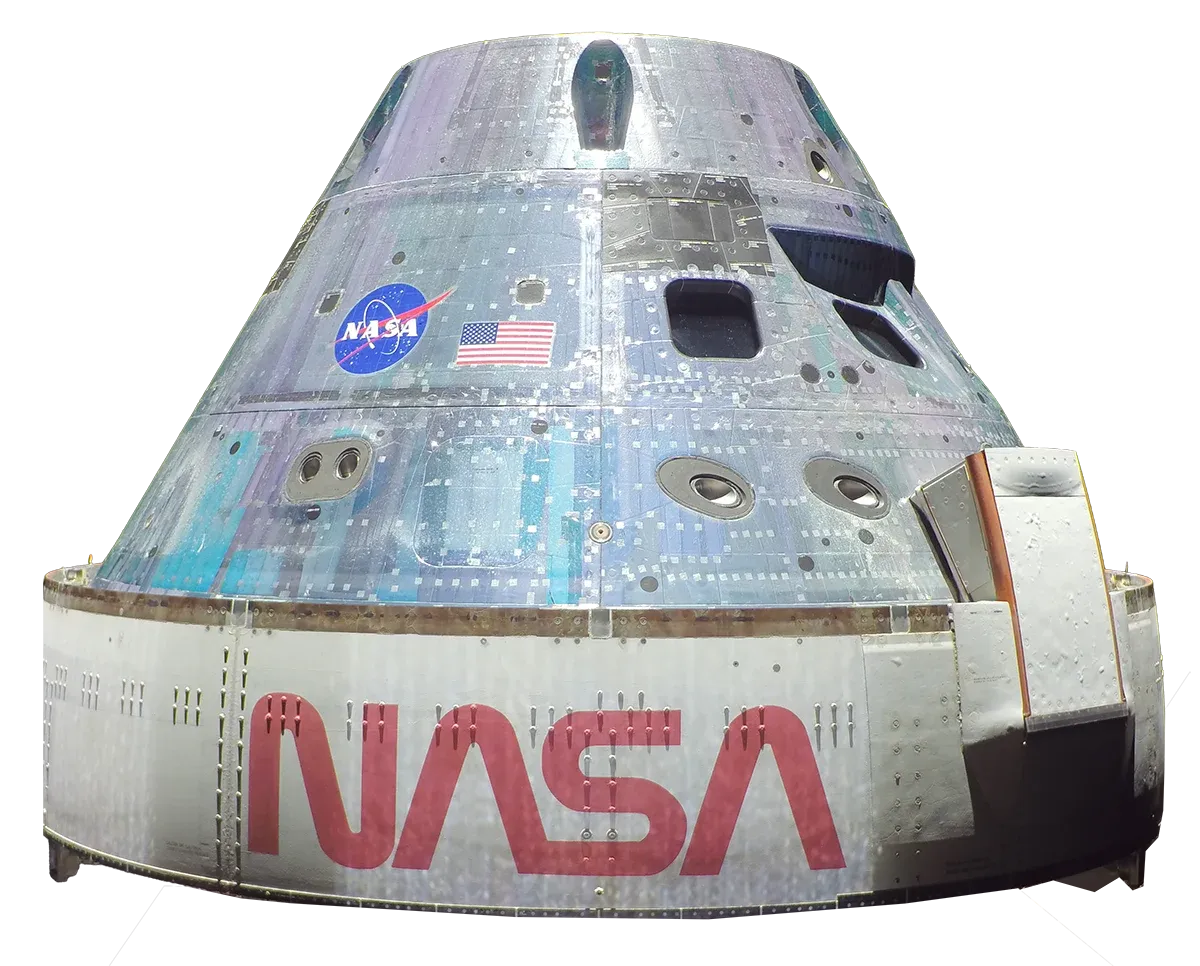
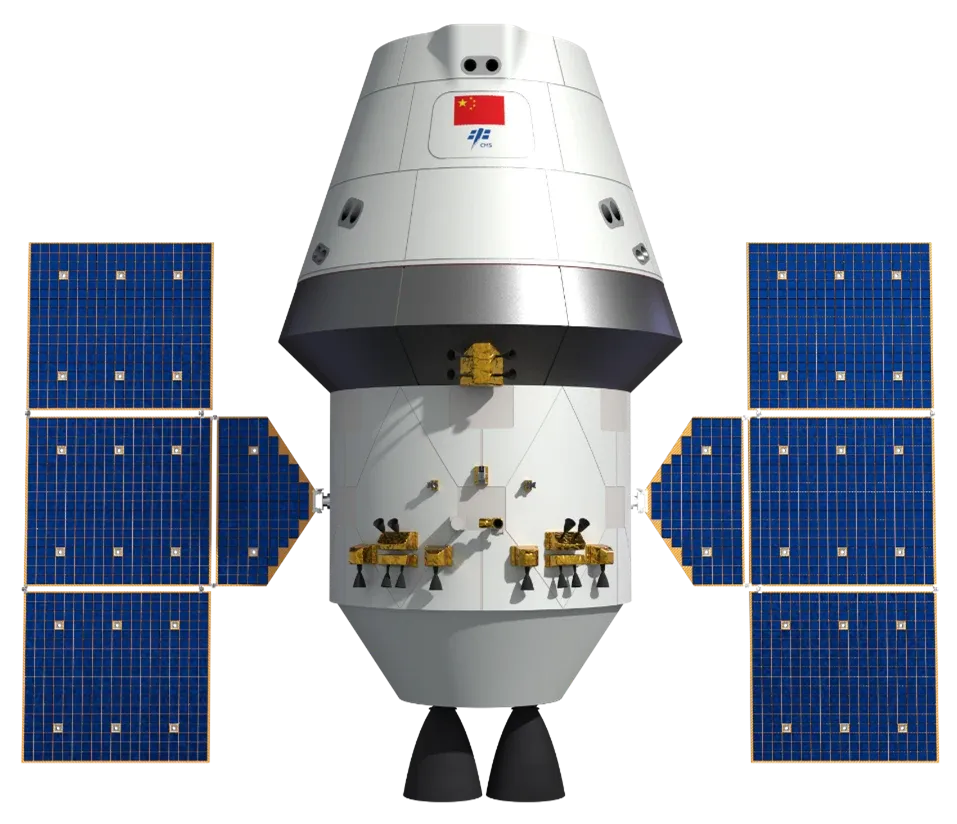
Crew Capsule Once in lunar orbit, these spacecraft would rendezvous and dock with the lander. NASA aims to demonstrate this maneuver next year in low-Earth orbit.
Orion
Mengzhou “dream vessel”
CMSA completed Long March 10 static fire testing in September, igniting the test article’s cluster of engines at the Wenchang Spacecraft Launch Site in the southern island province of Hainan.
Testing is also underway of the Lanyue lander, Wangyu spacesuit and a two-person Tansuo moon buggy — and CMSA has “completed the major tasks of the prototype phase,” Zhang said.
At a high level, China’s architecture is very similar to the one NASA created for Artemis, in which the crew and their lander are launched aboard two separate rockets. Two successive Long March 10s would lift off, one carrying the astronauts in their Mengzhou spacecraft, the other hoisting the lander.
The two vehicles would rendezvous in lunar orbit, so the crew can transfer to the lander for the descent to the surface. After the moonwalkers complete their duties, they would take Lanyue back into lunar orbit, joining up with and moving into Mengzhou for the journey back to Earth.
Beyond the initial 2030 landing, China is also laying the groundwork for a sustained lunar surface presence. At the center of those efforts is the International Lunar Research Station (ILRS), a two-phase moon base the China National Space Administration is developing with Russia’s space agency, Roscosmos.
Wu Weiren, CLEP chief designer, said in a 2025 interview with the state-run China Central Television that the ILRS encampment will benefit from two upcoming robotic lunar landings: Chang’e-7 in late 2026, tasked with completing environment and resource surveys in the lunar south pole region, and Chang’e-8 in 2028, which is to tackle on-the-spot utilization of lunar resources.
The first phase of the ILRS project calls for a “basic station” to be constructed by 2035 in the lunar south pole region, Wu said, with an expanded facility scheduled to be completed by 2045. This phase also entails establishing a moon-orbiting space station to carry out lunar studies and perform experiments and projects that will help prepare for a future human landing on Mars, Wu said.
Dean Cheng, a non-resident scholar with the George Washington University’s Space Policy Institute, said China seeks to establish what it calls an “Earth-moon space economic zone.”
References to this aspiration date back almost a decade, to 2018 remarks by Bao Weimin of the China Aerospace Science and Technology Corp., the main contractor for China’s national space program. Bao said early studies indicated that by 2046, the total annual output value of this economic zone would be at least $10 trillion.
In Cheng’s view, China’s steady progress and the start of ILRS development show the country is serious about its long-term moon plans.
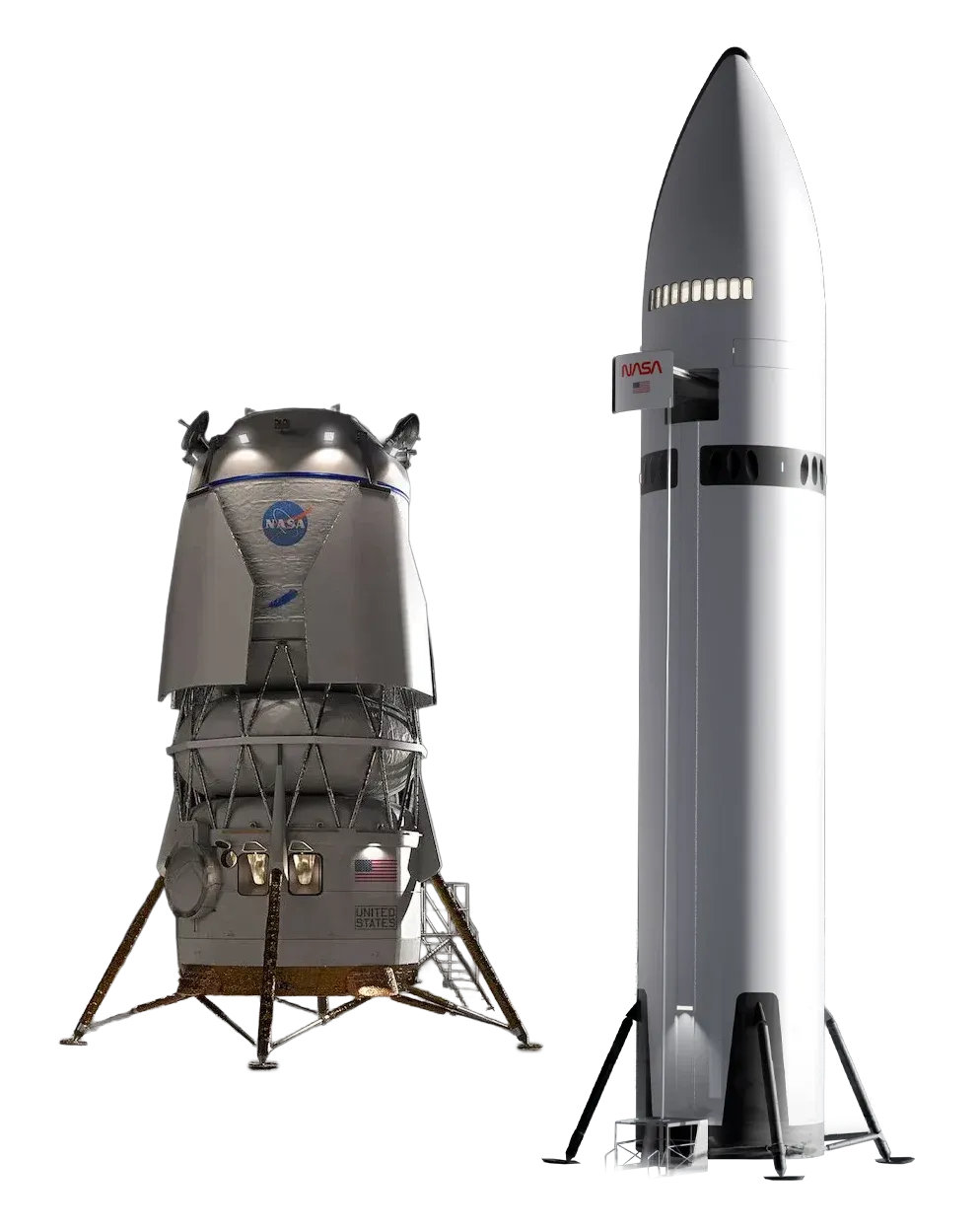
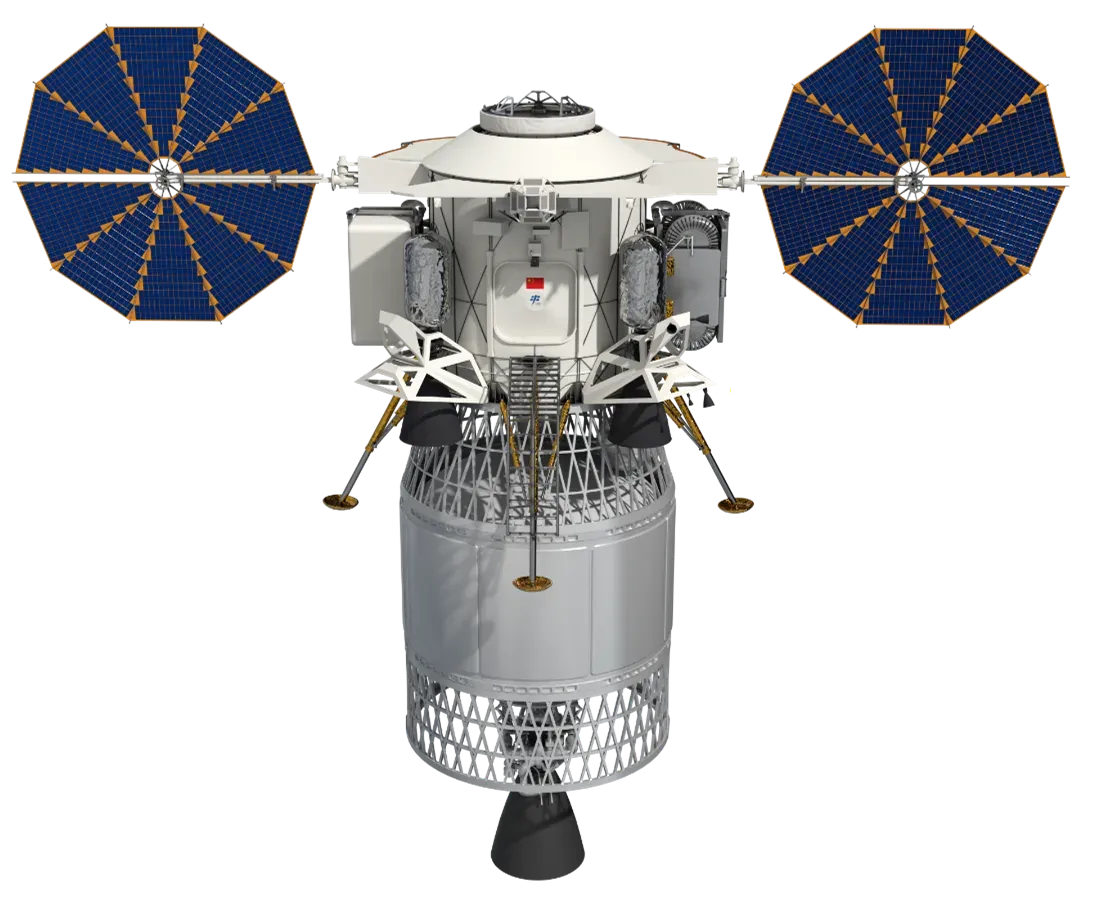
Lunar Lander For Artemis, NASA has contracted SpaceX for the Artemis IV lander and Blue Origin for Artemis V.
Blue Moon and Starship
Lanyue "embracing the moon"
“Space is not just about science, not just about exploration, but space is also about politics,” Cheng says. If China is the driving force behind a lunar economy, it will be able to influence standards, including those for positioning, navigation and timing data, “to make sure that Chinese is a language, if not the language of space.”
Although the technology approaches are similar, one big difference between the U.S. and Chinese programs is the level of government support. Consider the Apollo years, when Congress increased Saturn V funding from $8 million (in 2020 dollars) in fiscal 1961 to $11.6 billion (in 2020 dollars) in fiscal 1966. By contrast, the annual budget for SLS increased from $1.8 billion in fiscal 2011 to $2 billion in fiscal 2016.
China’s commercial space program is much younger, but government investment has skyrocketed over the last decade, according to a report, titled “Redshift,” released in September by the Commercial Space Federation. Since 2014, the country has invested a cumulative $85 to $95 billion in military and civil space technologies, “with [a] year-on-year trend upward from $4.9 billion in 2016 to nearly $20 billion in 2024,” the report reads.
“Given this impressive, sustained commitment, NASA should certainly count on Chinese astronauts getting to the lunar surface by 2030, and perhaps as early as 2028,” says Thomas Jones, a former NASA astronaut who completed a trio of spacewalks across four space shuttle missions.
NASA’s next steps
Since becoming administrator, Isaacman has emphasized his intent for the Artemis architecture to eventually “evolve” after the initial landings to incorporate more commercial rockets. But at least for Artemis IV and V, the plan hinges on an SLS lofting the astronauts in an Orion crew capsule to orbit, a process that was first tested to a degree in the 2022 uncrewed Artemis I demonstration. Artemis II is to build on that by testing Orion’s life-support systems, among other technologies.
In the original mission sequence, Artemis III was to be the inaugural landing, and also the first time an Orion capsule would rendezvous and dock with the chosen lander, a SpaceX Starship. NASA awarded the company $4.5 billion in contracts to supply landers for the first two landings, which at the time were Artemis III and IV.
But last year, U.S. lawmakers and NASA’s interim leadership began expressing concerns that Starship would not be ready in time and relies on techniques that remain unproven.
Chief among them is on-orbit refueling. SpaceX’s architecture calls for stationing a propellant depot in Earth orbit, which requires at least 10 tanker launches to fill up the depot with liquid methane and liquid oxygen. Each Starship lander must lift off atop a Super Heavy booster, then dock with this depot to fuel up before heading to lunar orbit. Multiple refueling launches were also required for Blue Origin’s architecture, which has a $3.4 billion contract to supply the Artemis V lander.
NASA late last year asked both companies to submit revised architectures for simplified landers that could be ready by 2028. In January, Isaacman told reporters he’d met with both providers about these plans.
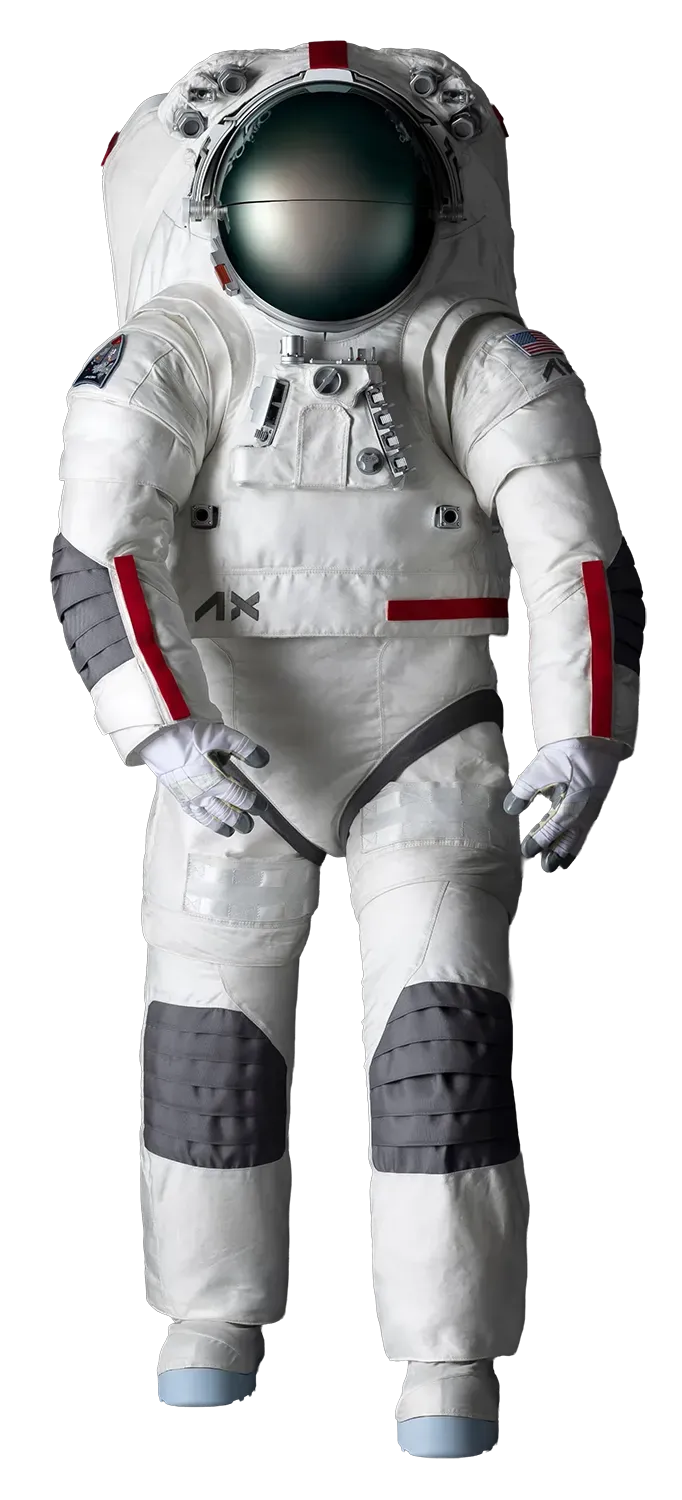
Spacesuits The crew will don these for surface excursions.
Axiom Extravehicular Mobility Unit
Wangyu “gazing into the cosmos”

“Space is not just about science, not just about exploration, but space is also about politics,” Cheng says. If China is the driving force behind a lunar economy, it will be able to influence standards, including those for positioning, navigation and timing data, “to make sure that Chinese is a language, if not the language of space.”
Although the technology approaches are similar, one big difference between the U.S. and Chinese programs is the level of government support. Consider the Apollo years, when Congress increased Saturn V funding from $8 million (in 2020 dollars) in fiscal 1961 to $11.6 billion (in 2020 dollars) in fiscal 1966. By contrast, the annual budget for SLS increased from $1.8 billion in fiscal 2011 to $2 billion in fiscal 2016.
China’s commercial space program is much younger, but government investment has skyrocketed over the last decade, according to a report, titled “Redshift,” released in September by the Commercial Space Federation. Since 2014, the country has invested a cumulative $85 to $95 billion in military and civil space technologies, “with [a] year-on-year trend upward from $4.9 billion in 2016 to nearly $20 billion in 2024,” the report reads.
“Given this impressive, sustained commitment, NASA should certainly count on Chinese astronauts getting to the lunar surface by 2030, and perhaps as early as 2028,” says Thomas Jones, a former NASA astronaut who completed a trio of spacewalks across four space shuttle missions.
The long view
In NASA’s view, the updated Artemis sequence is a more certain path to a landing by 2028 and establishing a surface base by 2030.
“Updating our architecture now demonstrates NASA’s and President Trump’s commitment to achieving the national space policy objectives,” an agency spokeswoman told Aerospace America. “With an increased cadence of lunar missions, NASA will maintain U.S. superiority in space exploration, including ensuring America’s timely return to the surface of the Moon ahead of China — this time, to stay.”
The experts interviewed for this piece were divided about the implications of a Chinese landing before a U.S. one. To Marcia Smith, a space policy analyst and founder of SpacePolicyOnline.com, the increasingly loud drumbeat in political circles of “beat China” is dismaying.
“Whining about China is just a distraction,” she says. “If China canceled their program, would we stop Artemis? The U.S. will always be the first country to land on the moon. We don’t need to do it again.”
In a similar vein, NASA’s schedule and objectives have limited bearing on China’s plans, notes Swope.
“No matter what the United States was doing with Artemis, China would still be going to the moon,” he says. “No doubt that China would be happy to have that trophy and do it before Artemis returns U.S. astronauts to the lunar surface.”
Others cast this “space race 2.0” in starker terms: not just a race to the moon, but as a demonstration of technical prowess.
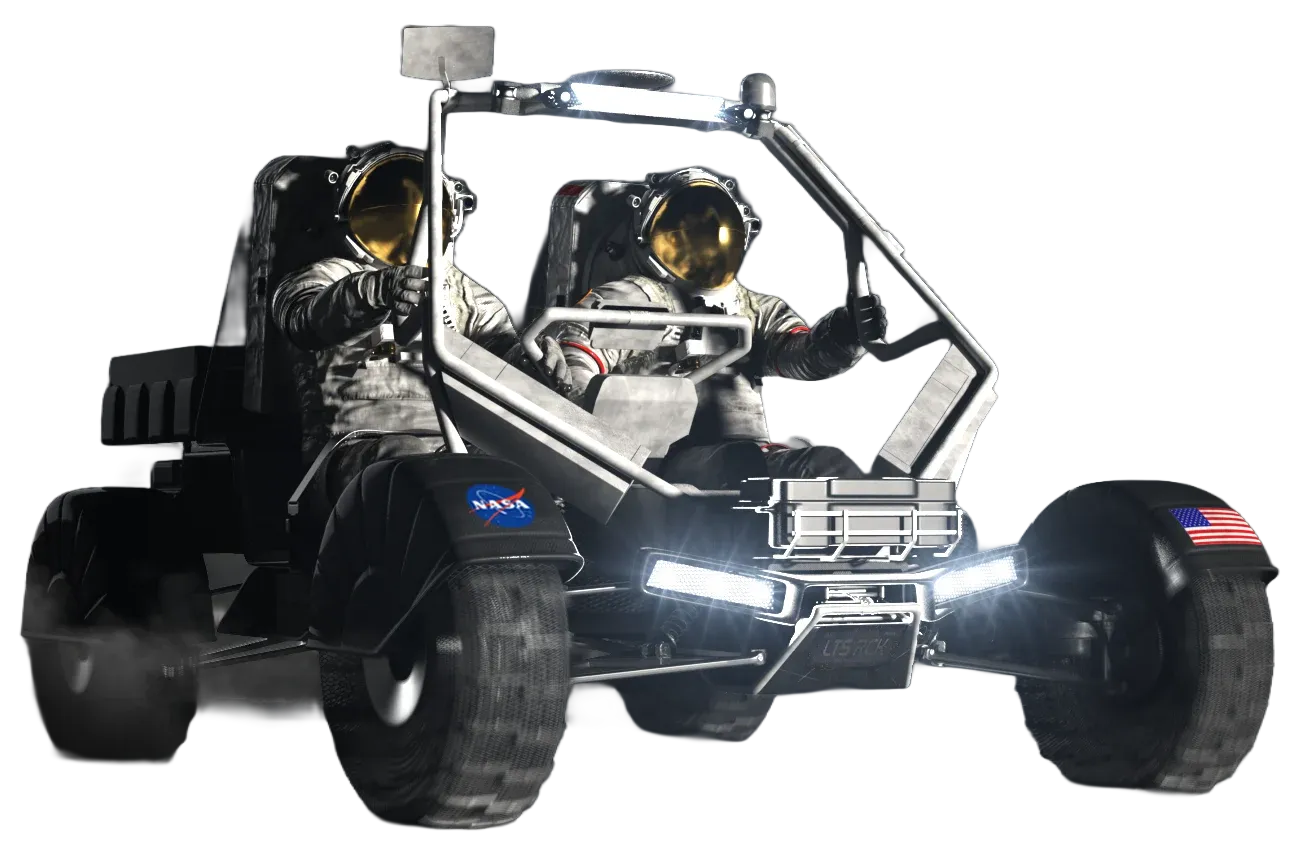
Lunar Buggy These vehicles would enable astronauts to traverse longer distances on subsequent missions.
Lunar Terrain Vehicle
Tansuo "to explore the unknown"

If China lands astronauts first, “they’ll use this lunar triumph to tout their communist system’s effectiveness, but also that of their military and aviation technology exports,” says Jones, the former astronaut. “The U.S. will have to work hard and fast to dig out of that geopolitical hole.”
U.S. Rep. Brian Babin (R-Tex.) put forth a similar argument in late February, during a keynote address at AIAA’s ASCENDxTexas conference.
“Leadership in space is not symbolic,” said Babin, who chairs the House Science Committee. “It shapes standards, partnerships and long-term strategic influence.”
He added: “This moment is not just about returning to the moon, folks. It’s about defining the next era of human exploration.”
In that sense, the stakes are higher than those of the 1960s race between the U.S. and Soviet Union, says Jonathan Roll, a program manager for Arizona State University’s Space Technology & Science Initiative. He is the lead researcher and co-author of the Commercial Space Federation’s “Redshift” report, which concluded the U.S. could lose its dominant strategic position in space to China.
“This is not really a race” between two nations, Roll says. “This is a perpetual competition of technological advancement. And that means it’s going to be multigenerational to have continuity with different groups being interested in advancing technologies faster.”
Metaphorically, he describes the U.S. as the driver of a car who sees a small speck in the rearview mirror, barely visible on the horizon, but coming up fast.
“China is accelerating. They have shifted gears. America still has the toolkit to also shift into another gear. Otherwise, they are going to blow by us.”

Leonard David has reported on the space industry for more than five decades. He is the author of several books, including “Mission to Mars — My Vision for Space Exploration,” co-authored with Apollo 11’s Buzz Aldrin.

Cat Hofacker became associate editor in 2021 after two years as our staff reporter, covering the Boeing 737 MAX crashes and inception of NASA’s Artemis moon program.