Starliner investigation points to ‘leadership missteps’ at NASA, hardware flaws
 By Cat Hofacker
 By Cat Hofacker
NASA’s desire to have two providers of crew transportation services for the International Space Station at times overrode concerns about technical issues with Boeing’s Starliner capsule, according to a report released today from a NASA-appointed investigation team.
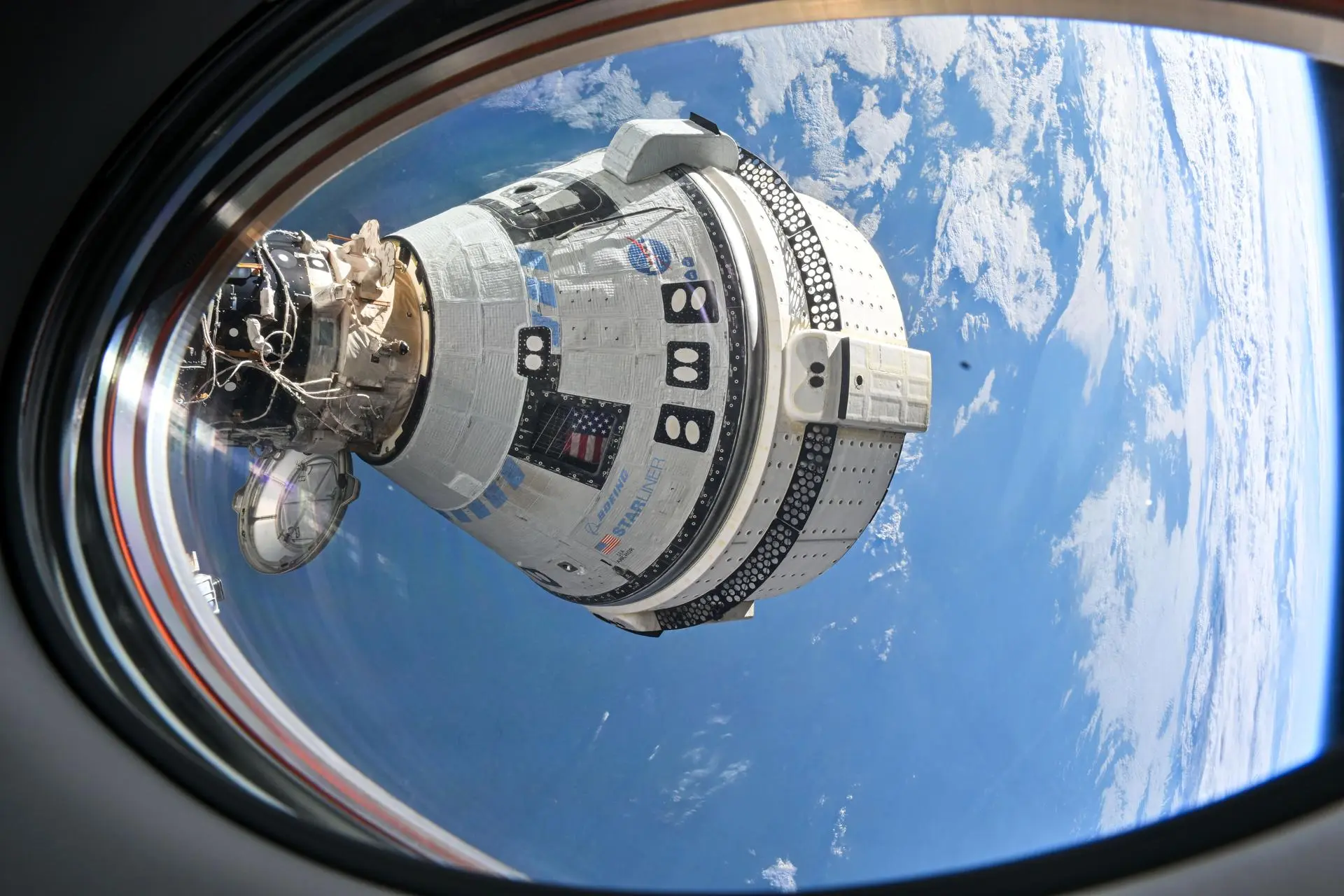
In June 2024, Starliner experienced multiple thruster failures while en route to ISS with astronauts Butch Wilmore and Suni Williams for its Crewed Flight Test, which was to be the final step before NASA approved the design to routinely ferry astronauts to and from the station.
Originally scheduled to last eight days, CFT was extended for months as NASA and Boeing fired Starliner’s thrusters on orbit and conducted ground tests back on Earth to determine the root cause of the failures. NASA ultimately opted to return the unoccupied capsule to Earth that September and bring the astronauts home in March 2025 aboard a SpaceX Crew Dragon.
“We returned the crew safely, but the path we took did not reflect NASA at our best,” Administrator Jared Isaacman told reporters during a Thursday afternoon briefing. The agency chartered an independent Program Investigation Team a year ago to investigate the mission; the report was finalized in November.
“The team’s findings reveal a complex interplay of hardware failures, qualification gaps, leadership missteps, and cultural breakdowns that collectively posed unacceptable risks to crew safety,” the report reads.
The root cause of the thruster issues remains unknown, but the report identified a number of what Isaacman described as “organizational root causes.” These included a “limited touch acquisition and management posture” that “left the agency without the system’s knowledge and development insight required to confidently certify a human-rated spacecraft.”
“Starliner has design and engineering deficiencies that must be corrected, but the most troubling failure revealed by this investigation is not hardware,” Isaacman said Thursday. “It’s decision making and leadership that, if left unchecked, could create a culture incompatible with human spaceflight.”
In a statement, Boeing said it remains committed to the Starliner program: “NASA’s report will reinforce our ongoing efforts to strengthen our work, and the work of all Commercial Crew Partners, in support of mission and crew safety, which is and must always be our highest priority. We’re working closely with NASA to ensure readiness for future Starliner missions and remain committed to NASA’s vision for two commercial crew providers.”
Starliner has experienced multiple flight test anomalies dating back to OFT-1, short for Orbital Flight Test-1, its first uncrewed flight to ISS. That 2019 test was cut short due to a coding error that caused the capsule to fire its thrusters at the wrong time, expending too much fuel to reach the station. Attempts to launch another Starliner in 2021 for a second uncrewed flight, OFT-2, were scrubbed due to stuck valves in the capsule’s service module. When that flight commenced months later, Starliner reached ISS, but three of its service modules thrusters failed during the mission.
Investigations by NASA and Boeing into these issues “did not drive to or take sufficient action on the actual root cause of the anomalies that we observed, the investigations often stopped short of the proximate or the direct cause, treated it with a fix or accepted the issue as an unexplained anomaly,” Isaacman said. “In some cases, the proximate cause diagnosis itself was incorrect due to insufficient rigor in following the data to its logical conclusion.”
The next Starliner flight, a cargo resupply to ISS, is scheduled for no earlier than April. Isaacman did not say whether that target would hold, but emphasized that investigation of the thrusters continues. He said “NASA will not fly another crew on Starliner until technical causes are understood and corrected.”
Although ISS is scheduled to be decommissioned in 2030 and deorbited, Isaacman said NASA sees a “near endless” demand for crew and cargo transportation well into the future, particularly from the crop of commercial space stations in development.
“America benefits from having multiple pathways to take our crew and cargo to orbit,” he said.