Private space station developers advocate for multiple pathways to secure NASA approval
 By Cat Hofacker
 By Cat Hofacker
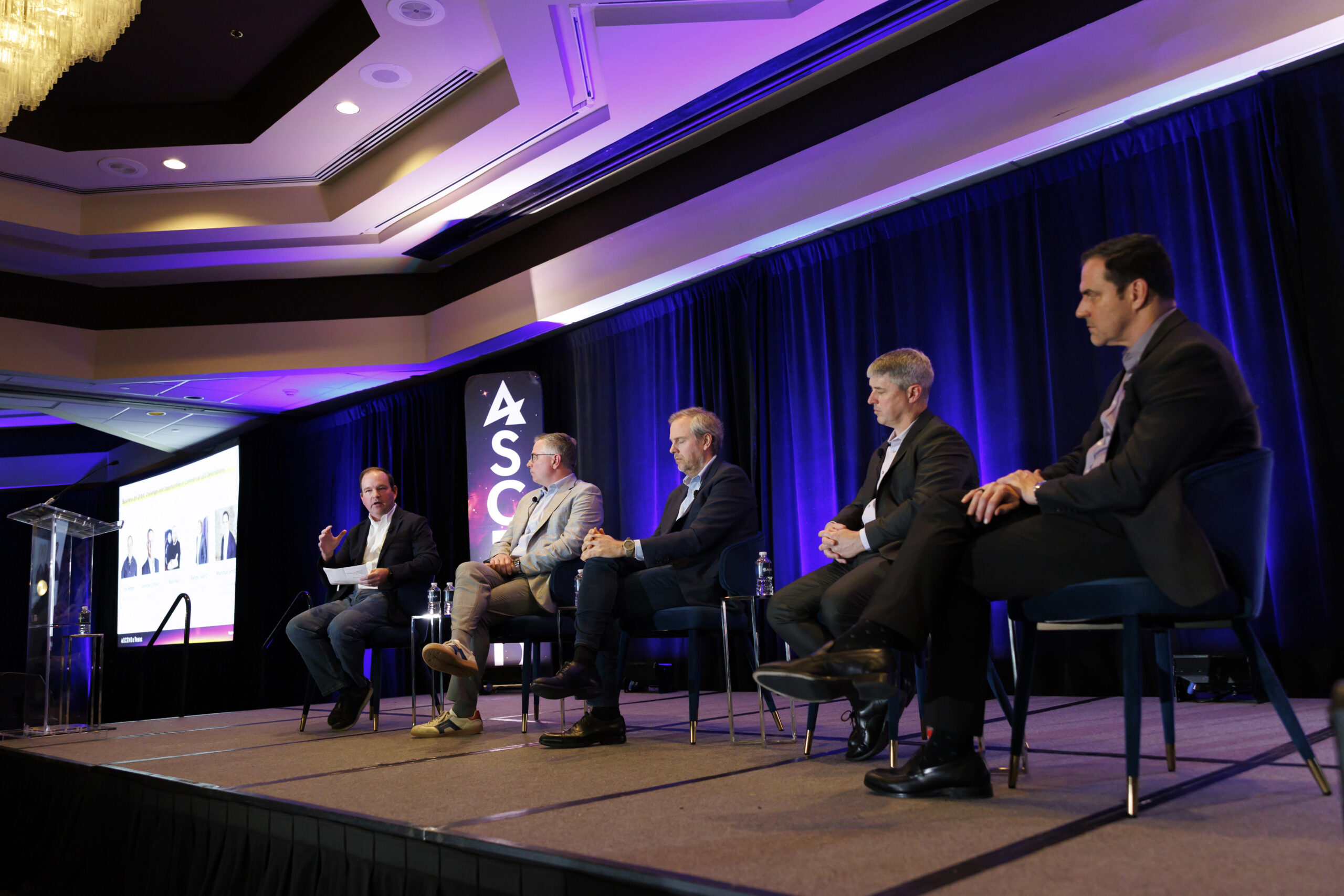
ASCENDxTEXAS, HOUSTON, Texas — As NASA mulls the acquisition strategy for the next phase of its commercial space station program, executives from several of the developers urged an approach that offers flexibility for demonstrating they can meet the agency’s requirements.
“Certainly, no one is going to argue that we give up on safety,” said Jonathan Cirtain, CEO of Axiom Space, during a panel here. “But there’s different approaches to meet the same safety criteria, and those should all be allowed as we go off, demonstrate and ultimately fly these new vehicles.”
Each of the four companies represented on the panel are employing a slightly different approach to orbiting their stations by 2030, the target date NASA has set for retiring the International Space Station. Axiom Space has an agreement with NASA to attach its first module to ISS for a time; Blue Origin is leveraging technology developed in other divisions of the company for its Orbital Reef station; Starlab Space plans to launch its entire station in one go aboard a SpaceX Starship; and Vast is targeting next year to launch Haven-1, a precursor station to the larger Haven-2 lab in development.
On-orbit demonstrations like the one planned by Vast are one method by which NASA could “bulk-verify requirements,” said Randy Lillard, Blue Origin’s program manager for Orbital Reef. “Instead of checking each requirement with a test all the way down to the lowest” level, a provider could check off multiple requirements with a single test, he said.
Starlab, meanwhile, plans to reduce risk by leveraging “the capability that’s been developed in space for the last 20, 30, 40 years,” said CEO Marshall Smith. Many of those technologies have been demonstrated on ISS. “How do we repackage that so we can reduce our risk?”
NASA had planned to release the CLD Phase 2 request for proposals last year, with the aim of awarding at least one firm-fixed-price contract that would cover the costs of station certification. Acting NASA Administrator Sean Duffy in August moved to alter that approach, to instead enter into multiple funded Space Act Agreements that would see the chosen stations through critical design reviews.
None of the panelists expressed a preference for either strategy, but Smith noted that “government commitment” is an important metric for the private investors who have funded Starlab and the other ventures.
“In that respect, a contract coming out is very important,” he said. “It’s time to move on. It’s time to get that decision made.”