‘Perfect bullseye splashdown’ caps Artemis II lunar mission


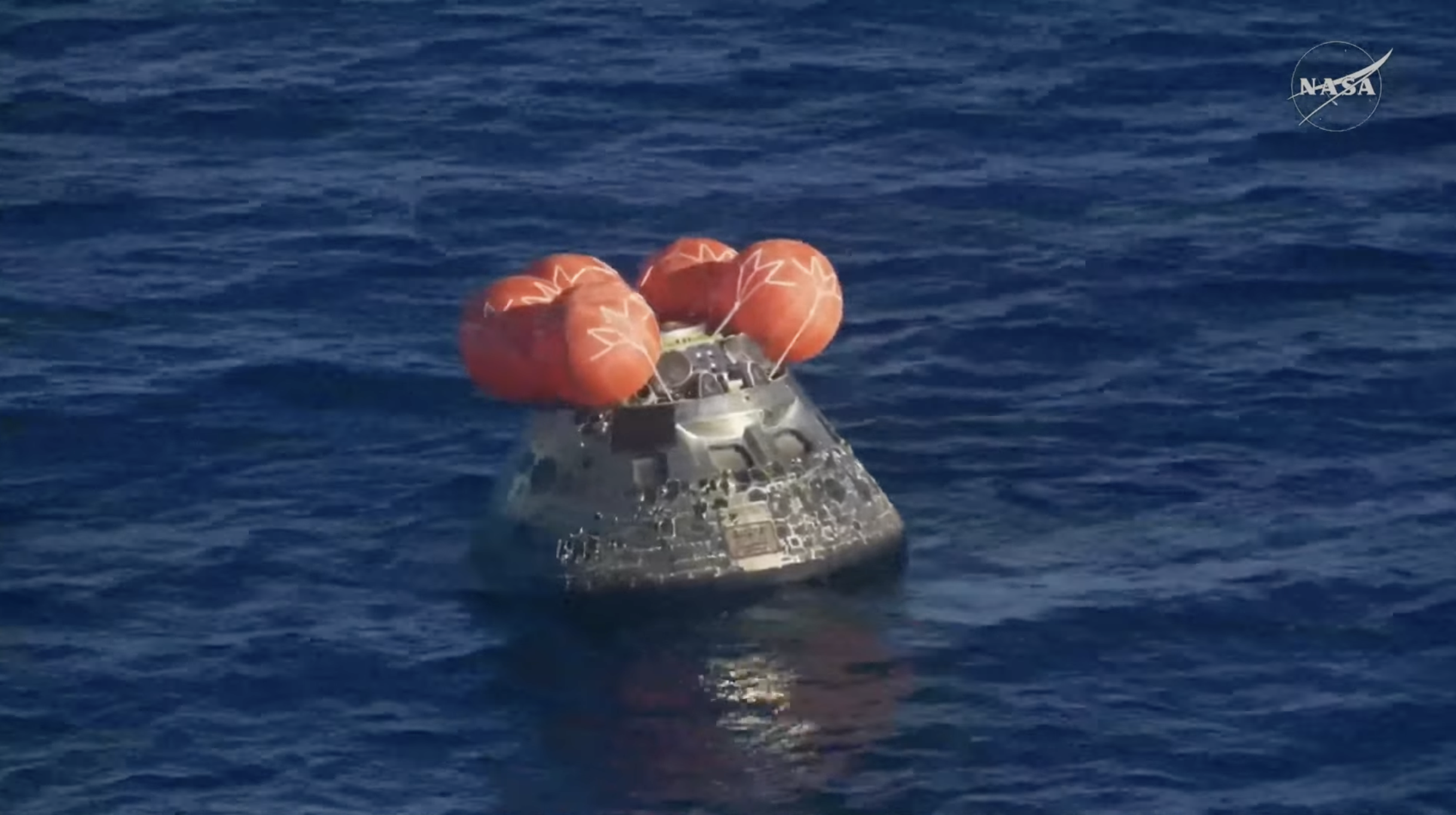
The Orion crew module carrying the four Artemis II astronauts splashed down Friday evening in the Pacific Ocean off the coast of San Diego, concluding a nine-day mission that marked NASA’s return to crewed lunar exploration.
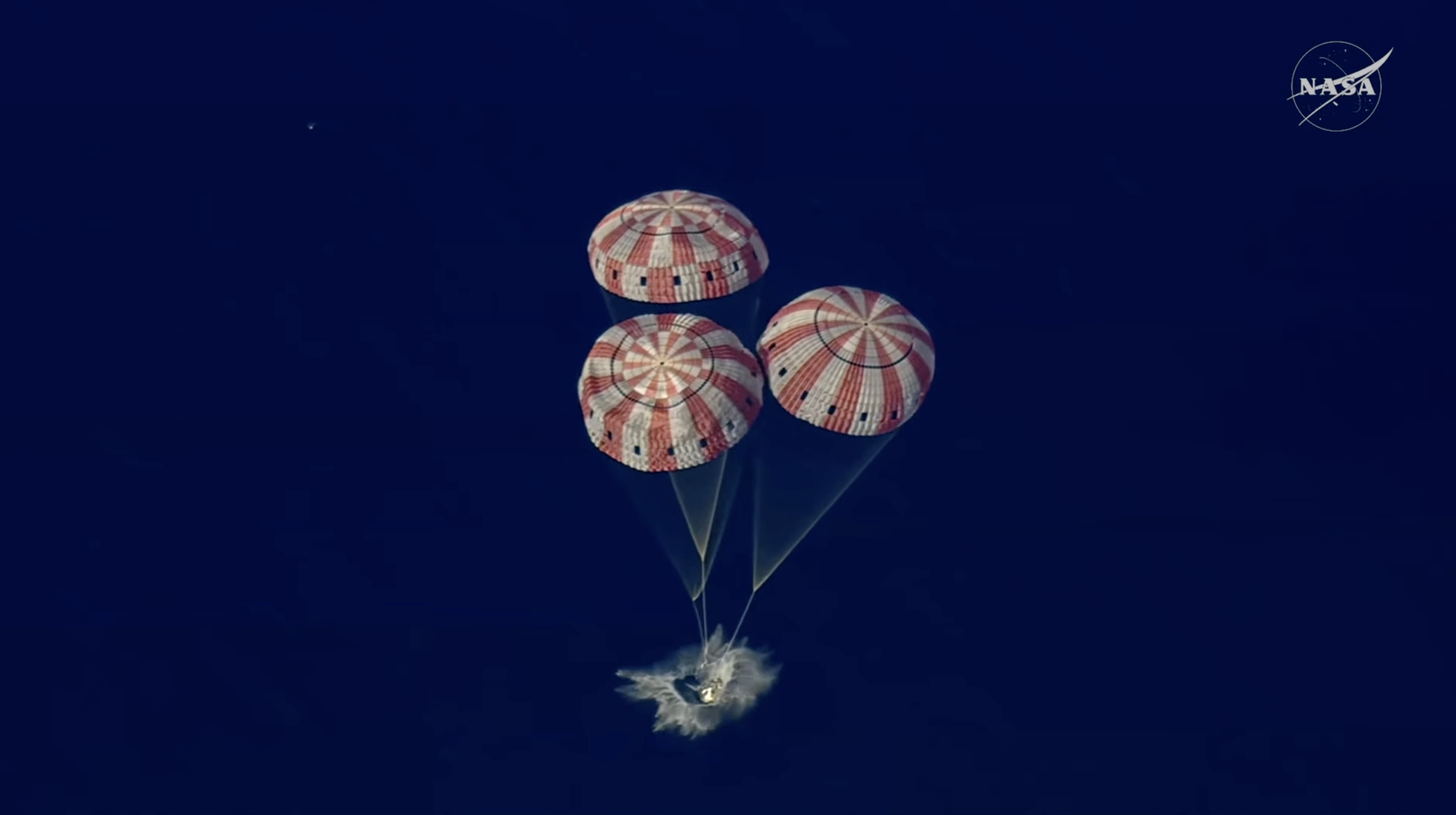
After a 14-minute plunge through the atmosphere, the spacecraft descended under three striped red and white parachutes before landing with a big splash in the waves. Almost immediately after splashdown at 8:07 p.m. Eastern, recovery boats made their way toward the capsule, named Integrity, although the final approach by the boats was slightly delayed as NASA worked through a communications glitch to ensure Integrity was properly powered down.
“A perfect bullseye splashdown for Integrity and its four astronauts,” said Rob Navias, moderator of the NASA livestream.
“This was a textbook entry and a textbook touchdown,” he added.
Once extracted from the capsule, NASA astronauts Reid Wiseman, Victor Glover and Christina Koch and Canadian astronaut Jeremy Hansen will be hoisted onto the waiting amphibious transport dock ship, the USS John P. Murtha, for medical assessment before returning to NASA’s Johnson Space Center in Houston.
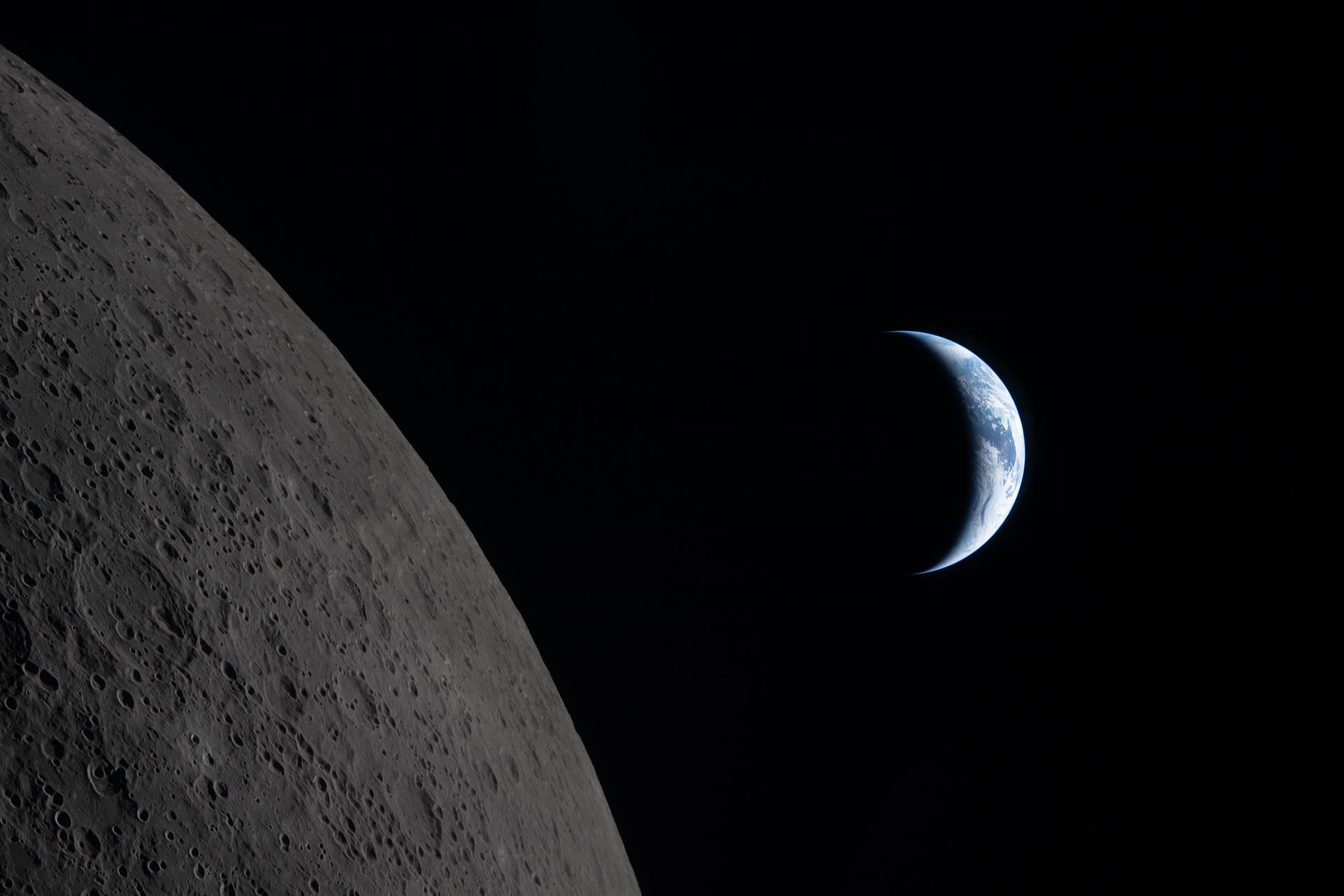
The mission, which began April 1, brought a number of firsts. During an April 6 lunar flyby, the astronauts became the first humans to observe the far side of the moon and an “Earth rise” with the naked eye since the Apollo 17 mission in 1972. The mission also took the crew 406,771 km from Earth, topping the record set by Apollo 13 for the farthest humans have traveled.
“There’s so much that you’ve seen already, but all the good stuff is coming back with us,” Glover told reporters Wednesday evening during an on-orbit press conference. “There’s so many more pictures, so many more stories, and, gosh, I haven’t even begun to process what we’ve been through.”
For NASA, Artemis II also marks a step toward its goal to return astronauts to the lunar surface in 2028, followed by annual lunar landings and the establishment of a permanently inhabited lunar base. The next test, Artemis III, is slated for mid-2027. This demonstration in low-Earth orbit is to practice how astronauts will transfer from Orion to one or both commercial lunar landers that are in development.
From a technical perspective, Artemis II was an opportunity for NASA to verify a range of technologies and techniques required for Artemis III and beyond, from life support systems to manual spacecraft control. In daily status briefings held throughout the mission, agency officials reported no serious problems with those technologies, although Orion’s toilet malfunctioned at least twice, requiring a vent fan to be unjammed and an in-space maneuver to thaw a frozen wastewater vent tube.
Mission managers late Wednesday also added a test to troubleshoot a “small leak” of helium gas in the Orion service module’s liquid oxygen pressurization system, Jeff Radigan, the Artemis II lead flight director, said at the Thursday status briefing. The leak — which officials said they were aware of beforehand — hasn’t affected the capsule’s performance, Radigan said, and NASA was confident it didn’t pose a risk for reentry. The service module is jettisoned before the crew module carrying the astronauts plunges through the atmosphere.
“We really have had a really well-functioning spacecraft. We don’t have any major things,” Rick Henfling, NASA’s entry flight director for the mission, said during a Wednesday briefing.
After inspection in California, the capsule is to be transported by truck back to NASA’s Kennedy Space Center in Florida so NASA can determine how many of its components can be reused. The agency has already concluded the service module helium leak will likely require “an extensive redesign of that valve system” before the Artemis IV landing, Associate Administrator Amit Kshatriya said Thursday. He added that the service module for the Artemis III LEO demonstration won’t need to be redesigned because “I don’t need those valves to hold pressure in the same way for a LEO orbiting mission, but for a lunar orbit mission, I do.”
NASA also must evaluate Orion’s performance, particularly how its heat shield fared during reentry. The agency opted to adjust the reentry profile for Artemis II, after the unoccupied capsule that completed the Artemis I demonstration in 2022 experienced greater damage than expected.
Although the crew had previously expressed confidence in NASA’s assessment of the heat shield, they acknowledged Wednesday that reentry was a big moment. Glover told reporters he’d been thinking about reentry and splashdown since he’d been assigned to the mission in 2023.
“I’m going to be thinking about and talking about all of these things for the rest of my life, for sure,” he said.