

Lawrence Sperry Award
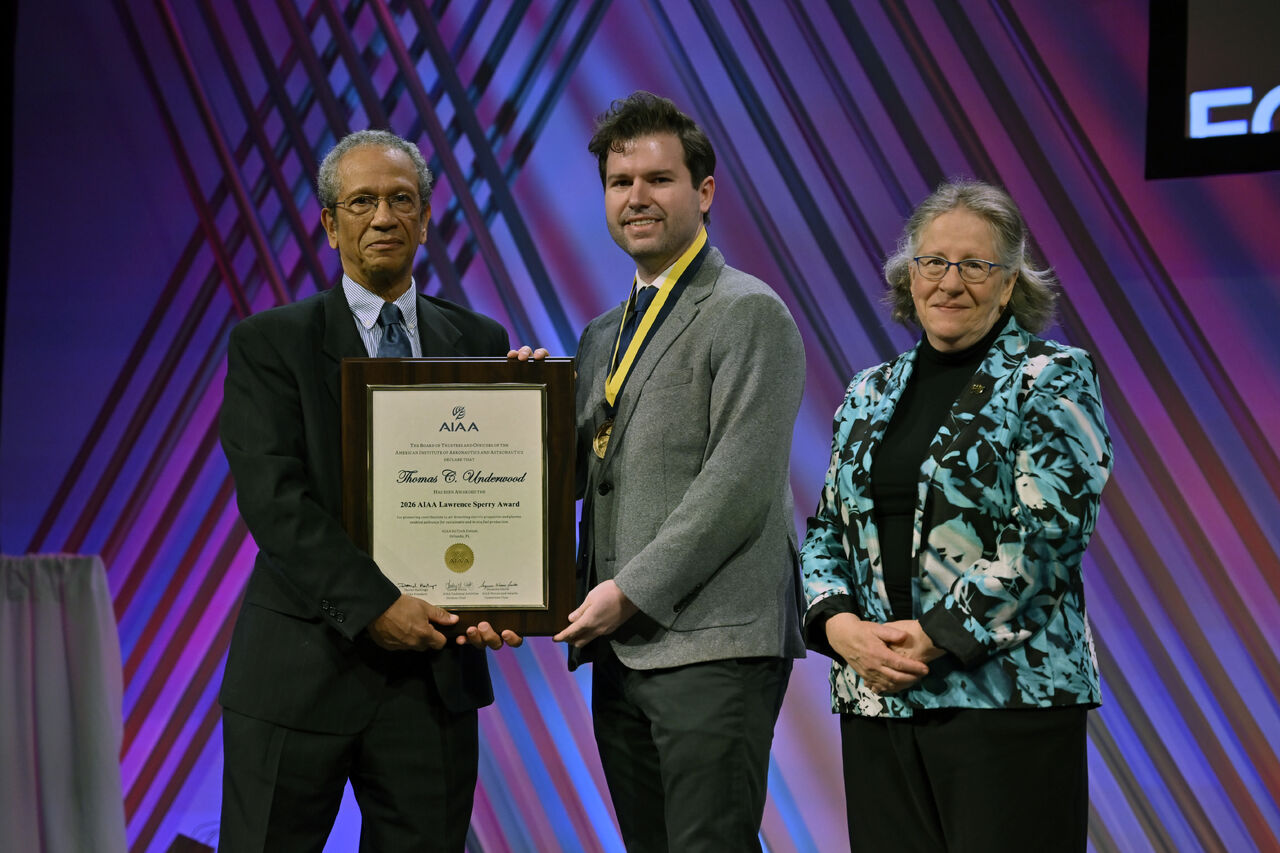
Each year, AIAA recognizes a notable contribution by a young professional, age 35 or under, to the advancement of aeronautics or astronautics with the Lawrence Sperry Award. This year Thomas C. Underwood is honored “for pioneering contributions to air-breathing electric propulsion and plasma-enabled pathways for sustainable and in situ fuel production.”
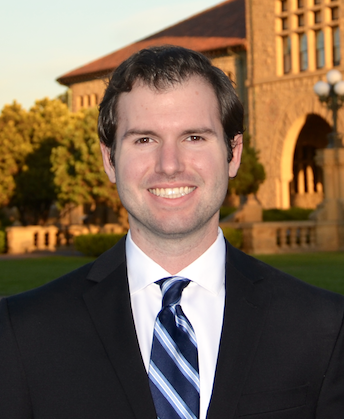
Underwood, Assistant Professor in the Department of Aerospace Engineering and Engineering Mechanics at the University of Texas at Austin, received his Ph.D. in Mechanical Engineering from Stanford University and was a postdoctoral fellow at Harvard University. His research lies at the intersection of plasma physics, fluid mechanics, and chemistry, and seeks understanding of how plasmas can be leveraged to address challenges in space, propulsion, and the synthesis of clean sustainable fuels. Underwood is a recipient of numerous distinctions including the AFOSR Young Investigator Award and the NASA Early Career Faculty Award.
A Childhood Shaped by Curiosity and Hands-On Learning
Underwood grew up in rural Florida, “where life moved a little slower and there was space to think. That quiet environment gave me the freedom to pursue my interests,” he noted. “For me, that was always building something, taking things apart, trying to understand how they worked, and putting them back together in new ways. A lot of engineers say that, but for me it was less about the gadgets and more about the thinking. When you grow up without so much noise, you learn to sit with problems and find the fun in solving them. That spirit continues to drive me to find solutions, even as I find my ideas don’t work. The fun and joy of discovery just cannot be matched.”
He became passionate about science in high school thanks to guidance from great teachers and his parents. Although he was inspired by many educators throughout his life, who instilled curiosity and a love of learning, one teacher, Chip Davis, made a large impact on the direction of his life in science. “Mr. Davis was really passionate about alternative ways to teach kids to think. He believed that real understanding came from building things, by getting your hands involved, seeing how systems operated, and learning through experimentation.”
That mindset continues to shape Underwood’s teaching philosophy today. “I believe students grow most when they encounter concepts embedded in real systems – when students are forced to practice and think through how ideas interact with the real world. This kind of learning is fundamentally different from the traditional approach of isolating concepts and layering complexity gradually. Both have value, but there is something powerful about seeing ideas come alive in action. It builds intuition, confidence, and the kind of problem-solving ability that lasts well beyond the classroom.”
He also described one teenage experience that stood out to him. “A few years after the Space Shuttle Columbia exploded, I traveled to Cape Canaveral to see the launch of Space Shuttle Discovery. Seeing that launch was powerful. It showed me what engineers can build and what ingenuity can do. For someone who didn’t come from a family of engineers or professors, this was an important moment for me, a moment that gave me confidence that engineering is what I wanted to pursue. It also inspired me to pursue big problems that matter to our society.”
The Pursuit of Fundamental Truths Through Research
His path to aerospace engineering was somewhat atypical. Underwood explained that he “started in nuclear engineering with the goal of working at a reactor. After my freshman year the Fukushima nuclear accident happened and that dream changed quickly.” Transitioning to physics attracted by its rigor, “I gravitated toward classes that pursued very fundamental answers to why things happened. As I have grown in my own career I always come back to searching for fundamental truths to ground any idea I have.”
Research had the biggest impact on his trajectory during his undergraduate years. “[As] someone that came into college not knowing what research was, how research was conducted, or how problems were chosen, I was very fortunate to begin working with Professor Subrata Roy (AIAA Associate Fellow) at the University of Florida as a very early undergraduate student. He taught me how to funnel my passion for science into technologies.” Underwood began working in his lab in 2009 on plasma flow control. “I was exposed to the world of low-temperature plasmas that became the field that I continue to work in. The use of low-temperature plasmas was a topic that was growing in popularity at the time for active flow control and turbulent drag reduction. I worked with Subrata on this topic and was able to deploy it in a low-speed wind tunnel at NASA Langley a few years later. That experience taught me that, while drag reduction could be measured, the physics driving it in the plasma were rich in complexity.”
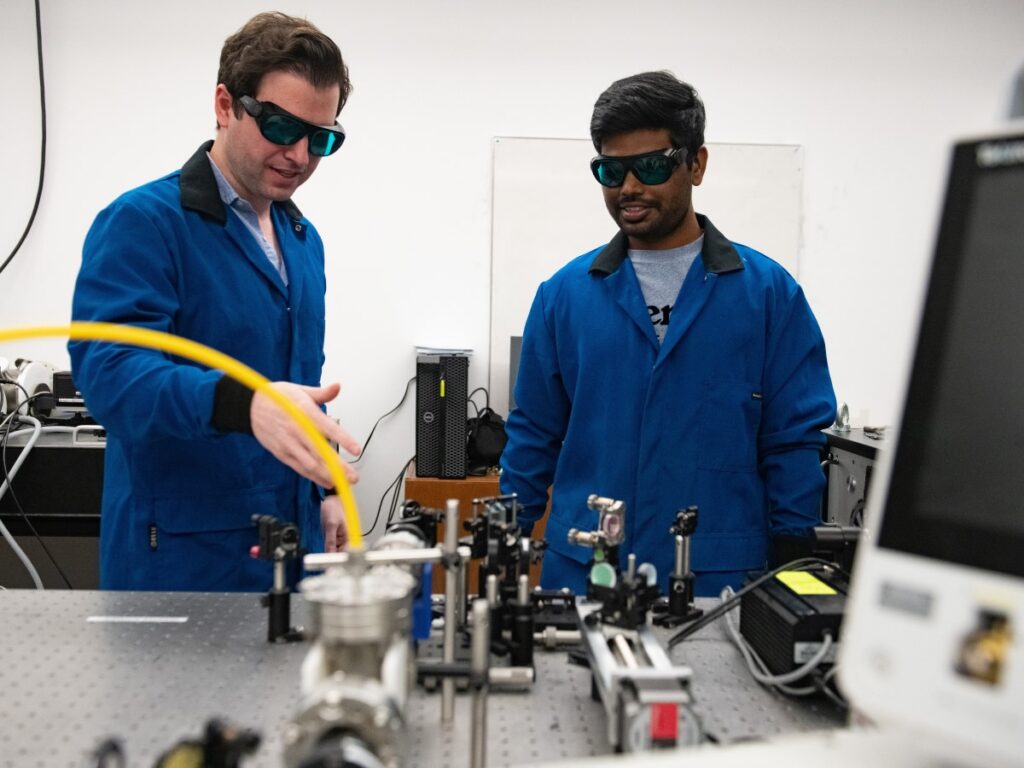
During his sophomore year he interned at Army Research Laboratory and began working on rotorcraft flow control using plasma actuation with Dr. Bryan Glaz. “That experience allowed me to see an end technology goal to motivate what I was studying. It really helped frame research and is something that I still think about today.”
Underwood also completed internships at Princeton Plasma Physics Laboratory and through NASA Langley’s Aerospace Research Student Scholars (LARSS) program providing access to world-class experimental facilities and exposure to the scale and rigor of aerospace research at NASA. “More importantly, it reinforced my desire to pursue experimental work, to build, test, and learn directly from physical systems.”
While pursuing his Ph.D. at Stanford University, he joined the laboratory of Professor Mark Cappelli to study mechanical engineering. “Mark taught me how plasmas behave, how to diagnose them, and how to control them. He introduced me to spacecraft propulsion and the principles that govern the design of plasma engines. More importantly, he shaped how I think about research. He gave me the freedom to pursue problems that I found compelling,” allowing Underwood to develop his own process and creativity. And although independence may be difficult to sustain as a faculty member with proposal deadlines and deliverables, he remains convinced that it is essential for students to grow into original thinkers.
Moving to Harvard he entered a very different research environment. “I worked with Professor George Whitesides, who taught me how to frame research questions. George’s creativity spans disciplines, but what stood out most was his insistence on asking a simple question: ‘Who cares?’ We have asked that question in every aerospace project in my group. If we cannot answer it clearly, we rethink the problem. The question is deceptively difficult, but it forces clarity and purpose in research. Simple questions set the foundation of innovations that make real and lasting impact.”
After graduate school, Underwood wrestled with whether to start a company or build a laboratory in academia. “Ultimately, I chose to join UT Austin, and it has been an incredible journey. I have been able to engineer new technologies and propulsion systems while also mentoring students who are discovering their own passions. Watching them grow, seeing their confidence develop as they tackle hard problems and go on to make an impact of their own, has been just as meaningful as any technology we have built.”
Rethinking the Limits of LEO and Expanding What Missions Can Carry
Underwood’s research career has taken him in directions he did not anticipate. “That’s the fun part about technology development and operating on the cutting edge of science. As ideas and opportunities present themselves, you are free to pivot toward what you believe solves the problem.”
He began graduate school studying electromagnetic propulsion; the work focused on extending a device known as a Cheng plasma gun. These thrusters use electromagnetic forces to accelerate plasma to high exhaust velocities through a magneto-deflagration wave. High exhaust velocity is directly tied to fuel efficiency in spacecraft propulsion that makes such systems attractive for missions with strict payload constraints. “At that stage, I was focused almost entirely on the physics of plasma acceleration and propulsion performance.”
“What excites me most about propulsion today is that traditional design limits are being reconsidered. New architectures that integrate new energy sources, acceleration mechanisms, and ideas that rethink how propellant is stored, harvested, and utilized in missions are emerging because existing technologies are approaching practical limits. There is still a long way to go, and that uncertainty makes the field dynamic and rewarding.”
At Harvard he focused on “how plasmas can be used to selectively convert molecules into value-added chemicals. That experience broadened my perspective. I began thinking not only about how to accelerate propellant, but how to generate or transform it. The idea that fuels could be converted or produced on demand opened new possibilities for propulsion systems. It also suggested intriguing opportunities for interplanetary missions, where propellants might be produced from local atmospheres rather than carried from Earth.”
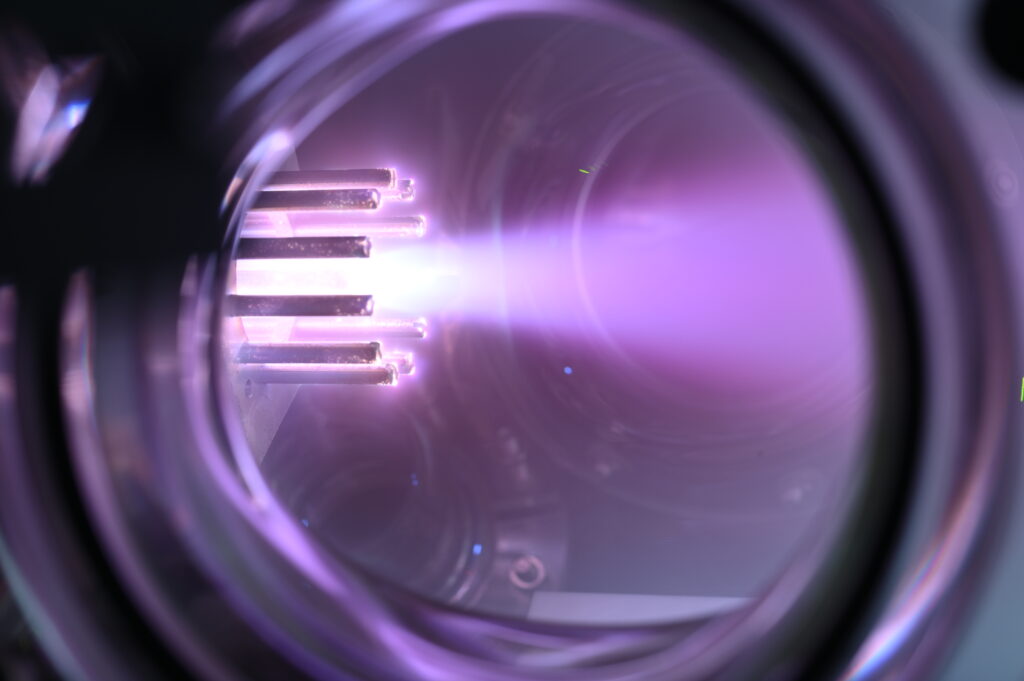
As Underwood started his faculty career, these threads converged into air-breathing electric propulsion. This concept reimagines the constraints of traditional electric propulsion. Instead of storing propellant onboard, the vehicle harvests atmospheric particles at very low Earth orbit altitudes where atmospheric drag is significant. The challenges are substantial. Can a plasma be sustained at those pressures? Can sufficient propellant be harvested to compensate for drag? How do electric propulsion systems operate efficiently on reactive species such as atomic oxygen and nitrogen? These questions pushed his research into new regimes of plasma physics and system design that would be self-replenishing.
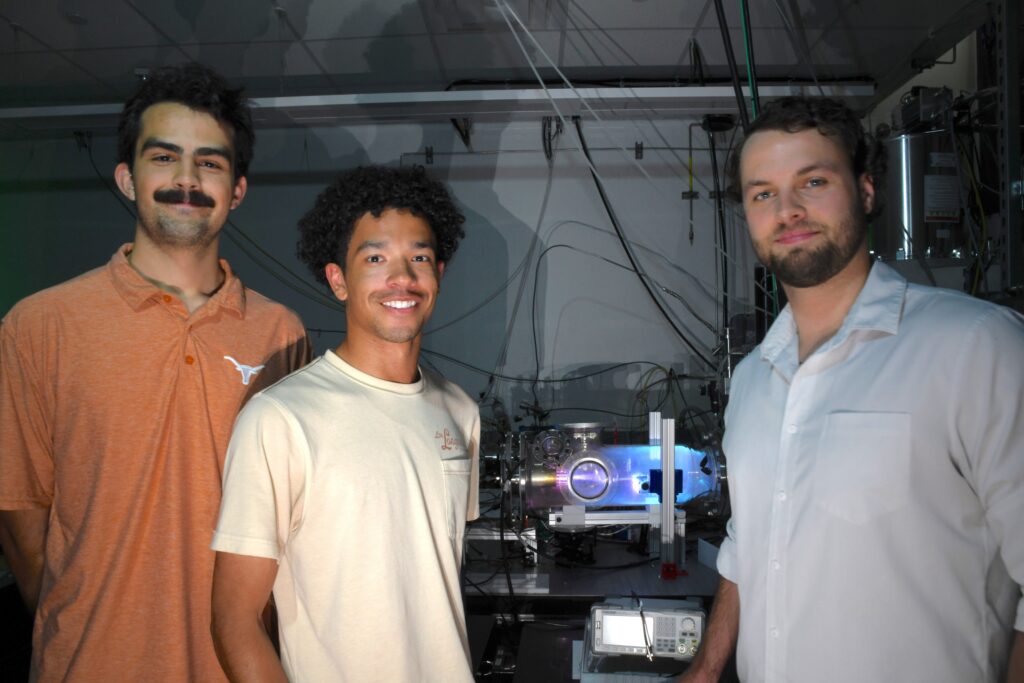
Through the Air Force and the DARPA TALOS program, Underwood’s team designed and tested an air-breathing thruster based on a modified electromagnetic magneto-deflagration concept. The system demonstrated compensation for drag at altitudes of 200–300 km using propellant that harvested at those altitudes and is now approaching final prototype testing at the Naval Research Laboratory.
The next steps, through the NASA Early Career program, are concepts to develop a high specific-power, high specific-impulse electromagnetic accelerator that leverages magnetic nozzle compression to heat plasma to extreme temperatures, with the long-term vision of fusion-assisted propulsion. The approach avoids permanent magnets and emphasizes scalability for interplanetary travel.
Underwood’s group has expanded into carbon-free fuels and plasma-enabled molecular conversion building directly on his Harvard experience. “The idea is to leverage electrical energy to convert molecules[with] longer term applications to convert the atmosphere of Mars into fuels with world of opportunities of missions no longer constrained by what you can bring [with you].”
Mentorship Focuses Career Path
“My career path has not followed the trajectory I once imagined,” Underwood noted, “I did not plan to become a professor. I believed the greatest impact might come from building a company. Instead, I joined the Department of Aerospace Engineering and Engineering Mechanics at UT Austin in 2021. Building a laboratory has been both challenging and deeply rewarding.”
This transition from student to faculty was shaped by the mentorship received from colleagues active within AIAA, including Noel Clemens, Karen Willcox, L. Raja, Philip Varghese, and David Goldstein who provided guidance and perspective during the early stages of his career. Now “I have had the opportunity to mentor a growing number of graduate and undergraduate students. Watching them develop their own research identities has become one of the most meaningful aspects of my work.”
Inspired by Those Who’ve Come Before
Underwood recounted the many influences along his career, especially those at the University of Florida, Stanford, and Harvard – “Each of them shaped not just what I studied, but how I think. My mentors taught me how to ask questions properly, how to identify the real problem hiding beneath the obvious one, how to build intuition before building equations, and how to build technologies.”
He also was inspired by the courage and adventurous spirit of astronauts John Glenn, Neil Armstrong, Buzz Aldrin. As he matured, Underwood’s focus shifted toward the innovators behind the missions that enabled the astronauts to get there. “I became fascinated by figures like Robert Goddard, Wernher von Braun, and Robert Jahn, individuals who defined the history of propulsion in the world. … They built institutions, assembled teams, established technical roadmaps, and committed to visions that would take decades to mature. Electric propulsion did not become foundational to space systems overnight. It required leaders who were willing to invest in difficult problems, shape communities, and push forward even when applications were not immediately obvious. This is what the AIAA community is all about.”
“What inspires me most about people who define research directions is the scale of their impact,” he said. “They do more than publish papers, they create ecosystems. They influence generations of students, guide national priorities, and shape industries in ways that ripple outward for decades. Their work becomes infrastructure that others build upon. … I aspire not just to contribute a few ideas, but to help shape the trajectory of fields that will outlast me. That is the kind of opportunity that motivates me every day.”
AIAA Offers a Place to Learn, Share, and Connect with the Broader Community
Underwood’s first exposure to AIAA was presenting a research paper back in 2011. Today AIAA SciTech Forum is the primary venue for the electric propulsion community to share advances and define where the field was heading. “If you want to understand the state of the art, or help shape it, that is where the conversation happens.”
Over time, he has become more involved with AIAA, serving on the Electric Propulsion and Plasmadynamics & Lasers technical committees. “These communities are where ideas are challenged, collaborations are born, and the future of our field quietly takes shape. Today, as the Fundraising Chair of the Electric Propulsion Technical Committee, I work to help sustain and grow that ecosystem.”
An equally important role for Underwood is serving as the faculty advisor for the AIAA student branch at UT Austin. “I remember what it felt like to be that student looking for direction, mentorship, and belonging. Helping students discover their own path is one of the most rewarding parts of my involvement. AIAA shaped my professional identity, and I am proud to help shape that experience for the next generation.”
While AIAA offers a venue to communicate progress on technologies, he noted “it has also become a place where I go to learn new things and connect with the broader community.… It is where I see what other institutions and researchers are building. And over the years, it has become a place of friendship and where colleagues have become collaborators.
“I became an AIAA member to connect with the broader research community. I have remained a member because of the people, the shared mission, and the sense that together we are pushing aerospace forward.”