

Higher Orbits, a modest nonprofit organization founded by a former NASA Johnson Space Center flight controller turned “Space‑Mom,” is quietly turning classrooms into launch pads.
Over a decade, its flagship Go For Launch! program—where middle‑ and high‑school students design, build and, with partner Space Tango, send real experiments to the International Space Station (ISS)—has grown from a single pilot event in 2016 to almost 100 nationwide workshops and more than 3,000 alumni, a much-needed pipeline for the future aerospace industry workforce.
An AIAA Corporate Member, Higher Orbits retains its decade-long mission: bring space‑inspired STEM to the backyards of students who may not have such access and who may have never considered a STEM field. So far, Higher Orbits has launched 24 experiments to space and has four more headed from classroom to microgravity on the International Space Station in the first half of 2026.
As the organization celebrates its 10th anniversary, Michelle Lucas, the founder and head of the program – who once trained astronauts and grew the program from a side gig into a 70–80-hours-a-week initiative – believes that AIAA has been instrumental in the organization’s work.
“It’s important to me to partner with AIAA because AIAA has been an integral part of my journey in space for the last 30 years. I’ve been an AIAA member since I was in college,” Lucas noted. “The networking opportunities are phenomenal. The ability to get connected into the local sections is really important to us because we want to make sure the local sections know that we’re there and what we can offer their students.”
And if a student isn’t interested in aerospace? Higher Orbits is an excellent way to introduce them, and perhaps to interest them, in science overall.
“I’m using space to inspire students about STEM,” Lucas said. “Sure, I want them to become part of the aerospace industry … if that’s what they want. But I’m not necessarily trying to make every single one of them rocket scientists. Space is just a great way to inspire kids about STEM. The data show that we are absolutely going to be at a shortfall for U.S.-based STEM graduates.”
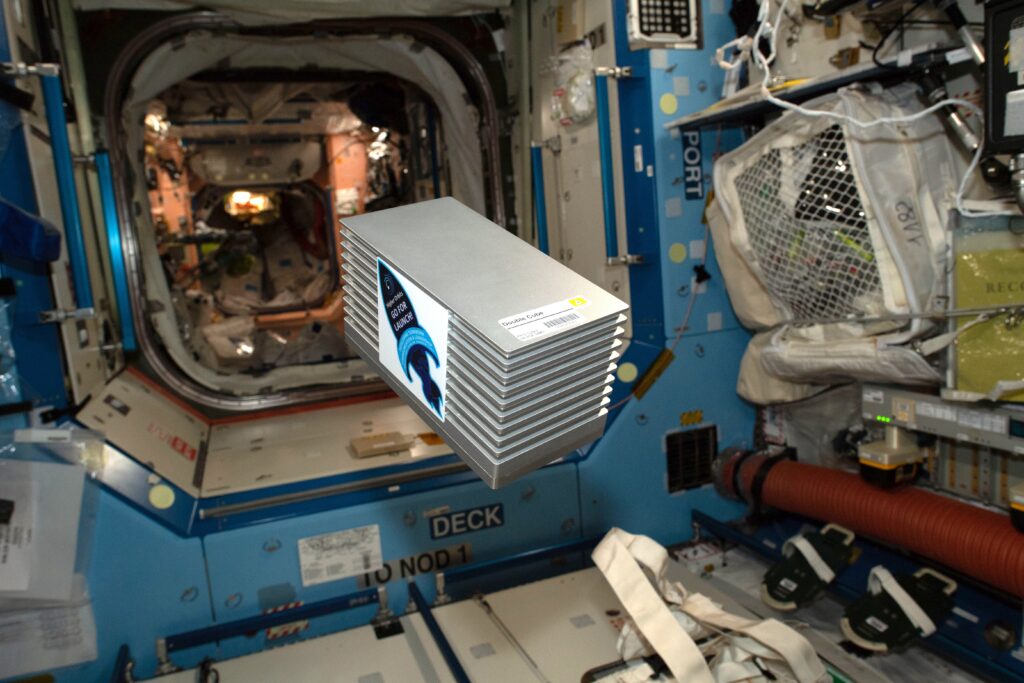
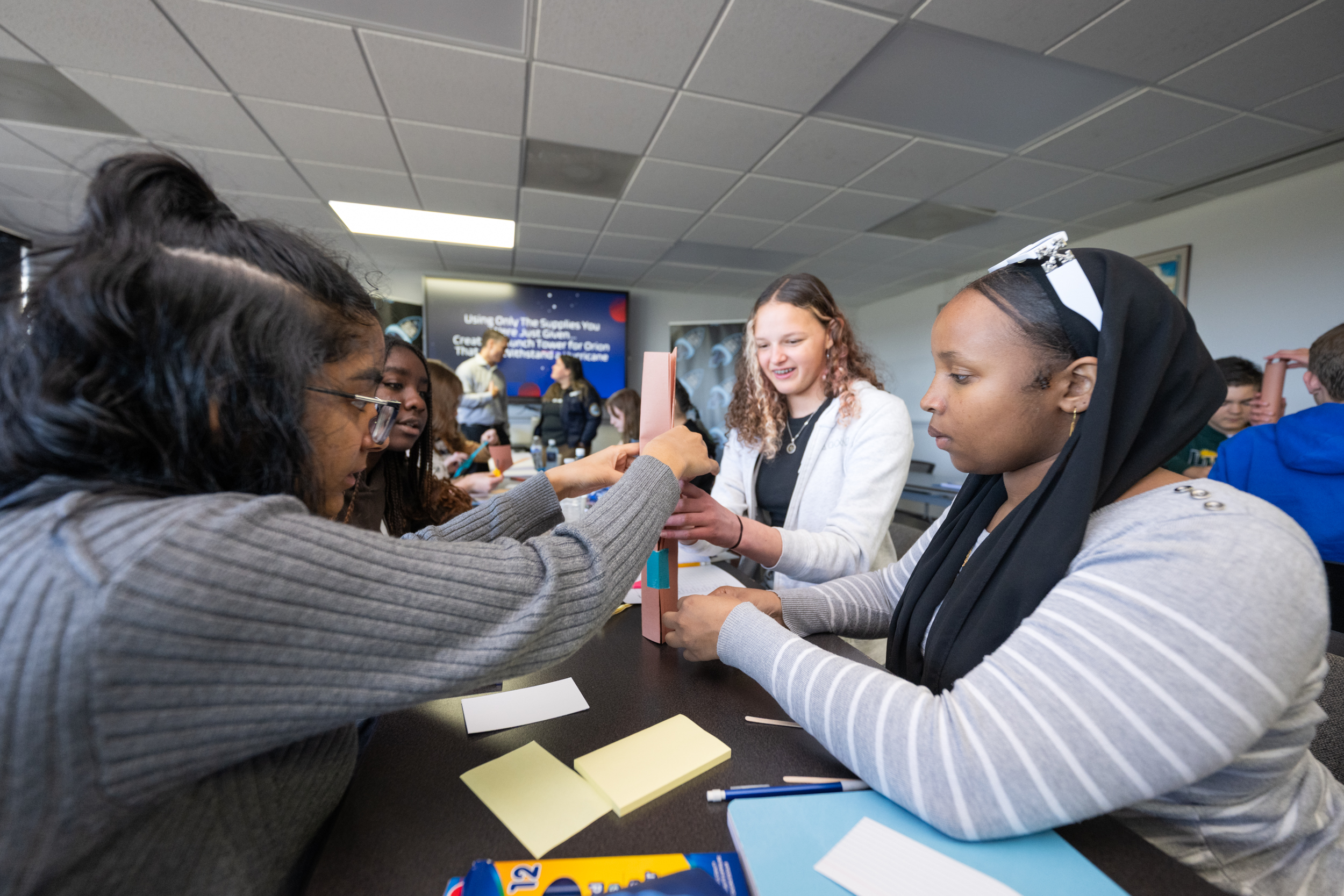
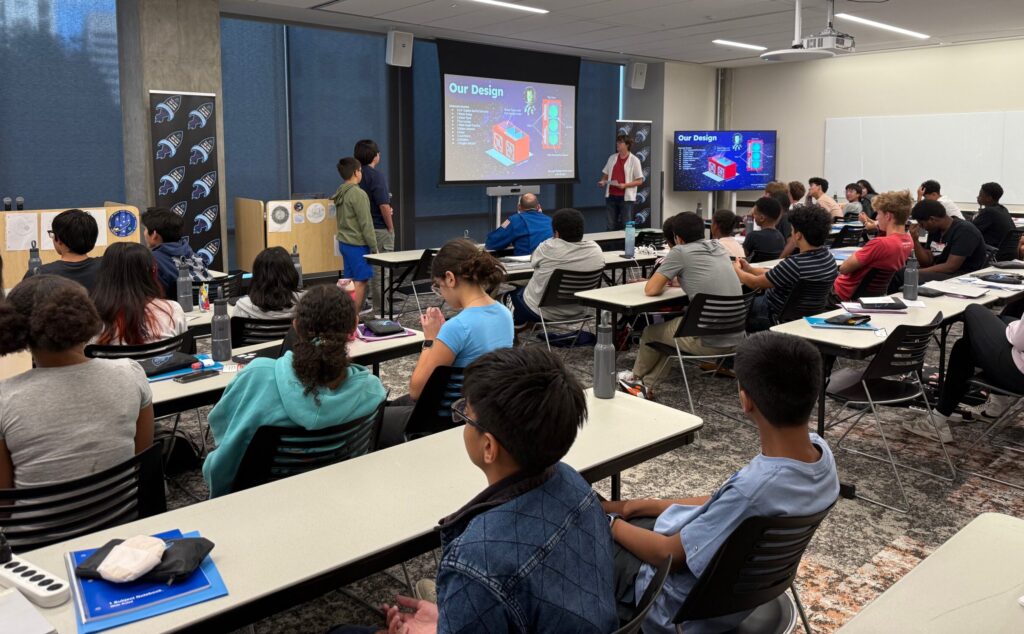
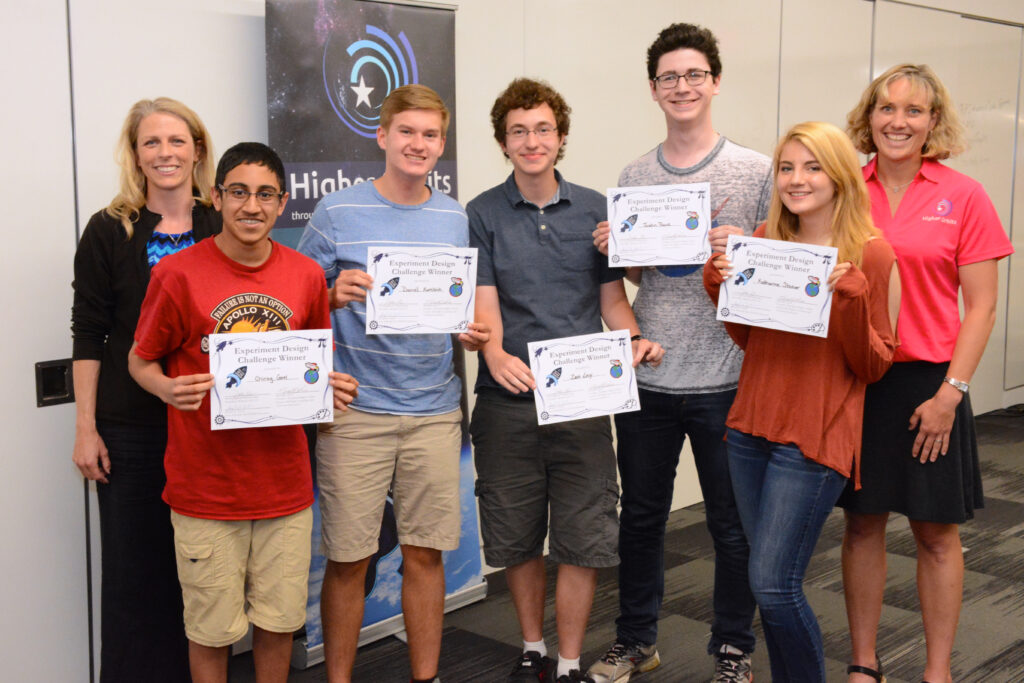
Here is how it works: Higher Orbits stages multiday project-based events in which students, usually between grades 7 and 12, work in teams with an astronaut to design and build an experiment for flight. Winners of local competitions advance to the national level, and the best experiments are chosen for orbit. Technicians with Space Tango, which hold Space Act agreements with the ISS National Lab, build the space-bound experiments and keep students in touch with the hardware progress, creating a literal flight path from the classroom laboratory to the orbiting laboratory.
Experiments have included testing radiotrophic fungi as a possible radiation shield; evaluation of self-healing polymer/metallic materials in microgravity; and one of Lucas’s favorites, behavior and flight patterns of bees after emerging from chrysalis in microgravity.
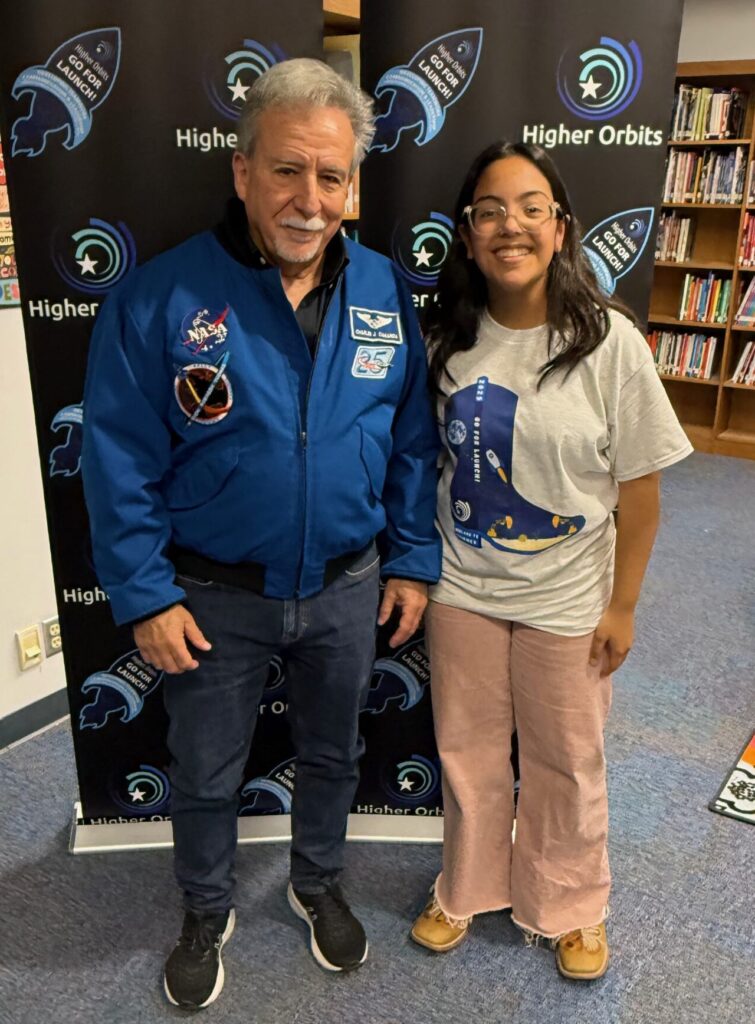
Students are effusive about the program. Eva Estrada, 13, was always interested in biology and space, and was determined to stitch them together. The Venezuelan‑born, Texas‑raised teenager won first place in the junior microbiology division at the Texas Science and Engineering Fair. What truly ignites her passion, however, is the sense of community that surrounds space exploration. She was among several to describe their journey on stage at a July HUB session at ASCEND.
“Higher Orbits has truly been a major turning point in my life,” Estrada declared. “It has taught me how much I love working in a team, made me more open to new things, and given me great opportunities such as this one. But most importantly, it has reignited my curiosity for space.”
Estrada is one of many who epitomize the reason AIAA partners with Higher Orbits.
“I don’t know of anyone else that’s out there developing the kinds of programs that Michelle does,” said Vickie Singer, AIAA Senior Director, Sales and Corporate Membership. “We want to partner with her because Higher Orbits is a successful and energizing program that makes a real impact on students and their professional development – exactly the kind of work AIAA wants to support. Michelle goes out into the academic community and promotes aerospace as a rewarding career path. She understands what inspires students, and she knows how to get them excited about it.”
Higher Orbits’ 100th Go For Launch! will be held on 29 June 2026 — the literal 10th anniversary of the first event — at the same high school in Deerfield, IL, where the series began. Dorothy Metcalf-Lindenburger, a mission specialist from Space Shuttle mission STS‑131, the same astronaut who participated in the inaugural program, will be working with Michelle on the event.
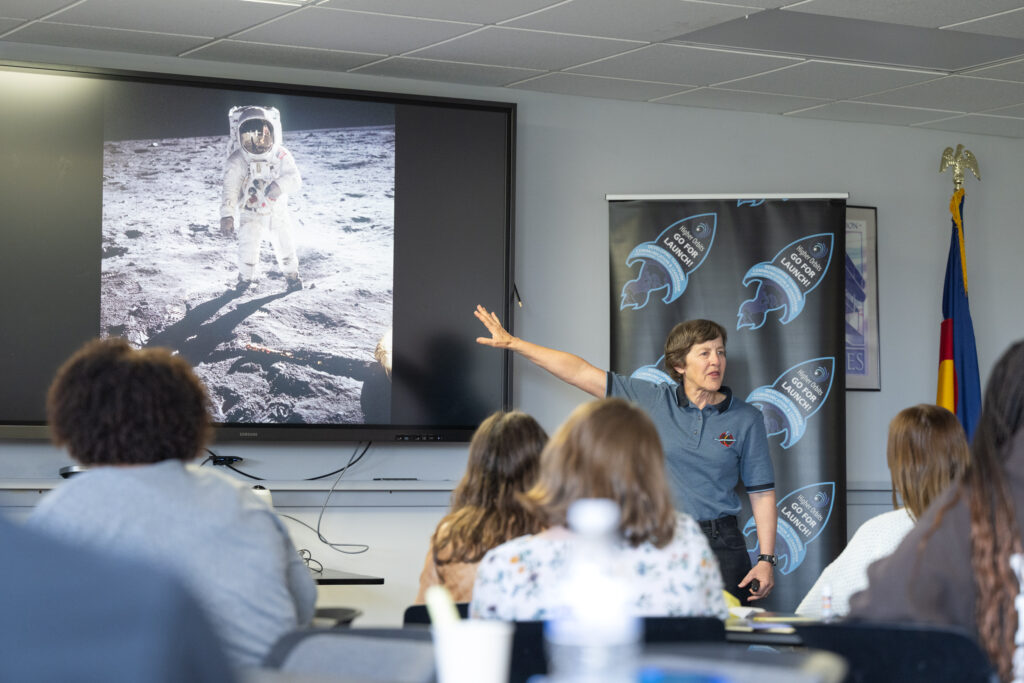
Astronauts do not just give a speech and leave – they are mentors, serving as hands-on guides and role models throughout the competition. They not only provide technical assistance and STEM inspiration, Lucas noted, they coach on communications, a vital part of the learning.
“Having the opportunity to allow students to speak at AIAA events like a HUB session during ASCEND and AIAA SciTech Forum has been an incredibly transformational experience for our students,” she observed. “Being able to speak at a professional event, to get that experience, and also to get that confidence is so important. Yes, the STEM skills are super important, but the communication skills are the ones that people struggle with the most.”
Singer praised Lucas’ efforts in that respect. “She polishes the students, shapes them into very poised speakers. That’s a really important skill in becoming successful.”
Higher Orbits’ contributions to the future STEM workforce is having an impact, and companies are taking notice, Lucas shared. Alumni work at major contractors as systems engineers; on flight control for NASA’s Artemis program; several are in defense and other non‑space STEM role; and entrepreneurial graduates attribute their trajectory to the hands‑on research experience Higher Orbits provided.
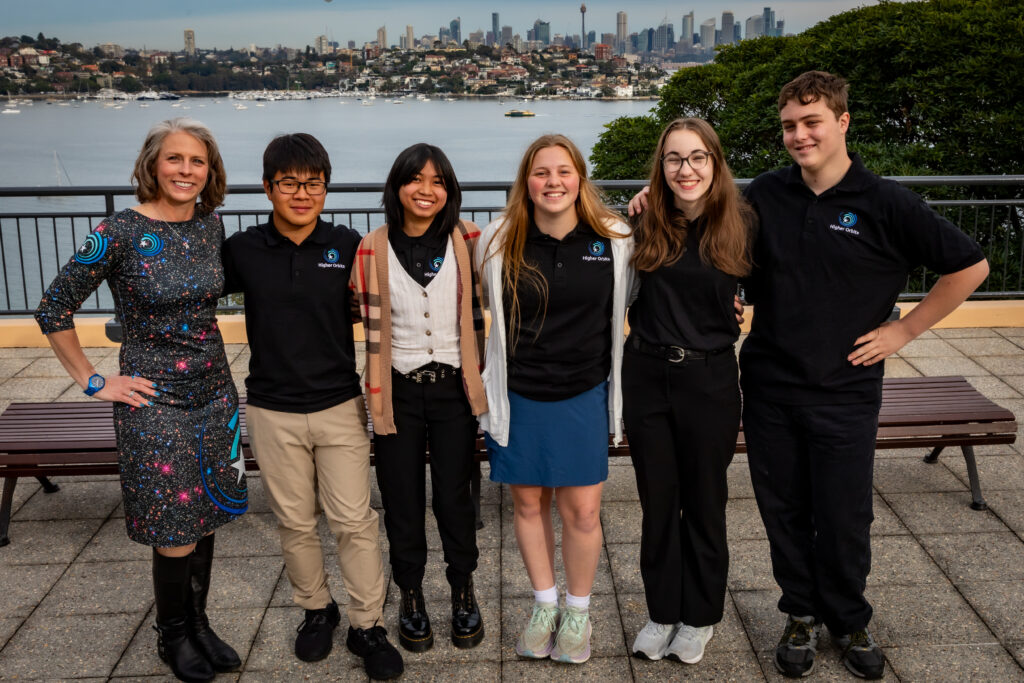
Students have presented posters and talks at conferences, and Higher Orbits is privileged to select the five American students to attend the renowned International Science School in Sydney, Australia, every other year.
Communication, teamwork and problem-solving learned during Higher Orbits workshops translate to jobs in the real world, Lucas said, since recruiting doesn’t start in college, but in inspiring students earlier. This model of using space as an inspirational gateway to broader STEM engagement is opening doors and minds.
As Higher Orbits looks to the future and students reach for the stars, its central aim remains simple: show students that they belong in STEM and give them the tools to explore it.