


ORLANDO — The internet – convenient, data-centralized, and governed by a single “I agree” consent button – is fundamentally misaligned with the needs of aerospace, defense, and other sectors that guard valuable intellectual property and classified information.
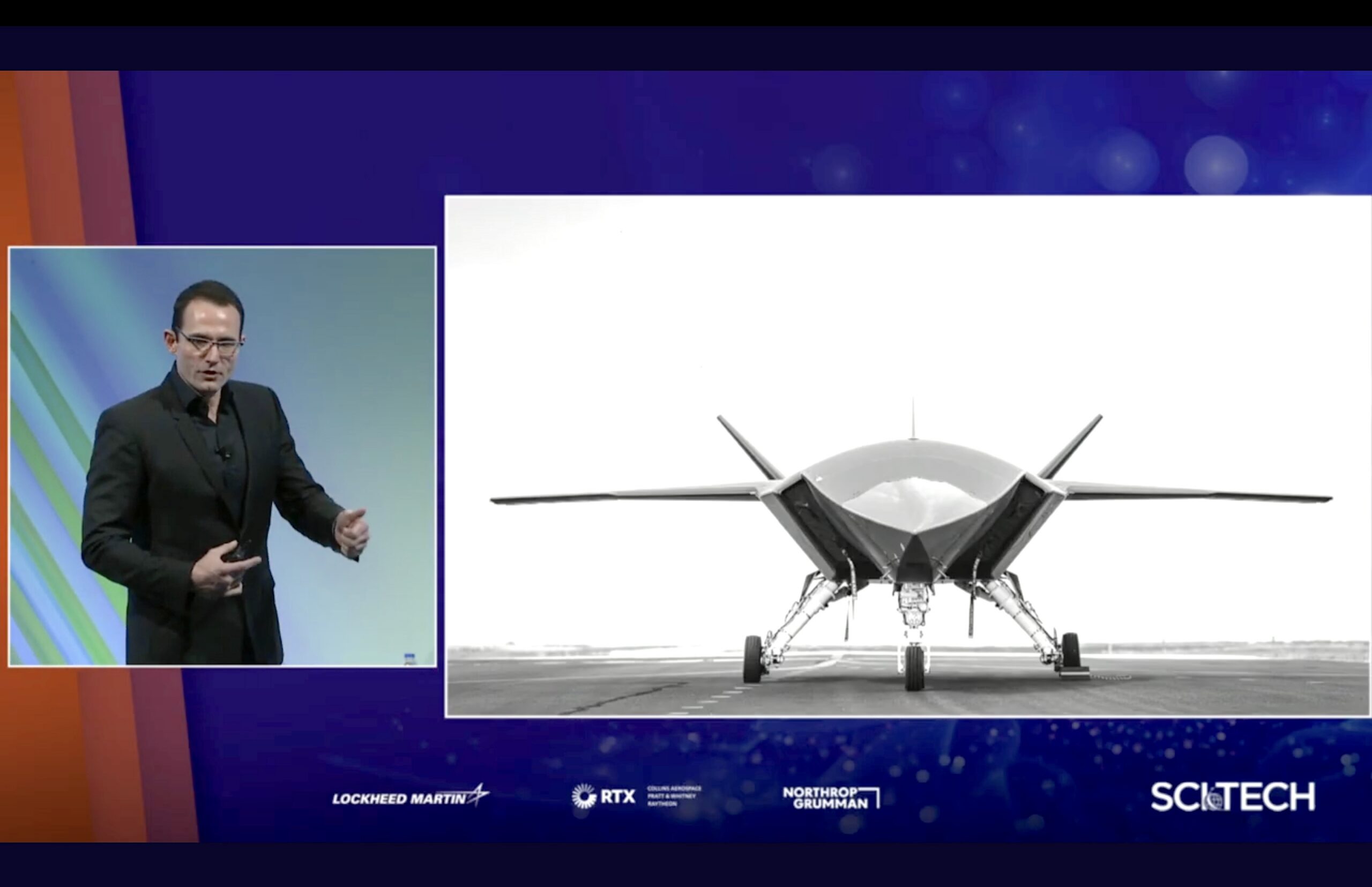
That’s the message from Will Roper, chief executive officer and founder of Istari Digital and former Assistant Secretary of the Air Force for Acquisition, Technology and Logistics, at an AIAA SciTech Forum 2026 session titled, “A Level Digital Playing Field – Vision & Urgency.”
“The internet empowers individuals by consolidating our data,” Roper explained, noting that most consumers willingly trade privacy for convenience. That model, however, collapses when the data carries commercial or national security weight. “There’s a lot that’s wrong with our world, but there’s something particularly wrong with the way that we are building systems in aerospace and defense,” he said, adding the current model is fine if you don’t consider your data valuable. But that model doesn’t work at all for the aerospace industry security weight.
Istari’s answer to the Cloud, Roper said, is a novel networking layer it calls “Ground,” a protocol that lets enterprises keep data behind their own firewalls while still enjoying the global reach and collaborative flexibility that Cloud services have popularized. Roper described Istari’s mission of moving the entire lifecycle of hardware and software – from aircraft to satellites – into a purely digital environment.
In a talk that took the audience from ancient Rome to the Industrial Age and then the Internet Age, Roper urged industry players to consider leveling the playing field. The infrastructure that makes the Internet is missing a component for industries, he argued. Current Cloud architectures solve the “where is my data?” problem by moving it to remote servers owned by third parties, which offers anywhere access, elastic compute, and built-in AI services that have driven a wave of digital transformation across every sector, he said.
However, “the downside is a loss of direct control. Data sits on external hardware, subject to the provider’s security posture, jurisdictional constraints and, ultimately, a single ‘I agree’ licensing clause,” Roper said. That doesn’t work for industries like aerospace.
So Istari’s “Ground” flips that paradigm. Rather than relocating data, the platform keeps it on premises, protected by the organization’s existing firewalls and compliance regimes. What changes is the connection protocol that sits atop the data stores. Ground establishes a shareable, auditable link between isolated networks, allowing each participant to dictate precisely what can be accessed, by whom, and under which contractual or regulatory conditions.
“What the infrastructure enables is what Cloud doesn’t have. There is no shared compute environment or storage. This is a shareable connection protocol. So your data stays local, but your connections can go global,” Roper said.
The protocol embeds the “red tape” that aerospace and defense contracts demand – encryption standards, provenance tracking, usage limits – directly into the communication layer. In effect, it transforms the vague “I agree” consent of today’s web services into an “I grant” that is conditional and fully auditable, Roper told the crowd.
Roper argued that Ground is the next logical infrastructure leap, moving the focus from what can be run anywhere to how data can be exchanged securely across organizational boundaries – key for aerospace firms. A single leak of a next generation airframe design can erode competitive advantage, while a compromised supply chain data set can jeopardize certification and safety.
Further, Ground promises a zero-loss model: owners retain full sovereignty over their data, receive a tamper evident audit log of every transaction, and can verify that collaborators are always accessing the source of truth, not stale copies that may have been edited or corrupted.
Roper cited three pilot programs that illustrate the platform’s versatility: the Air Force Research Laboratory and Lockheed Martin’s Skunk Works’ digital certification of the X-56A aircraft; Blue Origin’s design of space-qualifiable parts using agentic AI; and Boeing Australia’s externally accessible engineering environments for the MQ-28.
In each case, Roper said, these companies used Istari to work directly in sources of truth across stakeholders while retaining complete control. It’s the power of Git for aerospace.
Roper acknowledged in an interview at AIAA SciTech that culture remains the biggest obstacle. “People are used to doing things the way they’ve always done them,” he said, noting that any infrastructure shift that touches data governance triggers a cascade of policy reviews, contract renegotiations and IT rearchitecting. However, he argued that the rarity of true infrastructure breakthroughs, like Cloud and now Ground, means the aerospace industry must be prepared to change.

Following Roper’s talk, experts held a “Lessons Learned” session. In addition to Roper, Renee Pasman of Lockheed Martin, Brad Rothenborg of nTop, Mike Leone of Lockheed Martin, and Venke Sankaran of the Air Force Research Laboratory were featured. The panel discussed designing systems that are scalable, cheaper, and more reliable using the Istari approach.
Later that day, Istari hosted a “Hands-on Keyboard” workshop with nTop and SysGit, where about 150 engineers tried out the platform by designing a drone aircraft in a competition to see who could come up with the lightest design, in a code-first approach. The winner, Simon Miller of Pennsylvania State University, using his smart phone to access the program, produced a design that resulted in a 37-pound vehicle, far lighter than anyone else’s.
“This was wonderful,” Simon said. “A competition like this is a fantastic way to get involved. It’s great that you could access all this software with just one click.”
For engineers, Ground promises a secure collaboration tool that lets them work on cutting-edge designs without the fear of inadvertent data exposure. For executives, it offers a risk mitigation tool that aligns with compliance mandates (e.g., ITAR, EAR, GDPR) while still enabling the global supply chain agility that modern aerospace programs demand, Roper said.
Roper believes that Istari’s Ground could become the piece that finally reconciles the need for global connectivity with the imperative of local data control. Thus, the next great breakthrough isn’t a bigger rocket or a faster processor. It’s this protocol that lets every stakeholder talk directly to the truth, without ever surrendering control of that truth.