

To mark the 100th anniversary of Robert Goddard’s historic launch, a low-cost replica of his pioneering liquid fueled rocket gives schools and the public a powerful way to introduce the birth of modern rocketry.
“Tried rocket at 2:30,” Robert Hutchings Goddard recounted in his diary on that frosty afternoon in 1926 at “Aunt Effie’s farm” in Auburn, Massachusetts. “It rose 41 ft, and went 184 ft, in 2.5 sec, after the lower half of nozzle has burned off,” he wrote.
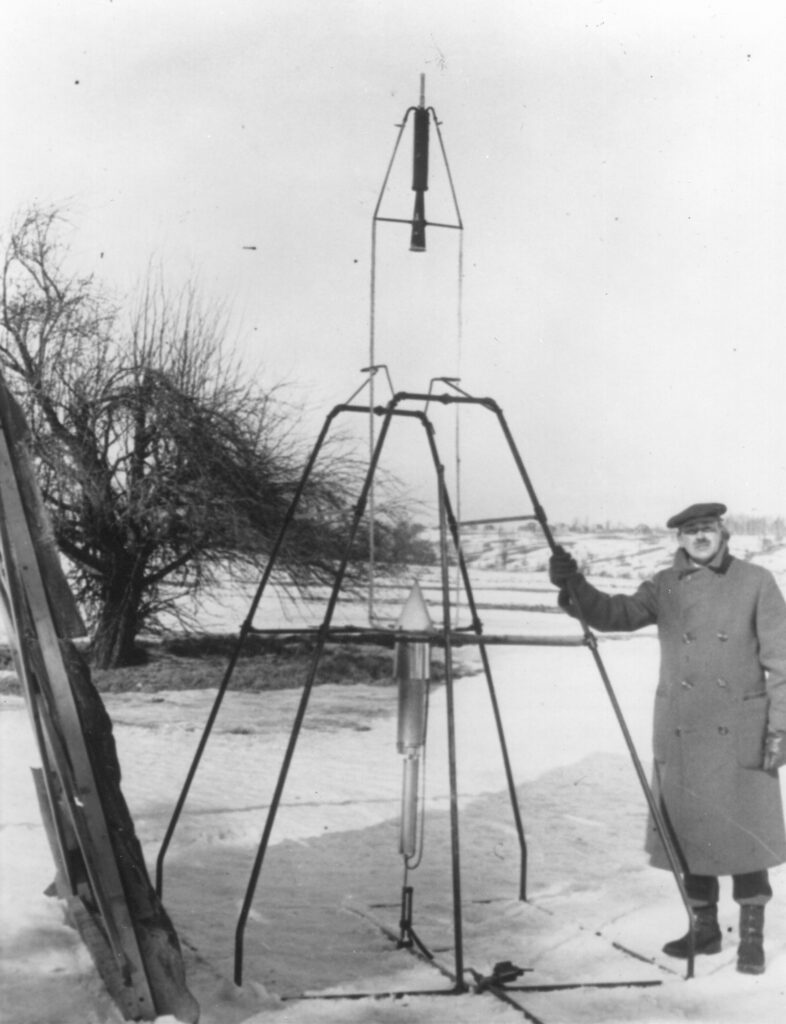
Goddard’s March 16th experiment marked “the first flight with a rocket using liquid propellants,” as the physicist and inventor recorded matter-of-factly the following day.
Now you can host your own version of Goddard’s launch to commemorate the milestone that NASA calls “as significant to history as that of the Wright brothers at Kitty Hawk.”
Estes Rockets, the model rocket maker founded in 1958, has debuted the Goddard Model Rocket, a one-fifth scale model of the experimental design that “connects hand-on building with a defining moment in science and engineering history” and “gives educators a powerful way to introduce the birth of modern rocketry.”
“We tried to put as much detail as we could to be as accurate as we could,” said James Thomas, Estes’ marketing manager. “We feel comfortable that it is a very good representation of the rocket. It is one of our intermediate builds and you’ll be able to easily put it together and be ready to fly pretty quickly.”
Estes, which produces a large collection of beginner-to expert-level models – from the legendary Saturn V that took American astronauts to the moon to the latest Blue Origin New Glenn – is offering the Goddard rocket kit for $29.99 (not including a few accessories needed for launch).
“We work directly with teachers, educators of all kinds,” Thomas explained. “We were looking to get that price point at a reasonable price where lots of folks would want to pick it up. It has big potential with our education channels to bring these into the classroom and start teaching about Robert Goddard and his contributions to rocketry.”
Part of AIAA History
On 16 March, at the appointed hour, 100 rockets will be sent aloft where Goddard made history – part of a series of commemorative events that AIAA is supporting that are designed to inspire a new generation of students to embrace STEM.
The launch area in Auburn is now on the 9th fairway of the Pakachoag Golf Course, a National Historic landmark where an engraved obelisk dedicated by AIAA in 2006 marks the dawn of the rocket age.
“We were honored to place the obelisk at the location of Dr. Goddard’s achievement,” said Merrie Scott, AIAA Senior Vice President of Membership Engagement. “He served as a director of the America Rocket Society, which is one of the predecessor organizations to AIAA. His legacy has become part of AIAA history.”
Other model rocket launches are expected by rocket clubs, school students, and space enthusiasts around the country on the anniversary.
“My premise has always been that as great as it is to celebrate something that happened 100 years ago, it’s really a celebration of the genius of humanity,” said Charles Slatkin, executive director of the Wonder Mission, a nonprofit that acquired and renovated Goddard’s birthplace in Worcester, Massachusetts, with the mission of inspiring the next generation of scientists, engineers, educators, innovators, and what he calls “visioneers.”
In addition to the rocket launched, Slatkin is coordinating a series of centennial events in March, including a festival and rededication with the city of Auburn at Goddard Park and tours of Goddard’s home.
On 18 March, AIAA President Dan Hastings will participate in a discussion at Worcester Polytechnic Institute on the legacy of Goddard (Class of 1908) and on 22 March he will participate in a 100th anniversary event at Worcester’s Hanover Theater.
The Goddard centennial is “a celebration of all of these innovators and dreamers and engineers and educators who work tirelessly and don’t get a lot of attention,” said Slatkin. “We have gone from Goddard to interstellar space in just 100 years. To me it is a wonderful way to celebrate and honor science and engineering.”
Teaching Moment
For organizers, the anniversary represents a unique opportunity to inspire a new generation to follow in the footsteps of Goddard, who as a youngster began tinkering with kites, balloons, and eventually chemical compounds – all with the encouragement of his father, who bought him a telescope and a subscription to Scientific American.
“Over 30 years of teaching middle school science, I never saw anything that came close to exciting the kids as much as a rocket launch,” said Jack Colpas, who with his wife Kathy directs the Reach for the Stars National Rocket Competition, which has involved 22,500 kids over the last three decades.
“The first thing they have to do is assemble them according to the directions,” he added. “If we are talking about STEM education, that’s a huge event. For the most part kids don’t build much of anything anymore. We’re hoping that all this talk about Goddard and launching rockets in your backyard will get people thinking about ‘gee, that might be a cool thing to do with my students, my scouts, my Civil Air Patrol cadets, YMCA groups.’
“It is about igniting curiosity and making space feel tangible and accessible to everyone,” said Alissa Haddaji, who teaches space law at MIT and is founder of The Space Consortium, a network of private companies and educational institutions that organizes the annual Massachusetts Space Week, 20–26 April.
Educators and parents can tap into a new set of resources from AIAA, Estes, and the National Science Teaching Association, including Exploration Generation, a series of rocketry-themed curriculum for elementary, middle, and high school students.
AIAA is also releasing a new collection next month of Goddard and related rocketry works from its vast Aerospace Research Central (ARC) repository. And its flagship publication, Aerospace America, recently published a three–part series on the origin of the liquid-fueled rocket, the 1920s “space craze” that Goddard helped ignite, and his legacy.
The Aerospace Corporation, meanwhile, plans to publish new Goddard-themed STEM lessons plans.
To coincide with the Goddard anniversary, the University of Massachusetts Lowell’s Center for Space Science and Technology plans to give away 100 nanosatellites to universities and colleges for use in classrooms. The experiments, to rapidly demonstrate new instrumentation technologies, will be flown this fall on NASA’s Scientific Balloon Program.
The UMass Lowell Rocketry Club is also planning to launch a series of model rockets on the centennial that will carry a nanosatellite known as Kiwi that is about the size of a hockey puck and is also designed for classroom use.
Other organizations supporting the centennial events include Blue Origin, Blue Origin’s Club for the Future, Clark University, MIT, National Association of Rocketry, National Space Society, Space Foundation, Spaceport America, The Aerospace Corporation, The Space Consortium, Virgin Galactic, Winn Properties, and Worcester Polytechnic Institute.
The Reality of Tomorrow
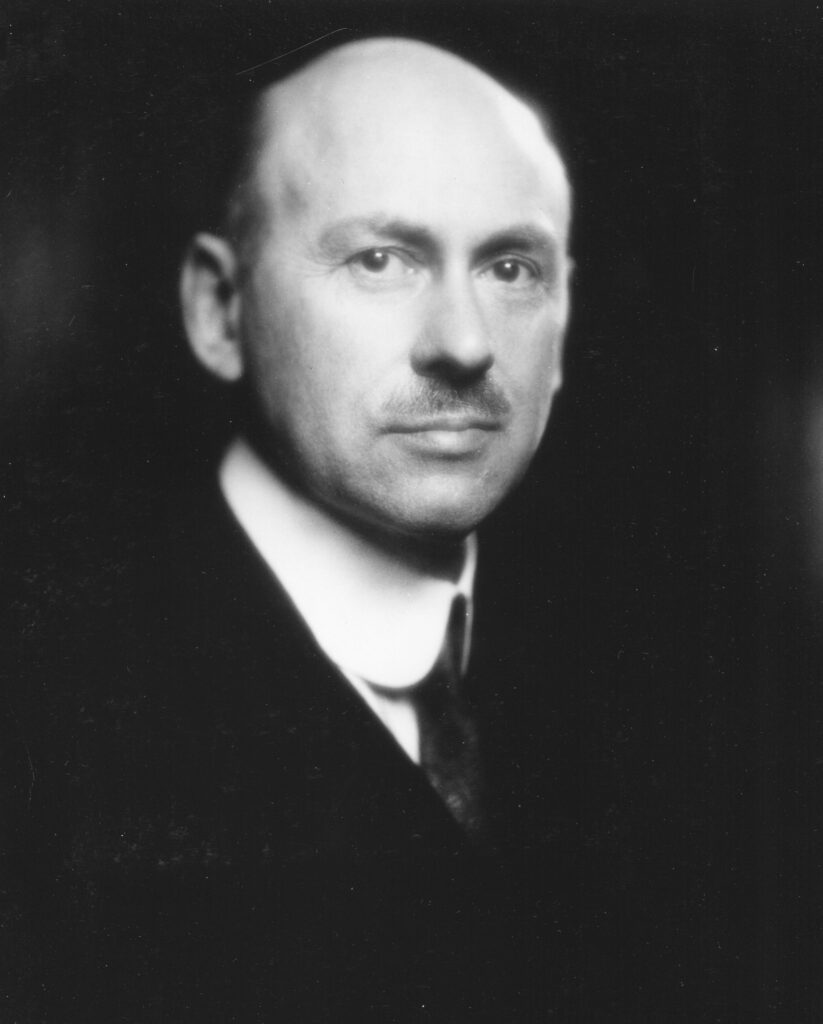
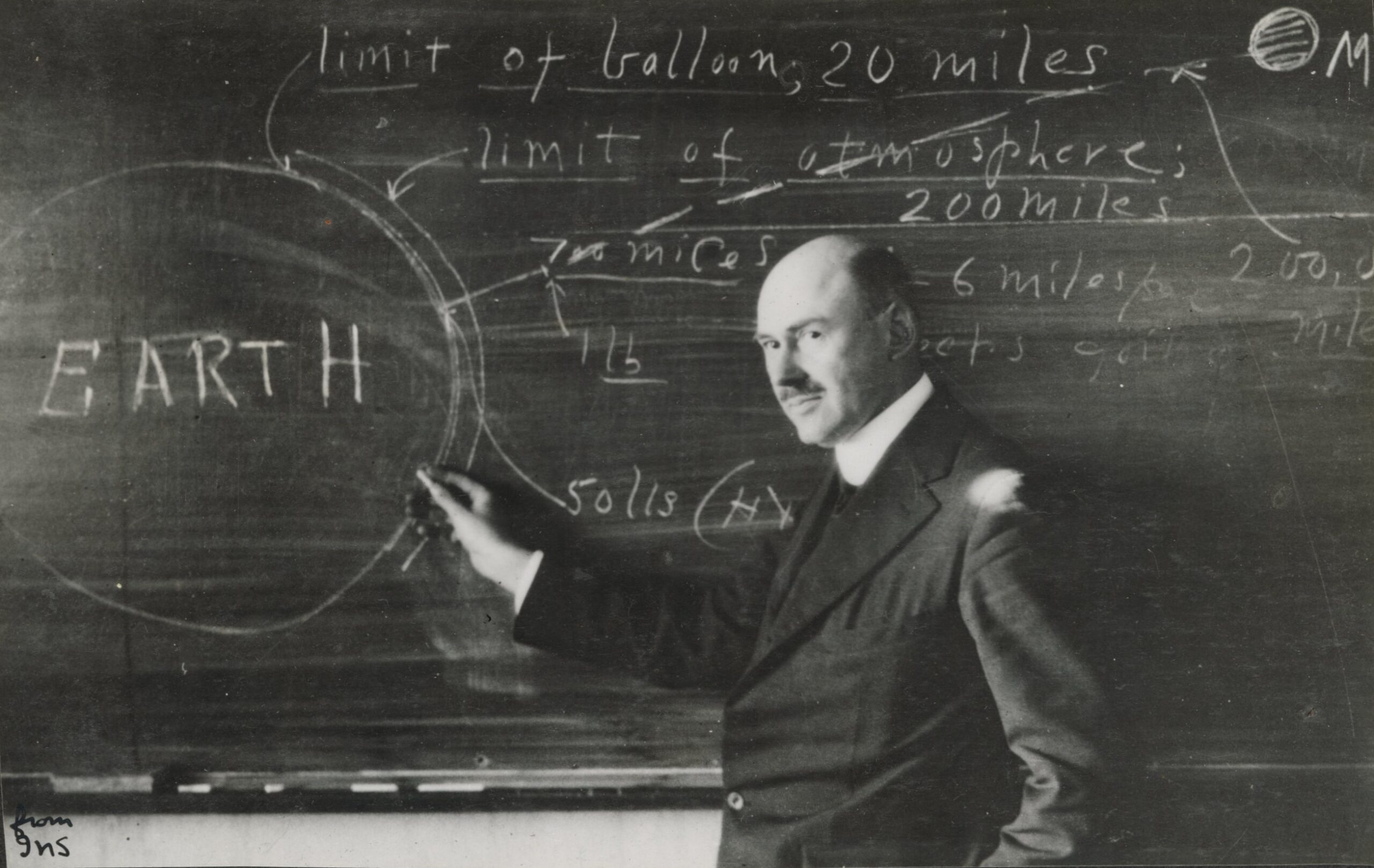
Goddard, who died in 1945 at the age of 62, did not live to see the full impact of his work. But he envisioned the coming space age as early as 1899, when he climbed his family’s cherry tree to gaze at the stars.
“I imagined how wonderful it would be to make some device which had even the possibility of ascending to Mars,” he later recalled in his journal. “I was a different boy when I descended the ladder. Life now had purpose for me.”
A few years later, in his high school valedictory speech, Goddard appealed to all dreamers: “It is difficult to say what is impossible, for the dream of yesterday is the hope of today and the reality of tomorrow.”
His historic rocket launch a century ago ushered in the dawn of the space age. “It looked almost magical as it rose,” Goddard wrote in his diary, “without any appreciably greater noise or flame, as if it said, ‘I’ve been here long enough; I think I’ll be going somewhere else, if you don’t mind.’”