

Early- and mid-career engineers looking for a career boost might want to look beyond everyday problem-solving and consider becoming a technical fellow.
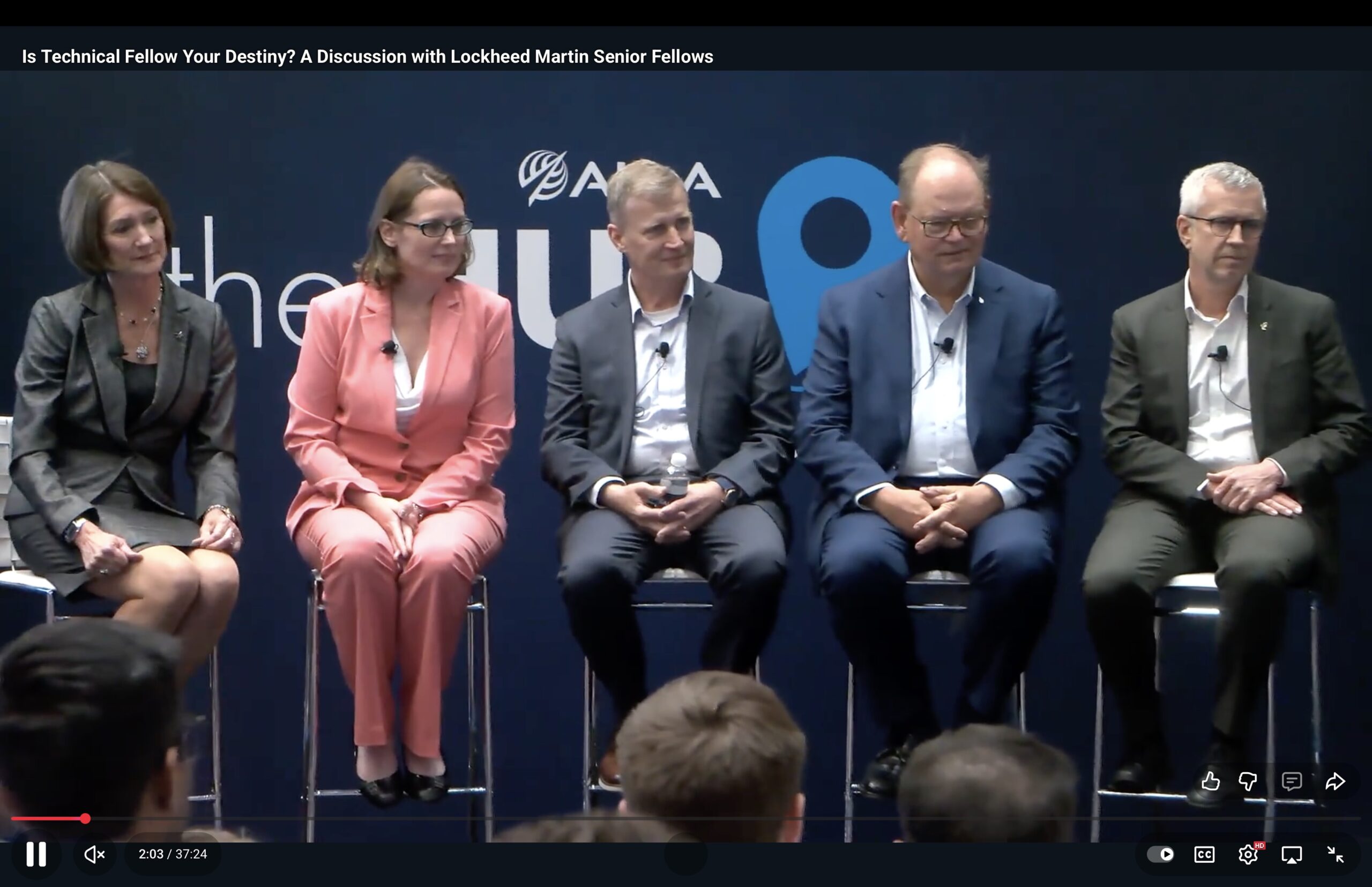
Four Senior Technical Fellows at Lockheed Martin — experts in artificial intelligence, sensor fusion, propulsion, and directed energy — who collectively support a technical community of nearly 17,000 professionals, discussed what it takes to become a Technical Fellow during a Hub session at AIAA AVIATION Forum and ASCEND in July. Engineers who want to know what it takes should watch this discussion.
The panelists, moderated by a senior leader in Aeronautics, shared their thoughts about Fellow requirements. It turns out deep subject-matter expertise is not enough, as that is only part of the equation, they noted. Beyond mastering core disciplines, aspiring Fellows need “soft” skills as well, such as the ability to influence decision makers, tell compelling technical stories, and distill complex ideas into clear, actionable insights.
One Fellow recounted how, early in his career as an electrical engineer, he immersed himself in relevant software and coding work – inspecting every line – to make his sensor-fusion designs more robust. That willingness to step into related domains without expertise in it, the panelists agreed, is a hallmark of high-impact technologists.
Communication and collaboration are key, the Senior Fellows echoed in agreement. They emphasized that being the smartest person in the room doesn’t succeed on its own – you must also listen. One panelist reminded the audience that no one-man show builds a modern aerospace system as it requires an integrated team. They encouraged engineers to cultivate humility, patience, and genuine respect for colleagues and customers alike.
Practical advice included reading broadly – humanities courses, industry journals, and professional society publications – to sharpen writing and speaking skills, and to build the intellectual flexibility needed for high-stakes technical leadership. They also encouraged participation in AIAA and other industry events.
When asked how they knew this deep-technology path was right for them, the Fellows urged attendees to try different roles – project management, people leadership, even finance or proposal writing – and to pay attention to what truly energized them. One panelist recommended spending five to 10 years exploring adjacent fields, watching for projects that keep you curious and motivated.
The panelists identified a key distinction between recognized subject matter experts and Fellows: beyond technical mastery, Fellows are expected to publish, mentor, and represent Lockheed Martin in industry forums. This broader footprint – mentoring others, driving internal research, and earning professional awards – can lead to the transition to Fellow, they explained.
The role isn’t all glamorous. Panelists acknowledged that navigating organizational silos and integrating across diverse business areas can be frustrating. Still, driving technical excellence enterprise-wide remains deeply rewarding.
On mentorship, Senior Fellows encouraged mentees to be proactive – set agendas, seek multiple advisors, and treat informal coffee chats as learning opportunities. As mentors, they listen as much as they advise, deriving fresh ideas from junior engineers’ perspectives.
The panel reminded the audience that becoming a Fellow is partly a matter of mastering one’s technical domain, developing and flexing communication and leadership muscles, and consistently earning trust, but also partly about seizing opportunities to influence the future of aerospace. Their message: dive deep, share one’s learnings, and build relationships along the way.