Lessons from Challenger


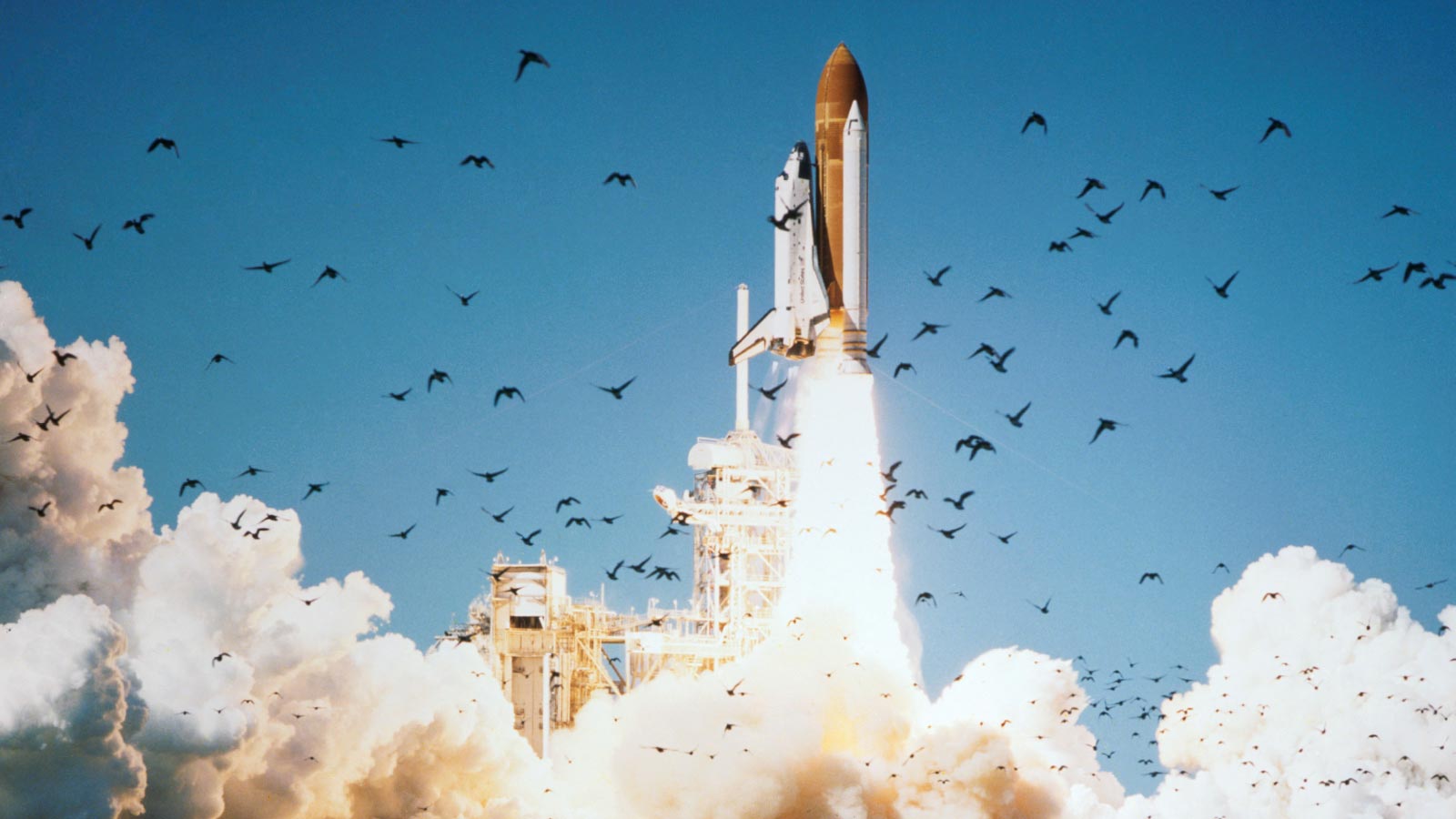
Forty years ago in January, the space shuttle Challenger broke apart 73 seconds after launch, shattering a growing impression that NASA’s shuttle program had made human spaceflight relatively routine.
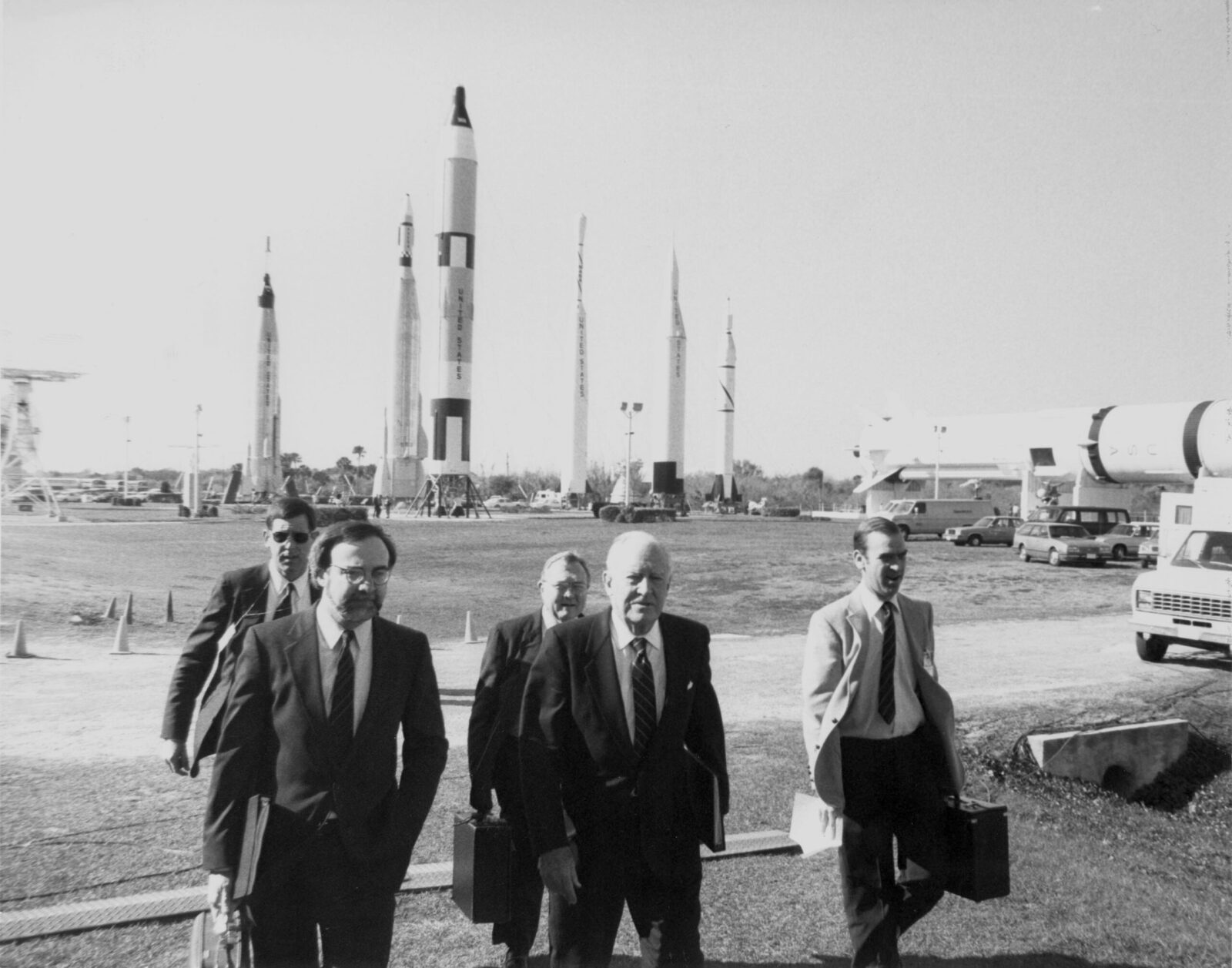
The technical cause of the death of the seven astronauts aboard was sobering — ignition of the main fuel tank traced back to faulty O-rings that allowed a leak in one of the solid rocket boosters — but perhaps even more so were the details unearthed by the Rogers Commission appointed by President Ronald Reagan. Over the course of a nearly three-year investigation, the commission found systemic flaws in NASA’s management and organizational structure, as well as pressure to meet an “over-ambitious” target of 24 annual flights by the end of the decade.
In the disaster’s aftermath came sweeping reforms: NASA created the Office of Safety, Reliability, and Quality Assurance; overhauled contractor oversight; and redesigned the boosters. What emerged was not just a reengineered space shuttle, but also a new model for governing U.S. spaceflight, born in part from shifting perspectives toward risk tolerance at NASA and beyond.
“As the findings of the Rogers Commission became apparent, and the investigation unfolded in public on television and in the newspapers, people began to see NASA in a very different way,” says Adam Higginbotham, author of the 2024 book “Challenger: A True Story of Heroism and Disaster on the Edge of Space.”
That reckoning would also reshape how the nation weighed risk, responsibility and the very cost of spaceflight. In the years since shuttle’s retirement in 2011, a fundamentally different kind of era has taken shape, with private companies taking on a central role within a more limited regulatory regime intended to foster growth and innovation.
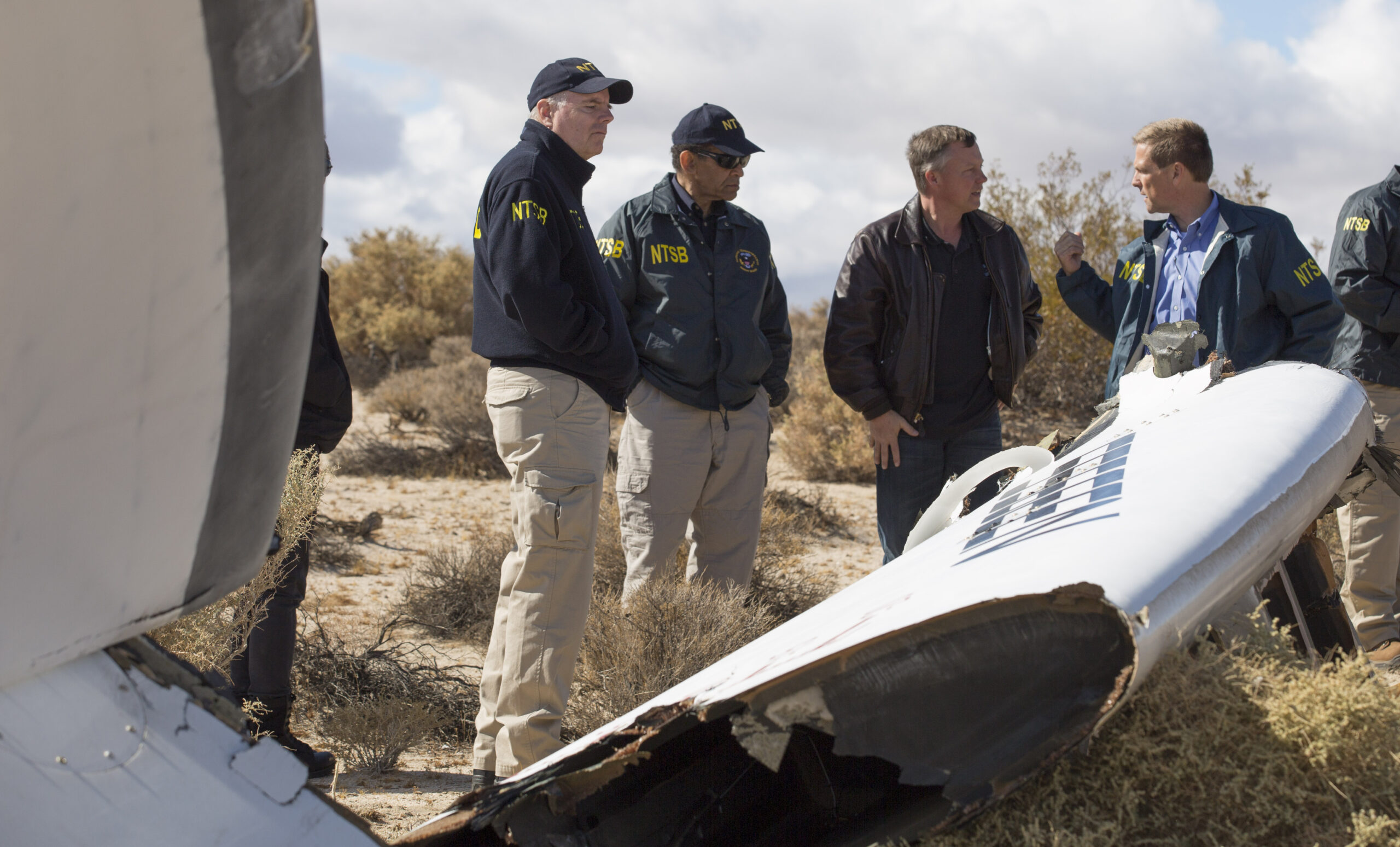
To date, Scaled Composites test pilot Michael Alsbury is the only person to die aboard a commercial space vehicle, during a 2014 flight test over the Mojave Desert. The National Transportation Safety Board (NTSB) concluded that Alsbury, who was co-piloting the SpaceShipTwo rocket-powered plane that Scaled was developing for Virgin Galactic, unlocked the vehicle’s reentry “feathering” system too early, which caused the plane to break up. Pilot Peter Siebold parachuted to the ground with serious injuries, but survived.
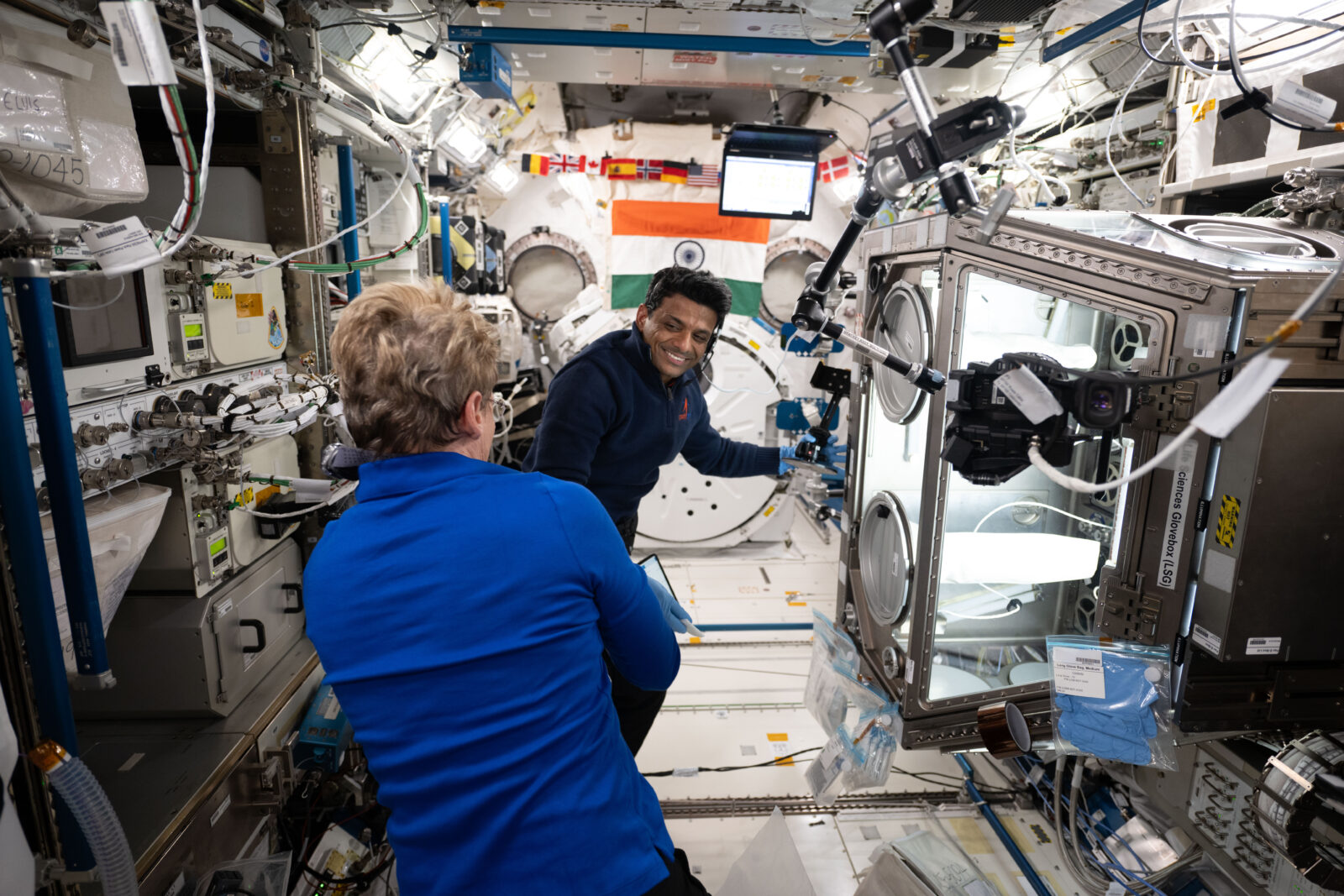
In the following years, passenger flights aboard privately owned and operated craft have begun in earnest. Since 2020, SpaceX has ferried 12 crews of professional astronauts to and from the International Space Station aboard its Crew Dragon capsules, in addition to four private flights to ISS and two free-flying flights to low-Earth orbit. As of Dec. 12, Blue Origin’s New Shepard rockets and capsules and Virgin Galactic’s VSS Unity spaceplane had conducted a combined 24 suborbital research and “tourist” jaunts. The majority of these passengers were private individuals who reportedly paid hundreds of thousands of dollars for a brief journey to the edge of space.
“People accept there’s risks in just the basic physics of what we’re doing,” notes Terry Hart, a former NASA astronaut and mission specialist who flew on Challenger for the STS-41C mission two years before the STS-51L tragedy that took the lives of his colleagues.
In terms of oversight, FAA licenses the launch and reentry of these commercial craft, but is constrained from crafting regulations related to passenger safety because of a moratorium Congress approved in 2004 and has extended several times. Lawmakers established this “learning period,” now set to expire in 2028, to allow the emerging commercial space industry to mature and evolve without the burden of full regulatory frameworks.
A disaster could change that.
There’s precedent, notes Scott Hubbard, a former center director of NASA’s Ames Research Center who participated in the investigation of the second shuttle disaster, the Columbia orbiter that broke apart during reentry in 2003. He pointed to railroads and early commercial aviation as examples of growing industries in which fatalities sparked increased regulations.
“These types of endeavors, once they have involved massive tragedies, then people come in and say, ‘You know, we probably ought to have better code,’” he says.
Debates about risk assessment echo an older story — one that NASA confronted decades earlier. In the weeks and months preceding that cold day in January 1986, engineers worried about the O‑rings in the solid rocket boosters positioned on both sides of shuttle’s external tank. These seals, meant to prevent hot gases from seeping through the joints of the boosters during combustion, were known to behave poorly in low temperatures.
Engineers at Morton Thiokol, which manufactured the boosters, had initially recommended standing down from the launch. Management reversed that the day before, the Rogers Commission concluded, “to accommodate a major customer.”
In the disaster’s aftermath, the agency’s old “failure is not an option” mantra — a phrase often associated with flight director Gene Kranz and the troubled Apollo 13 mission — seemed to take on new resonance. But in today’s commercial age, NASA is increasingly a customer purchasing services, rather than an owner and operator of hardware. Private companies now shoulder more of the risk, and speed, cost and market pressures have become part of the calculus in ways that NASA has never experienced.
With founders like Elon Musk and Jeff Bezos having earned their chops in software, rapid iteration is a hallmark of many modern space companies — particularly SpaceX, the world’s leading provider of satellites, cargo and crewed launches.
For Brewster Shaw, a retired NASA astronaut who flew on three shuttle missions, the differing attitudes toward risk amount to distinct cultures.
“I look back at when I was working for Uncle Sam, and then I look back when I was working for Boeing, and I was doing the same thing in both of the jobs,” says Shaw, who spent seven years at Rockwell and then Boeing overseeing development of components for ISS. “But I had cut my teeth working for NASA. And so I think that [sense of risk] gets ingrained.”
SpaceX leadership advocates for real-world stress testing and the iterative improvements gained from successive launches as the best way to enhance the safety and reliability of their vehicles.
“It’s called exploring the corners of the box,” Musk told podcaster Joe Rogan in late October of his company’s approach. “We intentionally subject [the vehicle] to a flight regime that is much worse than what we expect in normal flight, so that when we put people onboard, or valuable cargo, it doesn’t blow up.”
That approach has made for an “incredibly robust system design,” Gwynne Shotwell, SpaceX’s president and chief operating officer, said during a late 2024 event at the Center for Strategic and International Studies in Washington, D.C.
Indeed, over its roughly 500 launches since 2010, the Falcon 9 rockets have had a less than 1% failure rate. Today, SpaceX is responsible for more than 90% of the payloads launched into space.
And the company has even bigger hopes for the behemoth Starship-Super Heavy rockets that are central to Musk’s ambition of establishing a self-sufficient Mars city. Aspirations include launching up to 500 Starships during the 2033 transfer window to Mars, Musk said during a May presentation. Long term, each Starship could carry up to 200 passengers.
Given these ambitions and those of other companies, some experts say it could be time to revisit the learning period and update regulations.
“Things have been going well for a while, but we have a long way to go in terms of how we want to move forward,” says George Nield, a former head of FAA’s Office of Commercial Space Transportation that licenses launches. “That means at some point we’re going to want to transition away from continuing to extend the moratorium, which some people call the learning period, and adopt a new framework.”
Mary Guenther, head of space policy at the Progressive Policy Institute, formerly of the Commercial Space Federation, is among those advocating for a slower approach: “a glide path” that allows for a broader regulatory framework to be adopted over time.
“I don’t think the industry is ready to go from zero to 60 — limited regulation to full regulation,” she says. “There are still vehicles coming online. Your Dream Chaser looks a lot different from your New Glenn, and much different from your Starship. A full-scale certification regime may not be appropriate in the short term. But over time, we better understand the risk profile of these vehicles.”
A bill introduced in 2024 would have pushed the learning period out to October 2031, but it failed to pass both chambers of Congress.
In terms of logistics, the U.S. government has established the broad brushstrokes of how to investigate commercial space mishaps and fatal accidents. NTSB would lead any investigation in which there is a “fatality or serious injury to any person, regardless of whether the person was on board the commercial space launch or reentry vehicle,” according to a 2022 agreement with FAA. That agency would oversee investigations of any other mishaps.
NTSB also led the investigation into the 2014 crash of SpaceShipTwo, the first time the agency conducted a full investigation of a crewed commercial spacecraft.
“This has many similarities and some differences” to past investigations, acting NTSB chairman Christopher Hart told reporters shortly after the crash.
Like for its other investigations, NTSB issued a final report that determined the crash’s probable cause and detailed recommendations. Among them was for FAA to work with the Commercial Space Federation to “develop and issue human factors guidance for operators.”
Guenther expects regulation to increase as the industry matures and its workforce grows.
“As [spaceflight] becomes less of an active choice,” she says, referring to plans that would require people to regularly work and travel beyond Earth’s atmosphere, “and as we move along that continuum, that is when regulation will grow.”
“But it’s challenging to know how the Congress or the public will respond,” she adds.
History suggests that any passenger deaths could quickly prompt increased regulation. In 1931, for instance, Notre Dame head football coach Knute Rockne and seven others were killed when their Fokker F-10 crashed a few miles west of Bazaar, Kansas. President Herbert Hoover declared it “a national loss,” and all Fokker F-10s in the U.S. were temporarily grounded, pending inspections. Thereafter, the Aeronautics Branch, FAA’s precursor, took on a larger role in aircraft certification and began publishing the results of accident investigations.
Beyond the regulatory response, a tragedy could also prompt the involved company to take action. Consider, for example, the two fatal crashes in 2018 and 2019 involving Boeing’s 737 MAX, which led to a nearly two-year grounding and some $20 billion in financial losses. In response to the crash investigations, Boeing developed a software update to the implicated flight control system and overhauled pilot training protocols.
Still, Nield stressed the need for an overarching structure and framework, one that “would allow industry to take advantage of the advanced technologies and the new ways of doing business, while still benefiting from all of the lessons that we’ve learned over the past 60-plus years of human spaceflight, including what we’ve learned from Challenger.”
In the absence of congressional action, the industry could still begin creating such a framework today, Nield says. He suggested greater reliance on independent safety institutes to foster increased collaboration, transparency and data sharing, “especially when we’re talking about safety-related accidents, incidents and close calls.”
“It doesn’t have to be a one size fits all,” he adds. “We can have lots of options for approving these operations.”
The idea would be to clarify lines of responsibility. With NASA operating Challenger and Columbia, the agency held both decision-making authority and ultimate accountability. By contrast, commercial spaceflight involves multiple stakeholders, including the operating company, regulators and potentially passengers who assume certain risks.
That muddled picture, Hubbard says, is precisely what a more defined framework could address.
“It doesn’t mean we necessarily have to have a lot of detailed regulations,” he notes. “It could involve using industry and consensus standards,” private oversight or an institute that reviews and certifies operations.
Agility is top of mind for Guenther, given what she described as “the growing competition” between the U.S. and China to land astronauts on the moon this decade.
Acting NASA Administrator Sean Duffy echoed those sentiments during a September town hall.
“We are safety-driven, and we should be safety-driven,” Duffy said, according to a recording of the event posted by NASA Watch. “Sometimes we can let safety be the enemy of making progress.”
“We have to be able to take some leaps,” he added. “We can’t side on the side of doing nothing because we’re afraid of any risk.”