

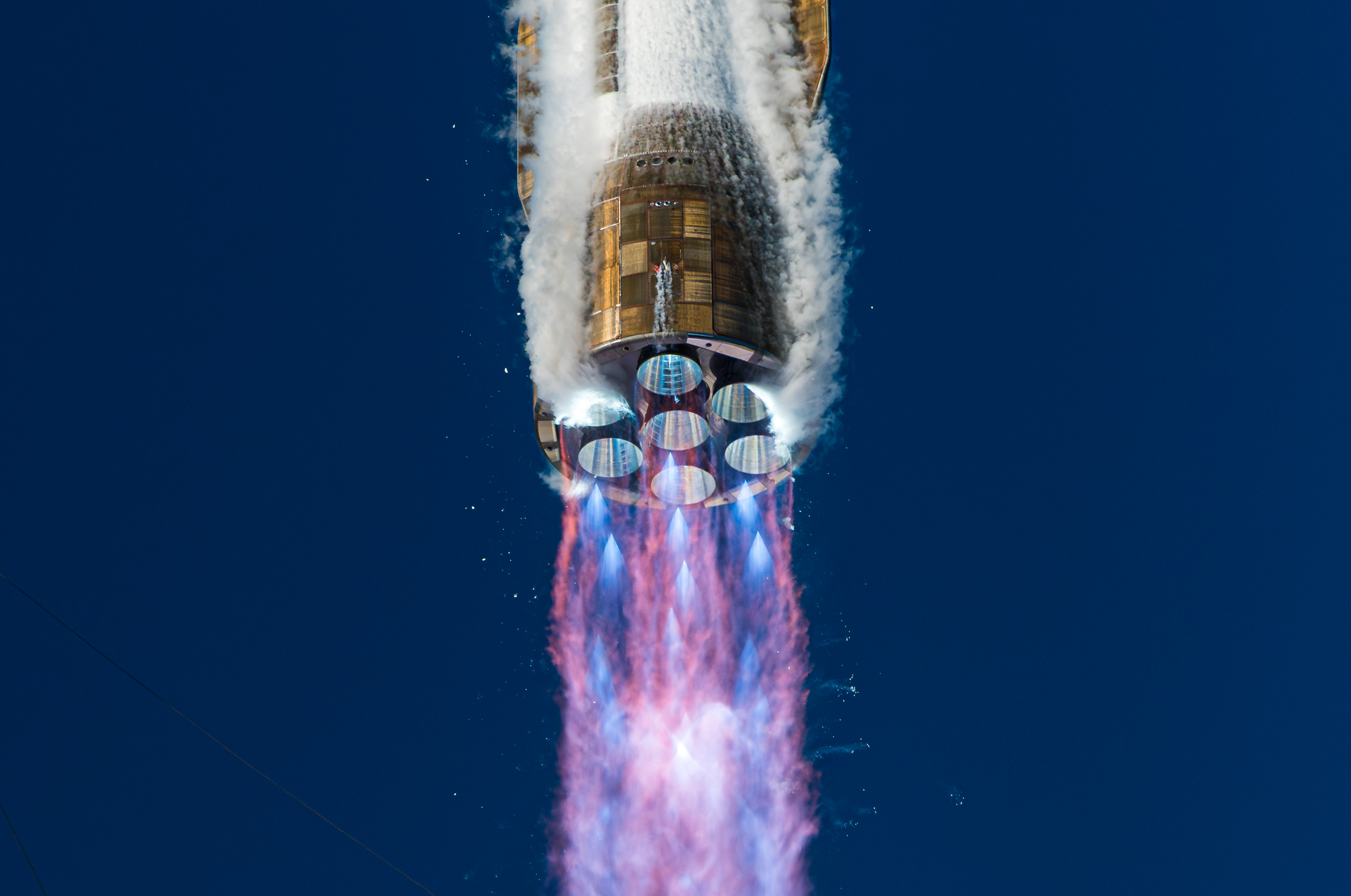
One year ago, on 16 January 2025, I witnessed the maiden launch of Blue Origin’s New Glenn heavy-lift vehicle from Rocket Park on Florida’s Space Coast. The landmark mission was awe inspiring with seven BE-4 methane-powered oxygen-rich staged combustion engines burning vividly blue in the tenebrous sky. It was an emotionally charged moment for the launch team as they successfully injected Blue Ring Pathfinder in medium Earth orbit. And it reminded me that breakthrough moments happen across AIAA’s member universe year after year.
Breakthroughs don’t occur in isolation. They emerge from thousands of engineering conversations, collaborations, and connections. They are the dividends of years of investment in innovation, pursuing design goals that may once have seemed impossible.
Throughout 2025, our industry marked significant milestones in its upward march to a dynamic future. Rockets soared, aircraft demonstrators flew, and landers landed. All the while, growth continued in labs, on tarmacs, and from launch pads where aerospace professionals leaned into complexity, asked harder questions, and pursued bold solutions.
As we enter 2026, our community stands on the threshold of tomorrow. The future of aerospace won’t be shaped by a single researcher or “eureka” moment. Rather, necessity will drive experimentation and risk-taking, leading to the next breakthroughs. AIAA will connect people doing this vital work as we look to our north star, to be the most trusted source for aerospace knowledge exchange.
Impact 2025
2025 marked a turning point where ambitious visions became operational realities. Boom Supersonic moved closer to passenger service with its successful XB-1 demonstrator flights. The NASA/Lockheed Martin X-59 demonstrator debuted its supersonic abilities, emitting a sonic thump. The first flights of next-generation autonomous combat aircraft from Anduril and General Atomics demonstrated technologies that will reshape national defense.
New aircraft programs flourished, with an award to Boeing to develop its F-47, the first sixth-generation fighter jet developed under the Next Generation Air Dominance (NGAD) program. Lockheed Martin Skunk Works® introduced its Vectis collaborative combat aircraft, with flight tests planned within two years.
The urban air mobility revolution moved closer to commercial service. Joby, Archer, and other air taxi developers achieved piloted transitions from vertical lift to forward flight, advancing toward FAA-type certification expected in 2026. Electra demonstrated its ultra-short takeoff and landing aircraft for future commercial routes and to support of America’s warfighters.
Access to space was fundamentally transformed. Blue Origin went on to land New Glenn’s “Never Tell Me the Odds” booster on its second flight, while SpaceX approached an unprecedented 170 launches for the year (as of this writing). Meanwhile, SpaceX’s fully reusable Starship completed all Flight 10 objectives, proving that testing and learning remains central to aerospace progress.
Firefly Aerospace’s Blue Ghost made a precision breakthrough, as the first lunar lander under NASA’s Commercial Lunar Payload Services (CLPS) program to land upright and remain operational.
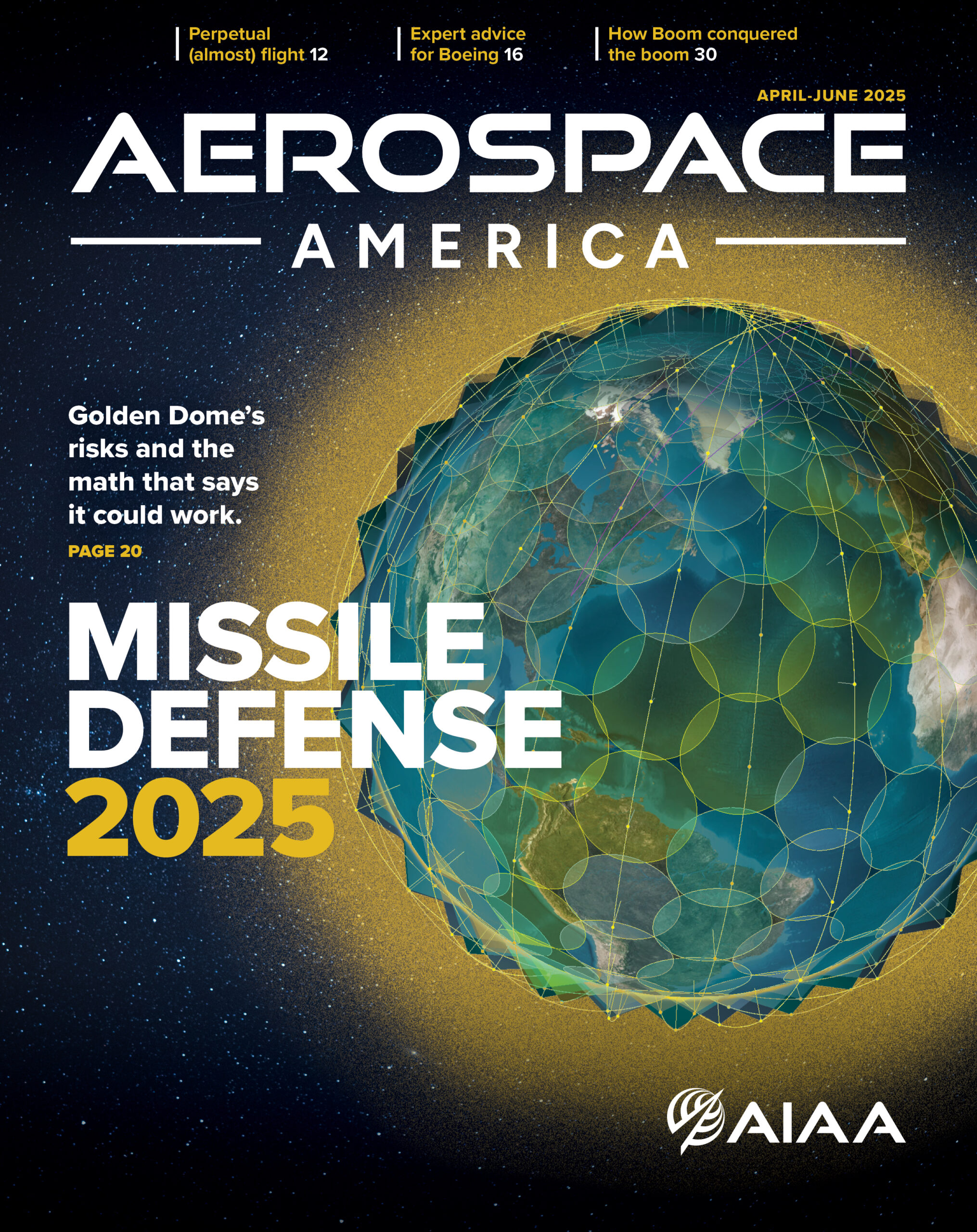
Defense innovation shifted into high gear. The Golden Dome for America initiative to develop space-based missile defense dominated discussions with billions of dollars committed toward making in-space interceptors operational. The Space Development Agency continued deploying its Proliferated Warfighter Space Architecture constellation, while hypersonic missile testing cadence increased substantially. Changing acquisition strategies from the Pentagon are expected to significantly increase investment in technology development as part of a broader effort to modernize defense acquisition and enhance America’s technological capabilities.
Regulatory momentum matched technical progress. Beyond supersonic flight authorization, the administration streamlined launch approvals, and the FAA released draft rules for routine beyond-visual-line-of-sight drone operations, which is widely recognized as essential for unlocking the full economic potential of uncrewed aerial systems.
The Road Ahead
In 2026, aerospace stands at a technological inflection point. That’s why we partnered with BryceTech to produce AIAA’s Technology Innovation Forecast. It’s our most comprehensive look yet at technologies shaping aerospace through the mid-2040s. Drawing on over 500 survey responses and interviews from AIAA’s unmatched technical community, the picture is striking: powerful trends are converging across the air and space domains.
The first glimpse shows that from AI-enabled engineering, quantum computing, and alternative aviation fuel, to advances in fully reusable launch vehicles, hybrid aircraft, and high temperature materials, our community sees a future defined by radical shifts in performance, economics, and national competitiveness. These innovations don’t just promise faster or cheaper. They have the potential to reshape how society understands and interacts with aerospace itself.
The full analysis will be published later this month, diving deeper into which technologies are poised to lead, where barriers remain, and how industry and government can position the United States for long-term success.
Consider this an early signal: the foundations of the aerospace next era are already emerging, and our community is uniquely equipped to help shape them.
Welcome to 2026. The aerospace industry has never been more important. Together, we’re transforming aerospace into possibly the greatest period of innovation our industry has ever seen.