
ANALYSIS: The space manufacturing market doesn’t yet exist — but some companies say it will soon
 By Keith Button
 By Keith Button
The news seemed to provide evidence of a growing industry: Varda Space Industries, provider of beach-ball-sized capsules for in-orbit research and manufacturing and reentry testing, signed an agreement in September that will permit its capsules to land in the Australian outback on a near-monthly clip in three years.
But space manufacturing doesn’t yet exist in the traditional sense of the term — where something is made in orbit and returned to Earth to sell for a profit, according to Varda and other companies and experts in the field. But it is closer to reality, thanks to technology breakthroughs that have allowed companies to produce limited amounts of advanced materials superior to those made on Earth. However, aspiring providers haven’t yet turned these demonstrations into a reliable revenue stream.
“I can say very confidently that there are no products that are manufactured in space that are sitting back down on the ground that you or I could go buy,” said Eric Lasker, chief revenue officer for Varda. The El Segundo, California-based company has launched and landed three space capsules to date, with two more in orbit and set to land in Australia before year-end and, per the recent agreement, another 20 planned through 2028.
“The vast, vast, vast majority of the ecosystem sits at that very-much-earlier state of working with universities, working with research institutions” that will hopefully lead to later-stage research and, eventually, production, Lasker said.
That’s a far cry from 1970, when NASA officials in the midst of planning for the space shuttle expected the low-Earth orbit environment would soon be the site of profitable manufacturing operations. In the decades since, various companies have projected billions of dollars of potential revenue. Among the promising applications: growing ultra-pure or new-geometry crystals, freed from the constraints of Earth’s gravity or containers, for advanced semiconductor materials, optical glass, pharmaceuticals or superalloys that would otherwise be impossible or nearly impossible to create on Earth.
Lasker said companies are still working toward that goal.
“Yes, we’re working with partners on materials made in orbit to be brought down on Earth,” Lasker said. “Are those materials from these initial flights that we’re doing with those partners going to appear magically on your shelf in the next year or two? No.”
So far, high costs and a lack of customer demand have thwarted efforts to develop traditionally defined space manufacturing ventures. But companies in some areas of material and pharmaceutical development believe they’re on the cusp of economic viability — and harnessing some of the benefits foreseen 55 years ago.
A big piece of the hurdle is the expense of getting things to space and back. For example, companies that deliver shoebox-sized experiments for in-orbit research charge $25,000 to $100,000 per kilogram, said Jessica Frick, co-founder and chief executive officer of Astral Materials, a 2024 startup with plans to launch mini-fridge-sized furnaces into orbit to grow crystals. Her Mountain View, California, company plans to demonstrate growth of silicon crystals for semiconductors aboard a space capsule flown by Atlanta-based SpaceWorks Enterprises in the second quarter of 2026 under a NASA-funded program.

Lasker predicts pharmaceuticals will become the first economically viable area of space manufacturing, simply because the economics favor products with the highest per-gram cost. With low-cost-per-gram material, the expenses of the space journey and the manufacturing process account for too much of the final price tag.
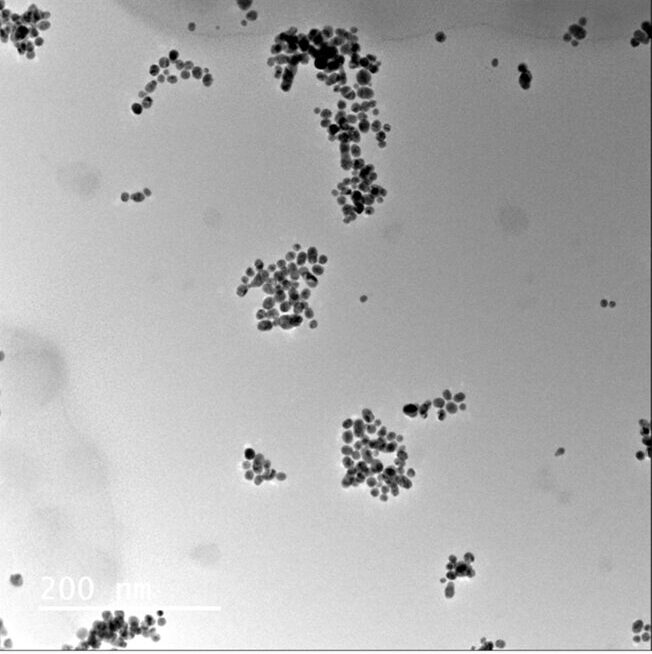
Another company with space-based pharma ambitions, Jacksonville, Florida-based Redwire, had this cost-per-gram equation in mind when it decided earlier this year to grow subcellular-sized gold spheres aboard the International Space Station, where in microgravity they could form more uniformly and with smoother surfaces. The gold nanospheres could be used for speedy blood tests for cancers or viruses: For some blood tests, 1 ounce (about 31 grams) of gold could potentially yield enough spheres for 3,000 tests.
“Which means that all of a sudden, the cost of getting it to and from space and the cost the gold itself is starting not to be a significant aspect of the product,” said Kenneth Savin, Redwire’s chief scientist.
For pharma, Lasker said, the first profitable product will probably come from a class of molecules like monoclonal antibodies or biologic medications, where a step in their production must be performed in microgravity or from a seed crystal process. Here, a crystal would be grown in microgravity and used as a template for mass production back on Earth. Varda is partnering with companies developing products along both routes, Lasker said.
Profitability could also come via intellectual property advances. Growing a new crystal structure on orbit for an existing drug could help a pharma company extend its patent on that drug with a new formulation, Savin said. Late-stage research and development conducted in space — though technically not manufacturing — could also provide invaluable intellectual property and help speed a drug to market, Lasker noted. “IP is where the majority of the economic value in the development chain for pharmaceuticals actually lives,” he added.
Outside of pharma, the first space-made materials will probably be for scientific applications that require “cutting-edge performances” and then slowly migrate into common-use applications, said Ioana Cozmuta, founder and chief executive officer of G-SPACE. This Sunnyvale, California, company offers web-based software that predicts how materials might be made in microgravity.
“Commercialization is not just: ‘I have a superior product,’” Cozmuta said. “It’s also, ‘How easy it is to adopt and integrate and upgrade the infrastructure that exists today?’”
Despite advances in on-orbit production of fiber-optic glass and semiconductor materials, companies haven’t yet been able to sell their materials, Cozmuta said. Space-made fiber glass doesn’t have the microcrystal defects that often form during terrestrial production, but potential customers don’t seem to have a problem that requires this higher-quality fiber glass, she said. As for semiconductors, she said, it’s difficult to “beat the very, very cheap price” of today’s terrestrially made crystals.
Astral has a different view of the market. Their potential customers “are desperate for higher-quality materials” in the areas of quantum computing; photonics, optics and laser systems; thermally conductive materials for chip circuit boards; and high-powered silicon carbide devices in electric vehicles, Frick said.
Astral’s strategy is not to “create a new magic material and put it into the market, because that just wouldn’t work in a business sense,” Frick said. “We have to find something that people already are using and want a higher quality of it to make devices and other advanced applications.”
To justify the initial costs of on-orbit manufacturing, a space-made material must be “substantially better” than its Earthly alternative, Frick said. “Not just incrementally, 1%, 2% better, but orders of magnitude better.” Plus, she said, that material initially will have to be made in low volumes: kilograms of product per year, because of startup costs, before hopefully growing to hundreds or thousands of kilos per year.
Redwire’s Savin predicts that for pharma, the long-term money-makers will be cellular products grown in microgravity, like stem cells, organoids or tissues for study or therapies. However, seed crystals will probably be the first profitable venture, he said, because the chemistry is relatively simple and the benefits of growing the crystals in microgravity are clear.
“I’m hoping somebody’s going to pull it off,” he said. “I think it’s going to be us, but somebody will do it and I think it would be good for the rest of the industry when something real starts to happen.”