





1925
Dec. 12 — A handful of New York investors establish Colonial Air Transport to fly the first contract air mail route. CAM-1 — contract air mail route number 1 — will connect New York and Boston, with service to begin in 1926. Colonial in 1930 is absorbed with several other carriers to form American Airways, the predecessor to American Airlines. R.E.G. Davies, Airlines of the United States Since 1914, pp. 49-50.
Dec. 15 — U.S. Sen. Hiram Bingham (R-Conn.) introduces a bill to establish national air laws and a bureau of civil aviation in the Department of Commerce. Later renamed the Air Commerce Act of 1926, the bill attempts to regulate commercial interstate flying, leaving the control of pilots and aircraft engaging in air work within the confines of a single state to local laws or voluntary submission to federal control. Aviation, Jan. 4, 1926, p. 7; Aircraft Year Book, 1926, p. 122.
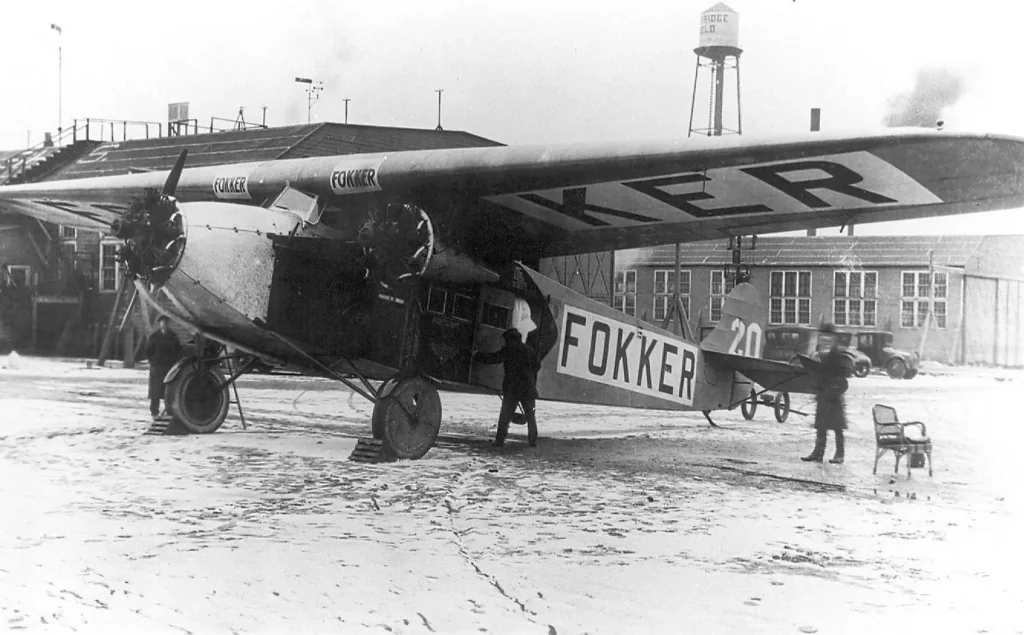
Dec. 15 — As part of Henry Ford’s reliability tour, Dutch aircraft builder Anthony H.G. Fokker a 10,000-mile (16,000-kilometer) tour of 10 states to promote the tri-motor Fokker F. VII-3m. Continental Motors Corp. of Detroit orders a Fokker tri-motor to link up its automobile plants spread over Michigan. The F. VII-3m later goes into service for Pan American Airways, operating between New York and Cuba via Key West, Florida. Fokker travels as one of the passengers on the aircraft’s first flight on the route. Flight, Jan. 14, 1926, p. 24; Aircraft Year Book, 1926, p. 122.

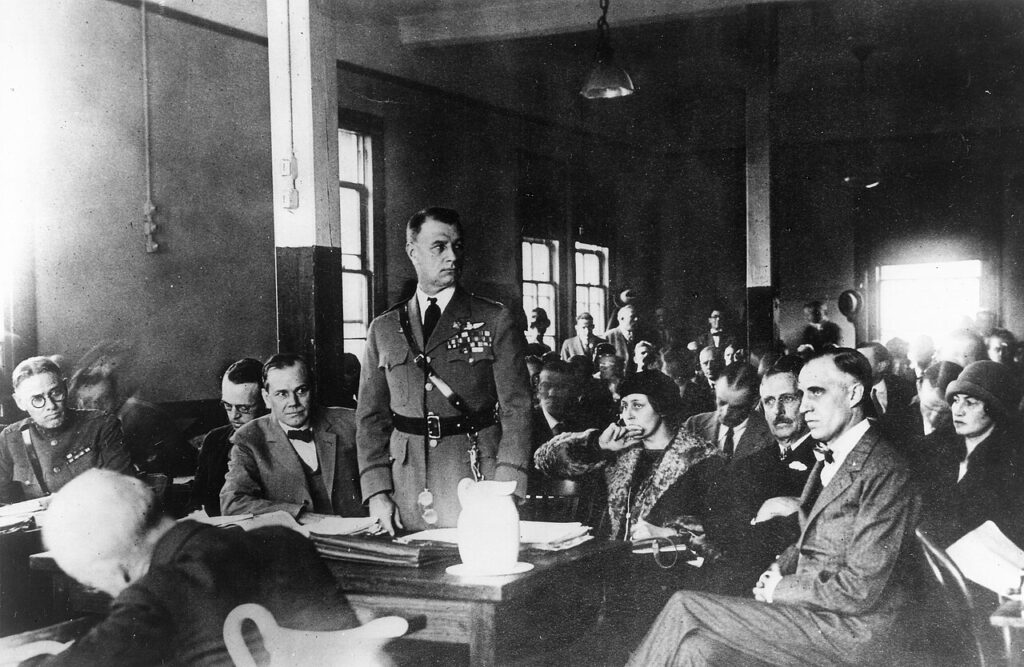
Dec. 17 — A court of 12 U.S. Army officers finds Army Air Service Col. William Mitchell guilty of insubordination and conduct prejudicial to military discipline in criticizing the administration of the U.S. Army and Navy Air Services. Following the crash of the USS Shenandoah airship and other high-profile incidents, Mitchell called for establishing a strong bomber force as the foundation of the national defense system and a separate air service, as well as accused his superiors of incompetence. Although President Calvin Coolidge later modifies his five-year suspension to half pay, Mitchell chooses to resign his commission instead. He continues to criticize national aviation policies until his death in 1936. Alfred F. Hurley, Billy Mitchell: Crusader for Air Power, pp. 104-107.

Dec. 27 — Daniel Guggenheim establishes the Daniel Guggenheim Foundation for the Promotion of Aeronautics. This organization supports the technical advancement of aviation by sponsoring the Model Airline of Western Air Express and funding various ventures: aeronautical research at numerous universities, the Full Flight Laboratory at Mitchel Field that led to the first successful “blind flight,” and Lindbergh’s tour around the United States following his trans-Atlantic flight, among others. Richard Hallion, Legacy of Flight: The Guggenheim Contribution to American Aviation.
Dec. 31 — The National Aeronautic Association awards Sylvanus Albert Reed this year’s Collier Trophy for his development of the metal airplane propeller. A. van Hoorebeeck, La Conquete de L’Air, p. 172.
Also during December — Pratt & Whitney produces its first engine, the R-1340 Wasp, a nine-cylinder air-cooled radial of about 400 horsepower at 1800 rpm. Eugene Emme, NASA, Aeronautics and Astronautics 1915-1960, p. 21.
1950
Dec. 1 — Test pilot C.W. von Rosenberg completes the first test flight of the Texas A&M AG-1 agricultural monoplane. Fred Weick, director of the university’s Personal Aircraft Research Center, designed the low-wing monoplane to carry dust, seed or fertilizer in a 27-cubic-foot (0.75 cubric-meter) hopper. The AG-1 has full-span slotted flaps and slot-lip ailerons, and its fixed landing gear legs are sharpened to sever any cables it may inadvertently strike. Aviation Week, Dec. 18, 1950, p. 32; Jane’s All the World’s Aircraft, 1952-1953, p. 246.
Dec. 6 — NACA scientists at the Langley Aeronautical Laboratory in Virginia achieve a continuous transonic airflow in the Langley 8-foot high-speed tunnel with a newly installed slotted-throat test section. Lead scientist John Stack and the NACA team responsible for this development are later awarded the 1951 Collier Trophy. NASA, Aeronautics and Astronautics, 1915-1960, p. 213.

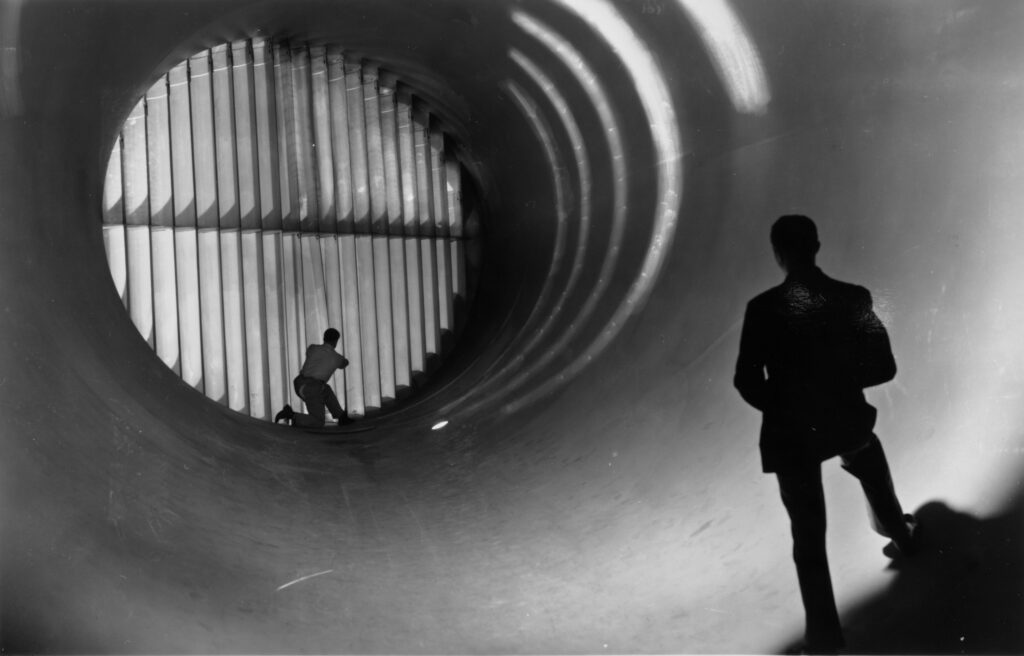
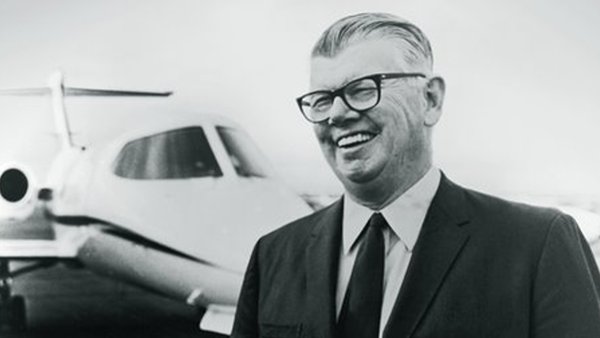
Dec. 15 — In ceremonies at the White House, President Harry Truman presents the 1949 Trophy to William Lear, inventor of the Lear F-5 Automatic Pilot and Automatic Control Coupler that enabled safe aircraft landings regardless of weather conditions. Aviation Week, Dec. 25, 1950, p. 28.

Dec. 29 — Convair test pilot R.C. Loomis completes the initial flight of the Convair Turboliner. This modified Convair-240 equipped with two Allison 501 turboprop engines is the first American turboprop transport. Subsequently, the Allison Division of General Motors test flies the Turboliner extensively to examine the dependability of turboprop passenger airliners, which leads to the later modification of most of the series of similar Convair airliners as revamped CV-580s. Aviation Week, Jan. 8, 1951, p. 15; Jane’s All the World’s Aircraft, 1952-1953, p. 196.
Dec. 30 — Sailplane pilot William Ivans Jr. sets a world altitude record for single-place gliders, reaching 42,090 feet (12,832 meters) above sea level in a pressurized Schweizer SGS 1-23 sailplane. Ivans, a Convair engineer, used a standing wave in the Sierras between Mt. Whitney and Bishop, California, to assist him. Aviation Week, Jan. 8, 1951, p. 7; Welman Shrader, Fifty Years of Flight, p. 135.
1975
Dec. 3 — Maxime “Max” Faget, director of engineering and development at NASA’s Johnson Space Center, receives the Gold Medal of the American Society of Mechanical Engineers. Faget was responsible for the design and testing of the Mercury, Gemini and Apollo spacecraft and the Skylab Space Station, as well as the space shuttle orbiters scheduled to debut in the late 1970s. Johnson Space Center Release 75-98.
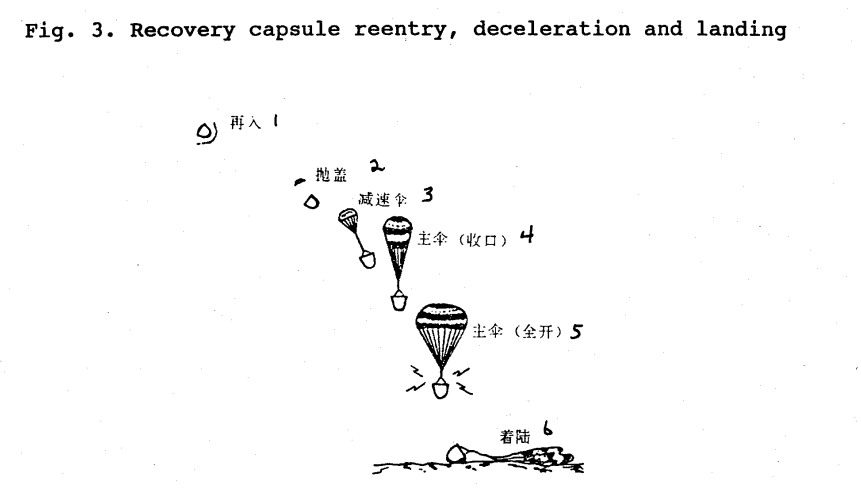
Dec. 3 — The People’s Republic of China announces its first recovery of a retrievable satellite, Fanhui Shi Weixing. This imagery reconnaissance craft was launched in late November and reentered days later, touching down in the Guizhou Province in southwest China. Baltimore Sun, Dec. 4, 1975, p. A4.

Dec. 11 — The Soviet Union launches the Intercosmos 14 satellite to study Earth’s magnetosphere, ionosphere and micrometeoroid environment. The satellite, in collaboration with Czechoslovakia, carries five experiments that focus on low-frequency electromagnetic waves, ionospheric plasma density and the characteristics of meteor showers. NASA, Astronautics and Aeronautics, 1975, p. 241.
Dec. 12 — A Delta rocket launches Satcom 1, the first of three RCA Corp. communications satellites to be placed in geostationary orbit around the equator to transmit long-distance telephone calls and service data. When fully operational, the Satcom network will handle TV, voice channels and high-speed data between the contiguous U.S., Hawaii and Alaska. NASA Release 75-302.
Dec. 22 — The Soviet Union launches its Raduga (Rainbow) communications satellite into a stationary circular orbit to help provide continuous around-the-clock telephone and telegraph radio communications with simultaneous transmission of color and black-and-white central TV programs of Orbita stations. NASA, Astronautics and Aeronautics, 1975, p. 245.

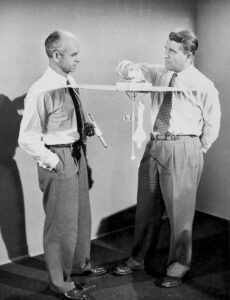
Dec. 28 — NASA’s Ernst Stuhlinger will retire in January after 30 years of federal service, the agency announces. The associate director for science at the Marshall Space Flight Center, the German-born Stuhlinger became involved in rocketry in 1943 when he contributed to the development of the V-2 rocket used in World War II. He came to the U.S. after the war and worked on the missile programs before his transfer to NASA in 1960, where he assisted with the early for lunar exploration, the High Energy Astronomy Observatory (HEAO) satellite and initial phases of the Space Telescope Project. Marshall Space Flight Center Release 75-256.
Also during December — German aerospace engineer Lutz Kayer establishes Orbital Transport and Rakten A.G. (OTRAG), the world’s first private space launch company. Test launches are conducted in Zaire, Africa, in the 1980s, but OTRAG shuts down shortly after due to international political pressures. New York Times, Dec. 28, 1975.
2000
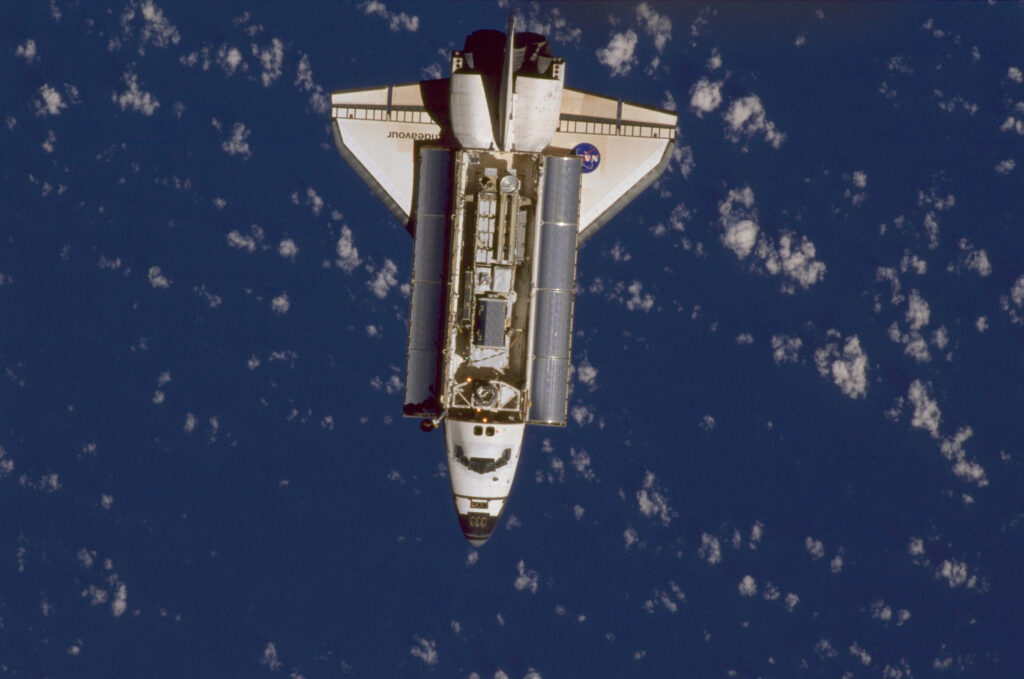
Dec. 2 — NASA’s space shuttle Endeavor becomes the first spacecraft to dock with the International Space Station while there’s a crew aboard. The orbiter brings the five-person STS-97 crew, led by commander Brent Jett Jr., who install the station’s first set of U.S.-provided solar arrays. Endeavour returns to Earth on Dec. 11, landing at the runway at NASA’s Kennedy Space Center in Cape Canaveral, Florida. NASA, Astronautics and Aeronautics: A Chronology, 1996-2000, pp.304-307.

Dec. 5 — A Russian Start-1 rocket launches the EROS A1 satellite. The first of a series developed by the Israel Aircraft Industries/MBT Division, the EROS satellites are designed to capture high-resolution images of Earth for commercial uses. Flight International, Dec. 12-18, 2000, p. 37
Dec. 6 — Four Russian airlines — Domodedovo Airlines, KrasAir, Chelyabinsk Airlines and Aviackspresskruiz — form the country’s first interline civil aviation alliance. In this arrangement, intended to boost revenue and improve market share, the carriers are authorized to sell tickets on one another’s flights. Flight International, Dec. 12-18, 2000, p. 10.
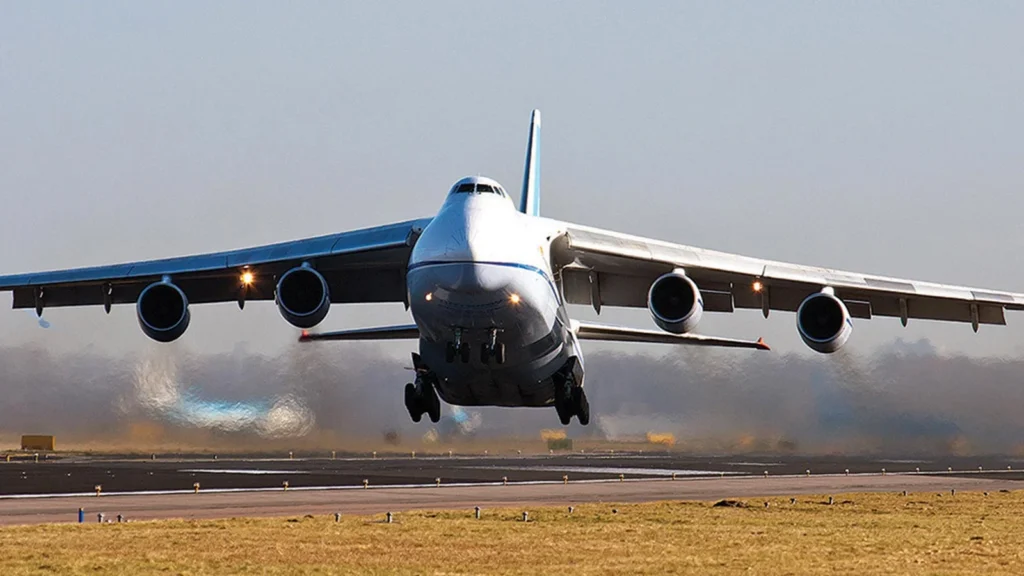
Also during December — The Russian government approves the conversion of four Russian Air Force Antonov An-124 aircraft for space launches. The An-124 would loft a two-stage rocket and payload, an operational sequence comparable to the Lockheed L-1011 TriStar modified by Orbital Sciences to air launch its Pegasus rockets. Flight International, Dec. 12-18, 2000, p. 6.



Related Posts